The post
On November 17, 2026, at 8:18 AM Eastern, Brian Krassenstein posted to X:[1]
“WTF!! Trump just said he’s not concerned at all about any of the outages. He goes on to say ‘that’s life.’ We literally have an 80-year-old man in denial about this shitshow he has created, claiming everything’s fine in Dandy.” Brian Krassenstein, X, November 17, 2026
A video was attached but not transcribed in the post. Krassenstein also added a ticked claim: “Asked whether Americans should be worried about the outages, the White House answered ‘No.’“
Trump was in Manila, Philippines, at the start of a four-day Asia trade trip when reporters asked him about the ongoing domestic outages. The post’s age claim is accurate: Trump turned 80 on June 14, 2026, and was 80 years old on the date of these remarks.
Claim 1: Trump’s words
Multiple news organizations that covered Trump’s remarks at Manila’s Solaire Hotel on November 17 agree on what he said when reporters asked whether he was worried about the outages. Rolling Stone, NBC News, Just The News, and others reported variations of the same quote:[2][3][4][17]
“No. It’s life. When you’re big and powerful and you have all the money, things like that happen. It’s fine.” Donald Trump, Solaire Hotel, Manila, Philippines, November 17, 2026
His opening word — “No” — was a direct answer to the question of whether he was concerned. “It’s fine” came at the end. Krassenstein’s paraphrase “that’s life” closely captures “It’s life,” and both express the same meaning. They are not the same words.
The citation-integrity question: is “that’s life” a fair summary of “It’s life”? Both phrases mean the same thing: these things happen, that is simply how life works. The paraphrase is not invented; it is functionally accurate. But quoting a speaker should be exact, and the actual phrase is different. That gap prevents a full True rating.
Claim 2: The White House response
On the morning of November 17, Senior Deputy White House Press Secretary Lauren Bis appeared on Newsmax. Aaron Rupar, a journalist who covers White House briefings, posted her quote directly:[5]
“There is no crisis or anything like that for Americans to be worried about.” Lauren Bis, Senior Deputy White House Press Secretary, Newsmax, November 17, 2026
Mediaite and Yahoo News also reported this statement.[6][7] The White House’s answer to the question “should Americans be worried?” is correctly characterized as a no. But the ticked claim puts “No” in quotation marks, implying that single word is what was said. What was actually said was a 15-word sentence that qualified the answer: not a crisis, not a cyber event, nothing to be worried about. The intent of the original longer statement included context (ruling out a cyberattack, downplaying severity) that the one-word compression strips out.
Separately, the White House published an official statement on November 18 from Director of National Intelligence Jay Clayton and Secretary of State Marco Rubio: “The Trump Administration sees no indication of a coordinated cyberattack, state-sponsored activity, or malign actor behind the recent tech outages.”[8]
The November outage wave
Seven major technology and infrastructure systems failed between November 12 and 17, 2026. Officials confirmed they were separate, unrelated incidents.[9][10]
| Date | System | Impact | Attributed cause |
|---|---|---|---|
| Nov 12–13 | Microsoft 365 / Outlook | ~20 hours; millions lost email access | Latent software bug from July; server overload |
| Nov 13 | Workday | Enterprise HR systems down | Backup test failure |
| Nov 13 | FAA (nationwide ground stop) | 4 hr 21 min halt; ~20,000 flights disrupted | Router failure during network upgrade |
| Nov 15–16 | Chase Bank | Delayed transactions; Zelle disrupted | Software bug in on-premise hardware |
| Nov 16 | United Airlines | 90-min outage; departures delayed | Weight-and-balance system failure |
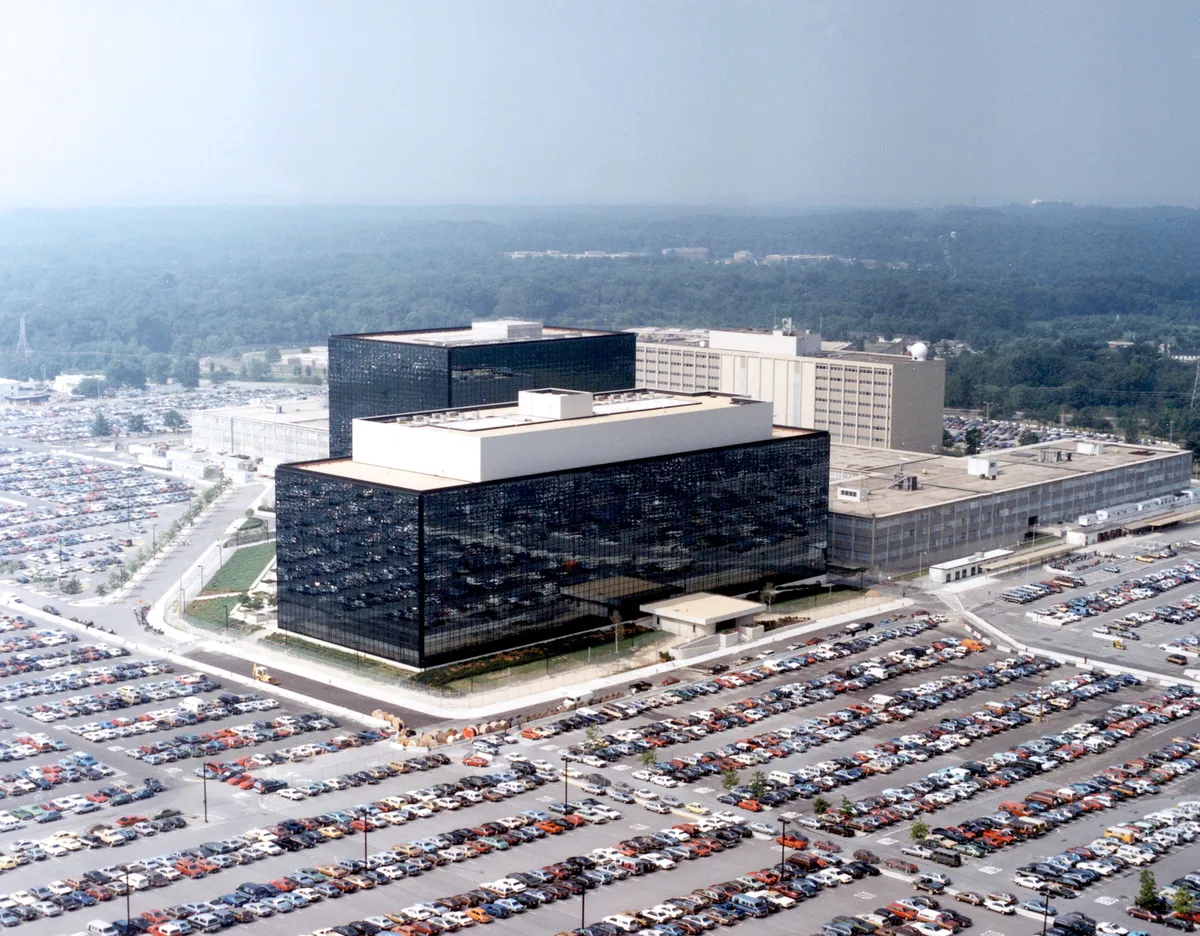
| Nov 17 | NSA internal network | Internal communications down | Under investigation at time of publication |
| Nov 17 | Apple iCloud sign-in | Login failures for iCloud users | Infrastructure issue; no cyberattack found |
DHS Secretary Markwayne Mullin attributed the pattern to “new technology swamping outdated systems,” suggesting AI demand was straining legacy infrastructure.[11] Secretary of State Rubio said officials found “zero evidence” linking the outages to each other or to foreign actors.[8] Microsoft blamed a “latent bug,” the FAA a router installation, and Chase a software defect in its own hardware.
The NSA internal network failure (a government national security system) went down the same day Trump told reporters “It’s life.” That detail was not part of Trump’s briefing at the time he spoke in Manila. By November 17, news of the NSA outage broke as Bis was making her Newsmax appearance saying there was nothing to worry about.
The better question
Krassenstein’s post is factually about what Trump said. But the post is substantively arguing something bigger: that Trump’s dismissal was inappropriate given real harm to Americans, and that his administration bears responsibility for the conditions that led to the outages.
The frame-lock check: “Did Trump say he wasn’t concerned?” is the stated question. The question the post is actually making is: “Was Trump’s response appropriate, and did his administration cause or fail to prevent this cluster of failures?”
The steelman for Trump’s “It’s life” response: the administration did not go silent. DNI Clayton and Rubio issued a joint public statement ruling out cyberattacks. DHS Mullin gave a technical explanation. Vice President Vance told Fox News that Americans “have to be prepared for everything” but saw no need for panic.[12] Five of the seven outages were attributed to private companies’ own software bugs or equipment failures — not government policy or government-managed infrastructure. The FAA router failure occurred during routine maintenance; the NSA outage was under investigation. Trump’s framing that large, powerful institutions have technical failures is factually accurate as a category claim.
The case for concern: the breadth of the cluster, its six-day span across unrelated sectors, was unusual even if each event was technically separate. The NSA’s own internal network going down (a government security apparatus) is distinct from a bank or airline. Karoline Leavitt, Trump’s former press secretary who left the administration in mid-2026, said publicly that the White House needed to do more to reassure Americans: “transparency is key” and she admitted to “checking my bank account with a little bit of worry.”[13] Congressional lawmakers from both parties said they were “not getting the whole story.”[14]
None of the official investigations found that Trump administration policy caused any of the seven outages. The connection Krassenstein implies — “this shitshow he has created” — goes beyond what the available record supports. That is an editorial framing, not a documented causal link. The strength of the criticism rests on what the administration failed to do (communicate, respond visibly) rather than what it caused.
Precedent
Compared against: Major U.S. technology and infrastructure outage events. The largest single-event tech outage on record was the July 2024 CrowdStrike/Windows update failure, which disrupted approximately 8.5 million Windows devices globally and grounded more than 2,000 flights in one day. The November 2026 cluster involved seven separate outages across six days; no individual event matched the 2024 CrowdStrike scale, but cross-sector breadth in aviation, banking, national security, and enterprise software within one week was unusual.
Experts and journalists characterized the November 2026 cluster as notable for its concentration across sectors, while each individual outage remained within historically common ranges for large-scale enterprise failures. Foreign Policy’s explainer noted that legacy hardware, latent software bugs, and unpatched vulnerabilities are common drivers of major outages across all categories of system.[15]
What the post implies
All seven outages were attributed to private company software bugs, equipment failures, or routine hardware upgrades. No official investigation — including DHS, DNI, and the NSA’s own review — found a link between government policy and the outages. Five of the seven were private-sector failures entirely. The FAA router failure occurred during routine maintenance at a government agency, not as a result of a specific administration policy decision. The NSA internal network failure was still under investigation at publication and no cause had been attributed. This implied claim is not supported by any available record.
This turns on a values judgment: how alarmed should a president be when private companies’ software fails? The administration did provide public information through DNI Clayton, Rubio, Mullin, and Vance. Trump’s own former press secretary said the White House needed to do more. Congressional representatives from both parties said they weren’t satisfied with the explanation. Whether “It’s life” was an appropriate response to a week that included an NSA outage is a legitimate policy debate, not a factual question this fact-check can settle. We rate this Contested.
The breadth — seven outages across aviation, banking, enterprise software, national security, and consumer tech in six days — is notable and unusual by frequency. Each individual outage, however, was smaller in scope than the 2024 CrowdStrike event. Officials and investigators attributed the cluster to coincidence rather than a common cause. “Unusually concentrated” fits; “unprecedented” does not.
What this finding changes
The two claims in this post are Mostly True, not False. That matters for how the post’s argument lands: Krassenstein’s characterization of Trump’s posture is substantively accurate even if the quoted words are loose. Trump did say he wasn’t concerned and did use a phrase that means “that’s life.” The White House did say not to worry.
What this fact-check does change is the implied larger argument. The post frames this as Trump being “in denial about this shitshow he has created.” The first part — denial — is a fair editorial characterization of a dismissive response. The second part — that he created it — is not supported. The outages resulted from private company technical debt and routine hardware failures at government agencies, not from administration decisions.
The word “shitshow” may turn out to be more accurate about the administration’s communication than about its infrastructure management. Former press secretary Leavitt, lawmakers from both parties, and media observers all said the administration failed to communicate clearly and transparently. That is a different and narrower critique than the one the post makes. It is also better supported by the evidence.
What to watch
- Ongoing: NSA internal network outage cause — the only government-infrastructure failure in the cluster whose cause had not been publicly disclosed as of November 20. If its cause points to systemic government IT policy gaps, the implied-False rating above may need revision.
- Near term: Congressional oversight hearings — multiple lawmakers from both parties said they were not getting the full story. If hearings surface evidence of a common cause or administration negligence, that changes the picture.
- Near term: DHS/DNI full report — the administration’s initial public statements ruled out cyberattacks but attributed causes only at a high level. A full technical post-mortem could either confirm the “coincidence” reading or reveal systemic vulnerabilities the administration knew about and did not address.
- Near term: FAA investigation — the router failure during routine maintenance at a federal agency raises the question of whether the FAA’s deferred infrastructure maintenance (a known issue predating the Trump administration) played a role. If it did, the question of administration responsibility becomes more complex.
Parties affected
| Party | Effect | Why |
|---|---|---|
| Travelers (FAA ground stop) | Costs | Approximately 20,000 flights disrupted; some passengers stranded overnight; organ donation logistics affected during the halt. |
| Microsoft 365 users (est. hundreds of millions globally) | Costs | Up to 20 hours without email access; business disruption during core working hours. |
| Chase Bank customers | Costs | Delayed transactions and Zelle disruptions over two days. |
| Trump administration | Costs | Bipartisan congressional pressure, public criticism of messaging, former press secretary publicly calling for more transparency — reputational cost independent of whether the outages were the administration’s fault. |
| Brian Krassenstein / critics of the administration | Mixed | The core characterization of Trump’s response is accurate; the causal claim (“shitshow he has created”) is not supported, which undermines the strongest version of the critique. |
| DHS Mullin / AI industry | Mixed† | Mullin’s claim that AI demand on old systems caused the cluster gave AI-safety critics an opening; major AI companies disputed the characterization. No official investigation confirmed the AI-cause theory at publication. |
† Rows marked † reflect analytical inference about likely outcomes, not documented statements of position from these actors.
What this fact-check is about
On November 17, 2026, a commentator named Brian Krassenstein posted on X that President Trump had said he was not worried about a string of major tech failures. The post also said the White House answered “No” when asked if Americans should be worried. This fact-check rates both claims.
The seven outages
Between November 12 and 17, seven major U.S. systems went down in just six days. Email, flights, banking, a business software platform, and even a government spy network all had serious problems. Here is what happened:
- Nov 12–13: Microsoft 365 email was down for about 20 hours. Millions of people could not access their email.
- Nov 13: The FAA ordered all U.S. flights to stop for 4 hours and 21 minutes. About 20,000 flights were disrupted.
- Nov 13: Workday (business software used by many companies) also went down.
- Nov 15–16: Chase Bank had problems with transactions. Some Zelle payments were delayed.
- Nov 16: United Airlines had a 90-minute outage that caused flight delays.
- Nov 17: The NSA‘s internal computer network went down.
- Nov 17: Apple’s iCloud sign-in failed for many users.
Officials confirmed the outages were not connected to each other. There was no cyberattack. Each outage had a different technical cause, like a software bug or old equipment failing during a routine upgrade.
Claim 1: Trump said he was not concerned and said “that’s life”
Verdict: Mostly True.
Trump was in Manila, Philippines for a trade trip when reporters asked if he was worried. He said: “No. It’s life. When you’re big and powerful and you have all the money, things like that happen. It’s fine.”
His first word was “No.” He clearly said he was not worried. But the post quoted him as saying “that’s life,” when he actually said “It’s life.” These phrases mean the same thing, but they are different words. The post is accurate about Trump’s attitude, but the quote is slightly off.
Claim 2: The White House answered “No” when asked if Americans should be worried
Verdict: Mostly True.
A White House spokesperson named Lauren Bis appeared on the Newsmax TV channel the same day. She said: “There is no crisis or anything like that for Americans to be worried about.”
The post says the White House answered “No” in quotes — implying those were the exact words. What was actually said was a 15-word sentence that explained there was no crisis and no cyberattack. Summing it up as a bare “No” is not quite right, even though the meaning is similar.
What the post implies
Implied: Trump’s administration caused the outages. This is False. All seven outages were caused by private company software bugs or routine equipment failures. No investigation found any link between government policy and the outages.
Implied: Trump’s response was inappropriate given the seriousness of the outages. This is Contested — a matter of opinion. Trump’s former press secretary said the White House needed to do more. Members of Congress from both parties said they weren’t getting the full story. But officials from the DNI, State Department, and DHS all made public statements about the outages.
Implied: The November 2026 outage cluster was an unusually severe wave of infrastructure failures. This is Mixed. The fact that so many systems failed in just six days across different sectors was unusual. But each individual outage was not historically the largest of its kind. The 2024 CrowdStrike software failure, for example, was much bigger as a single event.
What to watch
The cause of the NSA’s internal network failure has not been publicly explained. Congressional hearings are expected. A full government report on all the outages is coming. The FAA’s aging equipment is a known long-term problem that may come up again.
Sources
- Brian Krassenstein post on X
- ‘It’s life’: Trump brushes aside concerns about outages
- Trump Brushes Off FAA, Microsoft, Bank Outages: ‘It’s Life. It’s Fine’
- Trump unconcerned with service outages, says they happen ‘when you’re big and powerful’
- Aaron Rupar post quoting Lauren Bis on X
- White House Spokeswoman Insists There’s ‘No Crisis or Anything for Americans to Worry About’
- White House Spokeswoman Insists There’s ‘No Crisis or Anything for Americans to Worry About’
- “No Indication of a Cyberattack”: DNI Clayton and Secretary Rubio on Recent Tech Outages
- Every major outage of November 2026: timeline, times and causes
- LIST: A wave of outages hits U.S. companies and government systems in a matter of days
- Homeland Security chief floats AI as the cause of outages at banks, airlines and Microsoft
- Trump’s team scrambles to calm U.S. fears over tech outages
- As string of tech outages raises alarms, Trump says everything is “fine”
- The Trump team’s messaging problems on tech outages, broken down
- What Caused the Microsoft, Apple, FAA, and Other U.S. Tech Outages?
- White House message on tech outages met with bipartisan skepticism
- Trump Unbothered by Bank Outages: ‘When You Have All the Money, Things Like This Happen’