The Claim Under Review
On November 17, 2026, The Washington Sun published an article by reporter Jeff Stein under the headline: “Bank CEOs, NSA Tell Congress That AI-Driven Patches Are Behind Outages.”[1] The article’s subtitle reads: “Artificial intelligence is not causing the disruptions but identifying gaps that are difficult to fix.”
The article describes a pattern spanning several days: a nationwide ground stop that halted U.S. air travel on November 13; banking access disruptions at JPMorgan Chase and other major banks around November 16; and a classified NSA communications network going offline. The article’s central factual claim: “Wall Street executives and the National Security Agency informed Congress members that recent tech outages resulted from attempts to fix vulnerabilities identified by artificial intelligence, according to three anonymous sources with knowledge of private discussions.”
The November 2026 Outage Wave
Three separate high-profile outages occurred within roughly four days:
FAA ground stop (November 13): The FAA imposed a nationwide ground stop after its telecommunications network failed. The disruption lasted more than four hours, causing approximately 8,000 flight cancellations and over 10,000 delays in the first day alone, with disruptions continuing through the weekend.[2]
JPMorgan Chase banking outage (November 16): JPMorgan Chase experienced a nationwide service disruption affecting online banking and branch operations. At peak, nearly 4,700 customer problem reports hit Downdetector. Disruptions spread to customers of at least five other banks via the Zelle payment network.[3]
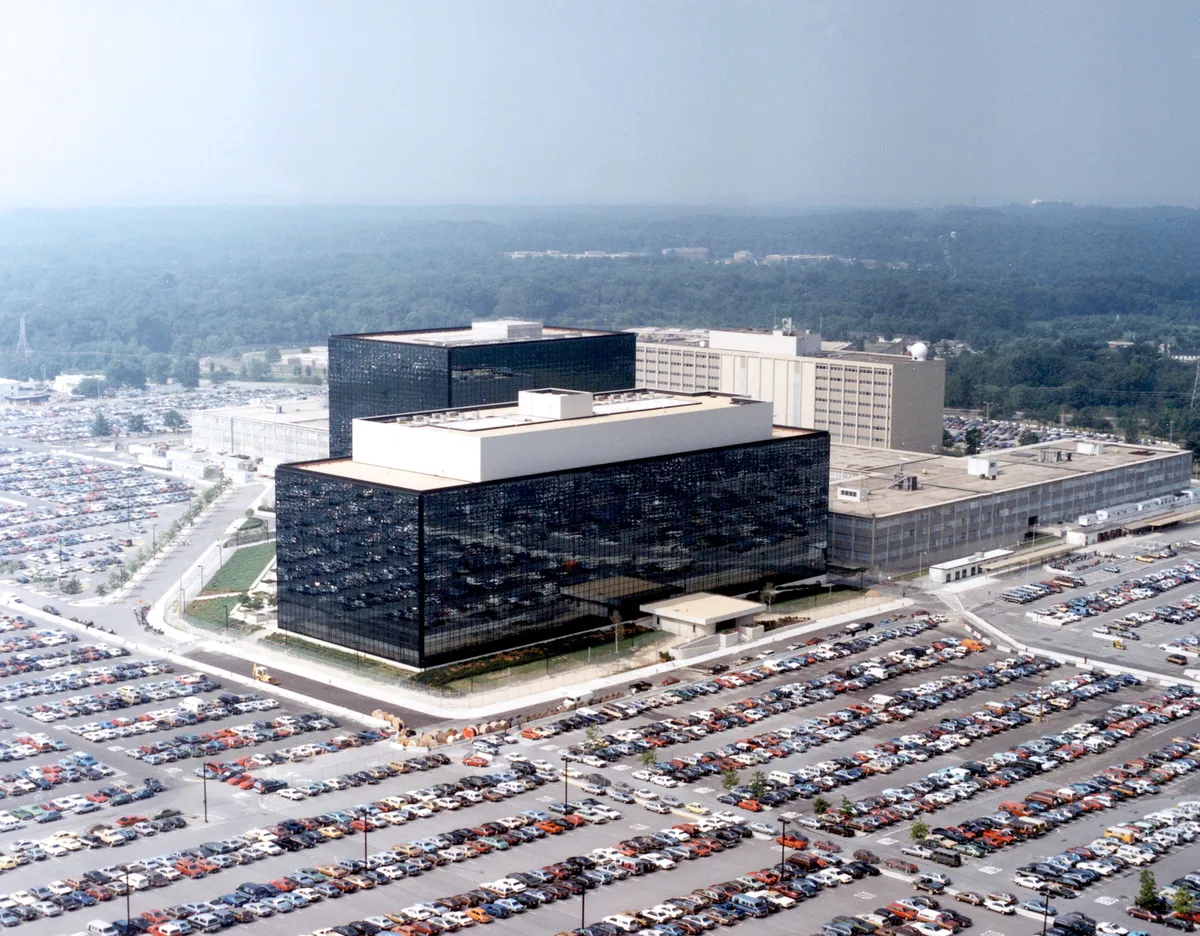
NSA network outage (November 17): A classified internal communications network at the National Security Agency, known as NSANet, went offline. The NSA staggered staff arrival times at its Fort Meade headquarters to ease the network load. Mission-critical capabilities remained operational.[4]
The timing of three major infrastructure failures in rapid succession drew significant congressional attention, though officials at the highest levels (including Director of National Intelligence Jay Clayton and Secretary of State Marco Rubio) stated publicly there was no evidence of a cyberattack or coordinated foreign interference.
What the Article Actually Says
Read closely, the Washington Sun article is more cautious than its headline. The sourcing is entirely anonymous: “three sources familiar with the private conversations” who “spoke on the condition of anonymity to describe private conversations.” No bank executive, NSA official, or congressional committee went on record. The article does not identify which congressional members received the alleged briefings, which committee (if any) convened, or when.
A search of congress.gov returns no scheduled or completed hearing on this topic as of the date of publication.[5] No committee video, official transcript, or press release from a committee chair corroborates a formal or informal briefing session matching the article’s description.
The article quotes one unnamed “congressional official” saying: “These models are identifying massive vulnerabilities, and that increases the urgency to patch right away. They’re trying to push through a lot of patches all at once — more than the system was designed for.” No other on-record participant confirms this characterization.
The article also quotes Nathan Calvin, identified as chief strategy officer at Encode, with a broadly applicable observation about legacy systems: “Updating those is going to be a rocky process, and as we get more advanced models this won’t be a one and done thing.” This is expert commentary, not confirmation of the specific AI-patching causal chain.
The article’s own subtitle undercuts its headline: “Artificial intelligence is not causing the disruptions but identifying gaps that are difficult to fix.” The article itself acknowledges AI is not the direct cause. It creates vulnerability intelligence that generates patching pressure. The headline attributes causation; the article body attributes indirect pressure.
The Official Record for Each Outage
Comparing the article’s anonymous-source account against the official explanations from each named organization:
| Organization | Official Explanation | AI patch theory supported? |
|---|---|---|
| FAA / Dept. of Transportation | Router failure caused by contractor L3Harris Technologies during copper-to-fiber upgrade at an Arkansas facility; network overwhelmed with connection attempts.[2] | Contradicted: Transport Sec. Duffy said AI tool SMART had “no possible way” of causing the outage.[6] |
| JPMorgan Chase | “A temporary issue related to a software bug in on-premise hardware systems.” Spokesperson: “There is no evidence it is cyber-related.”[3] | Not mentioned: no reference to AI-identified vulnerabilities or patch cycles. |
| NSA | “Temporary degradation during scheduled routine maintenance.”[4] No further technical detail released publicly. | Ambiguous: “routine maintenance” could include patching, but no AI linkage stated. |
The FAA case is the most direct contradiction. The FAA deployed an AI-assisted air traffic management platform called SMART to all air centers on November 10, three days before the ground stop. Investigators explicitly examined and ruled out SMART as a cause: Transportation Secretary Duffy stated it was “not connected to the agency’s core radar and flight-tracking systems” and there was “no possible way” it contributed.[6] The actual cause was a contractor’s router deployment at a remote telecommunications site in El Dorado, Arkansas.
JPMorgan Chase attributed its outage to an on-premise software bug, not a recently deployed security patch. The company’s spokesperson specifically described it as an on-premise hardware system issue with no cyber element. DNI Clayton said at a broader level that “many people are patching their systems,” framing the outage wave as a general modernization challenge, but did not connect patching specifically to the AI-identification mechanism the article describes.[7]
Verdict
The Better Question
The Strongest Case for the Article
The steelman for the Washington Sun’s account: (1) The outlet has high credibility (Media Bias/Fact Check rates it Left-Center with High Credibility), and Jeff Stein is an established reporter.[9] (2) Senator Warner publicly and voluntarily said AI is “indirectly” contributing to outage pressure (the kind of statement a senator makes after receiving briefings).[8] (3) Corporate and agency PR statements routinely minimize technical specifics; a “software bug” and “routine maintenance” are both descriptions that could co-exist with an AI-triggered patch deployment. (4) The specific mechanism Warner described, that AI tools find vulnerabilities faster than teams can patch them safely, is well-documented in cybersecurity literature as a real operational challenge.
This counter-argument scores 3 out of 5 on the adversarial rubric. It is plausible and grounded in real dynamics, but it does not overcome three specific problems: the FAA actively investigated and ruled out its AI system; JPMorgan’s statement (“software bug in on-premise hardware”) describes a failure mode inconsistent with a patch rollout; and Warner used “indirectly” and hedged;[10] he did not say AI-driven patches caused these specific outages. Plausibility does not substitute for evidence.
Precedent and Comparison
Compared against: prior large-scale U.S. aviation and financial-system disruptions attributed to software changes or system updates. Prior notable case: the January 2023 FAA NOTAM system outage, which grounded approximately 1,350 flights for about 90 minutes after a corrupt database file was introduced during maintenance.
The November 2026 outage wave, taken at face value as the article describes it, would represent a qualitatively different category of systemic disruption: multiple critical sectors (aviation, banking, intelligence) experiencing failures in the same week, all traceable to a single accelerating force. The 2023 FAA outage and the July 2024 CrowdStrike outage (a faulty software update that disrupted 8.5 million Windows systems globally) both affected single sectors from a single failure point. A multi-sector AI-patching cascade would be a novel pattern. The official record, as of publication, does not support it.
What the Post Implies
Implied: AI-driven vulnerability detection is now creating systemic risk to U.S. critical infrastructure. This broader policy claim is not ratable as True or False. It is a contested question of risk assessment and policy, with credible expert opinion on both sides. Senator Warner’s proposed Artificial Intelligence Risk Management and Security Act of 2026 reflects one view of that debate; whether that risk has already materialized in the November outage wave remains an open empirical question.
What This Finding Changes
The misleading verdict does not vindicate the official explanations, all of which carry their own credibility concerns. Official statements from large institutions minimize attribution when doing so avoids liability or public alarm. It is entirely possible that internal post-mortems at JPMorgan, the FAA, and the NSA will eventually identify AI-accelerated patch pressure as a contributing factor, even if the proximate cause was a software bug or router misconfiguration.
What the finding does change: the Washington Sun article should not be treated as a confirmed account of a congressional briefing in which institutions publicly acknowledged AI as the cause. It is a claim made by three anonymous sources about private conversations. That sourcing, from a credible outlet, warrants attention and further investigation. It does not warrant presentation as established fact.
The article’s own subtitle, which acknowledges AI is “not causing the disruptions,” is the more accurate framing. The misleading element is the gap between that nuanced description and the headline’s flat attribution.
A secondary factual issue: the article states “The FAA canceled over 20,000 flights during a nationwide ground stop.” Available reporting from the FAA and multiple outlets cites approximately 8,000 cancellations and over 10,000 delays in the initial period, with disruptions continuing through the weekend. The “over 20,000” figure likely combines multi-day cancellations and delays, but presenting it as cancellations is misleading.[2]
What to Watch
Signposts
- FAA and NTSB incident reports Formal reports on the November 13 ground stop are expected within weeks to months. If the AI-patching theory has any traction in the official record, those documents will be the first place it surfaces with attribution.
- Congressional hearings on critical infrastructure outages Senate Intelligence Committee Vice Chair Warner and other members have flagged the outage wave. If a formal hearing is scheduled, witness lists and opening statements will indicate whether the AI-patching narrative has moved from anonymous briefings to on-the-record testimony.
- AI Risk Management and Security Act of 2026 Warner introduced this bill, co-sponsored with Sens. Schatz and Kim, requiring safety testing of advanced AI systems and cybersecurity reporting standards. Committee markup is pending. The November outages are likely to be used as supporting evidence in floor debate; watch whether the bill language addresses AI-accelerated patching specifically.
- JPMorgan Chase post-incident disclosure Large U.S. banks are required under FFIEC guidelines to report significant operational events to their primary regulator. Any regulatory disclosure or earnings-call commentary about the November 16 outage will clarify whether a patch cycle was involved.
Parties Affected
| Actor | Effect | Why |
|---|---|---|
| The Washington Sun / Jeff Stein | Mixed | Story drew significant pickup (Techmeme, Memeorandum) but the anonymous-only sourcing and headline-body tension are legitimate credibility concerns for follow-up coverage. |
| JPMorgan Chase, major banks | Unclear | Official denial of AI-patch link is on the record. If post-incident disclosures contradict that denial, reputational and regulatory costs rise. |
| NSA | Unclear | Outage acknowledged; “routine maintenance” attribution is thin. Any official investigation that surfaces patching details will determine whether the anonymous account was accurate. |
| Sen. Warner / Congress | Gains | Warner’s public framing of AI as an indirect contributor to outage pressure provides political support for his AI Risk Management legislation. The article amplifies that legislative momentum. |
| AI industry / cybersecurity vendors | Costs | Narrative linking AI vulnerability-scanning tools to infrastructure failures adds regulatory pressure. Even if the specific causal claim is unproven, the debate has moved to Congress. |
| Bank customers and air travelers affected | Unclear | No causal clarity reduces accountability. Accurate attribution of causes is a prerequisite for remediation; a contested narrative delays that. |
The Claim
A Washington Sun article says bank leaders and the NSA told Congress that the recent tech outages were caused by AI. The story says these organizations found security holes using AI tools, then rushed to fix them all at once — and the fixes crashed the systems.
Our verdict: Misleading.
Who Is The Washington Sun?
The Washington Sun is a real news outlet with a good reputation. It was founded by Robert Allbritton, who also started Politico. Media watchdogs rate it as a credible source. This is not a fake-news site.
But being a credible outlet does not make every story accurate.
The Big Problem: Anonymous Sources
The story says “three sources familiar with the private conversations” told the reporter what happened. These sources did not give their names. No bank CEO, no NSA official, and no member of Congress went on the record. There was no public hearing. There is no official transcript. We searched Congress.gov and found no committee hearing on this topic.
The headline says bank CEOs and the NSA “told Congress” — which sounds like formal testimony. The article describes unnamed sources talking privately to a reporter about private conversations. That is a much weaker foundation.
What Each Organization Said Publicly
The FAA ground stop (November 13): All U.S. flights were halted for over four hours. About 8,000 flights were canceled. The government said the cause was a router failure at a small FAA facility in Arkansas. A contractor was upgrading telephone cables when things went wrong. Officials investigated whether the FAA’s new AI tool (called SMART) played a role. They ruled it out completely. Transportation Secretary Sean Duffy said the AI tool had “no possible way” of causing the outage.
The Chase Bank outage (November 16): JPMorgan Chase went down for most of a day. The bank said the cause was “a software bug in on-premise hardware systems.” The bank’s spokesperson said there was no evidence of a cyberattack. The bank did not mention AI or patches.
The NSA network outage (November 17): The NSA’s internal classified network went offline. The NSA called it “scheduled routine maintenance.” They said nothing publicly about AI-driven patches.
What Senator Warner Actually Said
Senator Mark Warner went on CNN and said AI is “indirectly” related to the recent outages. He said AI tools now find security holes faster than ever, which puts pressure on companies to push out fixes quickly. Too many fixes at once can crash older systems. This is a real concern.
But Warner used the word “indirectly” carefully. He did not say AI caused these specific outages. He described a background pressure, not a direct cause.
The Headline vs. the Article’s Own Subtitle
The article’s subtitle says: “Artificial intelligence is not causing the disruptions but identifying gaps that are difficult to fix.” The headline says the opposite — that AI-driven patches are behind the outages. The article contradicts its own headline.
Why It Rates as Misleading
Three things make this misleading:
- The headline implies a formal congressional briefing. The story describes private conversations reported by unnamed sources.
- Every named organization gave a different official explanation. None mentioned AI-driven patches.
- The only public official who made a similar argument (Sen. Warner) used the word “indirectly” — a much weaker claim than the headline makes.
Could the anonymous sources be right? It’s possible. Official statements from banks and agencies often leave out technical details. But possible is not proven.
What to Watch
The FAA and other agencies will release formal reports on these outages. Congressional hearings may follow. If officials go on the record and confirm the AI-patch theory, this finding could change. The AI Risk Management and Security Act of 2026, introduced by Senator Warner, is also moving through Congress. How lawmakers describe the outages during that debate will be a key signal.
Sources
- Bank CEOs, NSA Tell Congress That AI-Driven Patches Are Behind Outages
- 2026 FAA Nationwide Ground Stop
- JPMorgan Chase Says Temporary Software Bug Is Affecting Consumer Banking
- Classified Communications Network at the National Security Agency Goes Down
- Congress.gov
- FAA Rules Out SMART AI System as Cause of Nationwide Ground Stop
- Classified Communications Network at the National Security Agency Goes Down, Defense Official Says
- US Senator Says Recent Outages Show No Sign Of Cyberattack So Far
- The Washington Sun
- Warner: Outages “Indirectly Related to” AI, “No Evidence” of Coordinated Attack