Context
A post on the r/Conservative subreddit (shared in mid-November 2026, titled “Ukraine faces another systematic Starshield speed restriction”) catalogued a series of claims about the Trump administration’s recent Russia-related actions.[1] The post linked a flurry of contemporaneous stories: a deal to import Russian diesel, a sanctions waiver, Starshield access restrictions for Ukrainian forces, a reported intelligence gap before a deadly missile strike, a proposed three-way summit excluding Ukraine’s president, and Trump sharing fabricated crowd content.
Some claims in the post involve real events, some are misattributed, one is contested, and one cannot be verified against available reporting. We examine each in turn, beginning with the headlining claim about Russian diesel.
Claim 1 — The Russian Diesel Deal
“Trump bought hundreds of thousands of tons of Russian diesel”
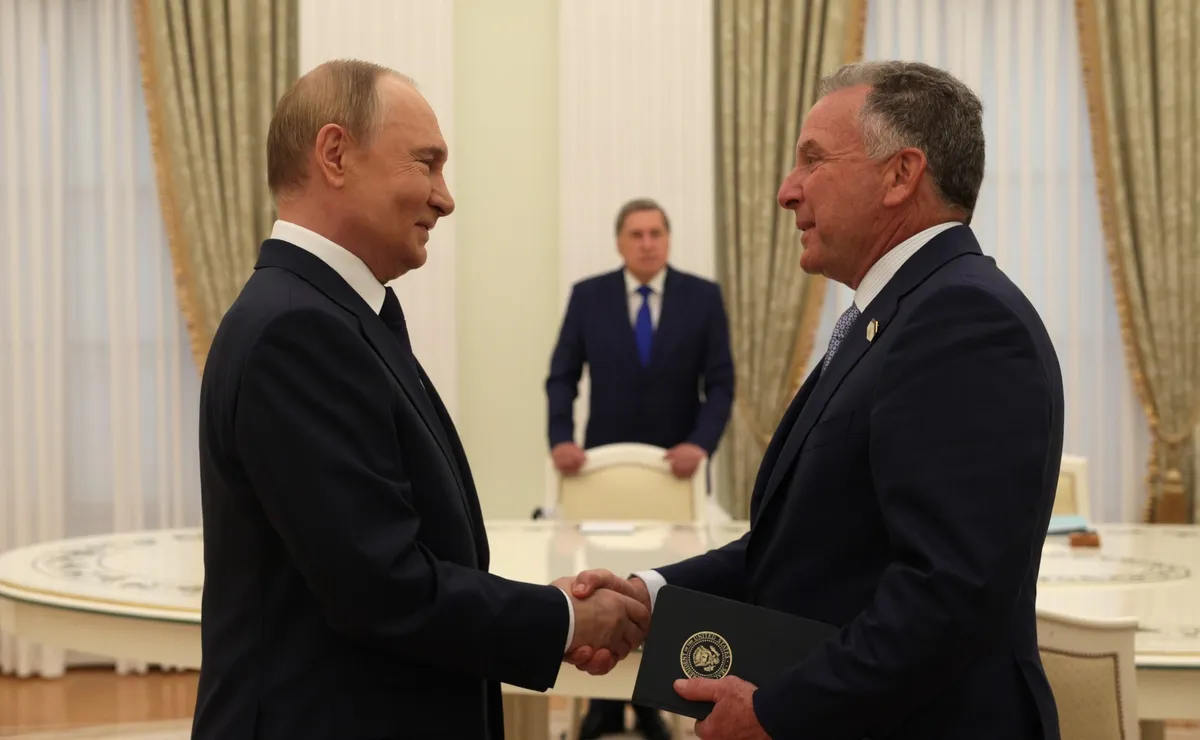
On October 9, 2026 (37 days ago), Trump announced he had struck a deal with Vladimir Putin for Russia to supply “more than 300,000 tonnes of diesel fuel” to the United States and global markets.[2] The same day, the Treasury Department’s Office of Foreign Assets Control issued a temporary general license suspending the Biden-era ban on Russian petroleum imports, originally imposed by Executive Order 14066 in March 2022, for a period running through April 2027.[3]
Trump subsequently pushed for more: 500,000 tonnes in November, then one million tonnes, with ongoing supply thereafter.[2] At 7.5 barrels per tonne, the initial 300,000-tonne tranche equals roughly 2.25 million barrels. The total announced pipeline across all phases amounts to tens of millions of barrels. Trump said the goal was lower prices for “our Great Farmers, Ranchers, and Truckers.”[6]
The word “bought” is where the claim breaks down. No commercial purchase materialized. Phillips 66, one of the United States’ largest refiners, stated publicly that it has “no intent to acquire Russian diesel.”[4] No other major US refiner stepped forward. One tanker that signaled a US-bound destination was later found zigzagging 400 nautical miles off the Eastern Seaboard before being redirected; Brazilian fuel distributors were subsequently offered the cargo instead.[4]
Legal uncertainty compounded the market reluctance. Even with the OFAC license, commodity trading firms questioned whether it superseded the underlying 2022 import ban.[4] Analysts also noted that 300,000 tonnes would cover only about three-quarters of one day of US diesel consumption and would have minimal effect on prices.[2]
What the evidence supports: Trump negotiated a framework deal with Putin, issued a sanctions license enabling US companies to buy Russian diesel, and subsequently waived additional Graham Act tariffs (see Claim 2). It does not support that the United States, as a government or through US companies, bought the diesel. It did not.
Claim 2 — The Graham Act Waiver
“Trump waived the bipartisan Graham Russia sanctions act”
The Lindsey O. Graham Sanctioning Russia and Iran Act of 2026 passed the Senate 86–11 on August 7 (88.7% in favor) and the House 262–159 on September 16. Trump signed it into law on September 18.[7] The legislation was introduced by Senator Lindsey Graham (R-SC) and Senator Richard Blumenthal (D-CT) with a “bipartisan supermajority of 84 senators” as co-sponsors.[7] “Bipartisan” is accurate.
Twenty-eight days after signing it, on October 16, 2026, Trump signed Executive Order 14436 invoking the act’s own national-interest waiver authority. The order suspended “nearly all” of the law’s operative provisions, primarily the 500% tariff on US imports from Russia and tariffs of up to 100% on the five largest importers of Russian crude oil and natural gas.[8]
Ukrainian President Volodymyr Zelenskyy condemned the waiver: “The decision to undo all of this...seems wrong to me.”[5] Russian envoy Kirill Dmitriev called it “a truly historic moment.”[5]
The qualification on “mostly”: Trump did not repeal the act, nor did he waive everything in it. Executive Order 14436 preserved pre-existing Russian Harmful Foreign Activities Sanctions (31 C.F.R. Part 587) in full, along with OFAC’s authority to designate and license entities under Executive Order 14024.[8] The act’s institutional sanctions and Iran provisions also remain operative. What Trump waived was the act’s new tariff architecture, the main economic pressure mechanism targeting Russia and third-country buyers of Russian energy.
Claim 3 — Starshield Speed Restrictions
“Trump throttled Starlink/Starshield access for Ukrainian forces”
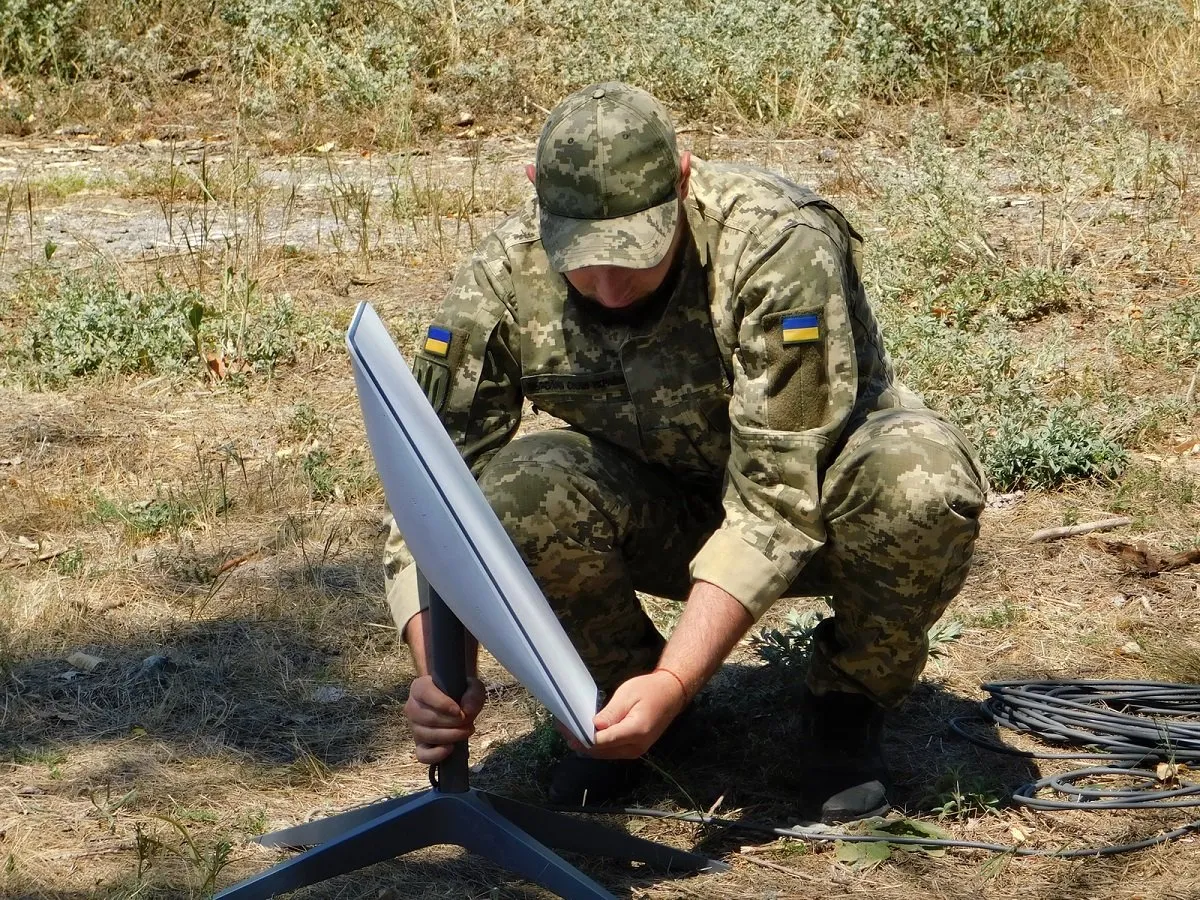
Starshield is the military-grade version of SpaceX’s Starlink satellite internet service, operated under US government contracts. In mid-October 2026, SpaceX imposed speed limits on Starshield terminals moving faster than roughly 100 miles per hour (160–161 km/h), disconnecting faster-moving devices and effectively grounding strike and interceptor drones that rely on the service.[10] The degradation cost Ukraine an estimated tens of millions of dollars in lost operational capability.
The Wall Street Journal reported that CEO Elon Musk ordered the restrictions — though Musk himself then complicated the picture, claiming that Starshield systems are “owned and controlled by the US government,” implying government direction rather than independent SpaceX action.[11] Trump denied that the White House ordered the restrictions.[12] The Journal separately reported that Trump subsequently asked Musk to lift the initial restrictions.[13] Musk lifted them around October 24.
Fresh restrictions were reported again on November 12, three days ago, with Zelenskyy confirming new speed limits had been imposed after the first set was temporarily removed.[10]
What is not in dispute: Ukrainian forces lost significant Starshield capability on two occasions. What remains disputed: whether the decision came from Musk acting unilaterally, from the US government directing SpaceX under its contract, or from some combination of both. The claim says “Trump throttled” the access; the reporting attributes the operational decision to Musk, with Trump subsequently asking for a reversal. That does not match a scenario where Trump directly ordered the throttling.
Claim 4 — Missile-Warning Intelligence
“Trump withheld missile-warning intelligence from Ukraine”
On October 14, 2026, Russia launched over 39 ballistic missiles and more than 120 attack drones at Kyiv and other Ukrainian cities. Six people were killed and approximately 600,000 people lost power across Kyiv and Kharkiv. Ukraine received no advance warning from the United States for the initial wave of ballistic missiles.[14]
CBS News reported that “multiple sources familiar with the matter” said the US “may have intentionally withheld” the early warnings. Ukrainian officials said they had received “no advance warning from our partners.” Ukrainian sources told CBS they believed the Trump administration deliberately throttled the information-sharing for the first wave of attacks, then restored it for a second wave later that night — suggesting a deliberate decision rather than a system failure.[14]
Yahoo News reported that Ukraine “blames the Trump administration for the Russian missile intel blunder,” citing similar multiple-source reporting.[15]
Trump denied it. Asked directly whether the US had stopped sharing intelligence with Ukraine, he said: “No, we haven’t. We help them, but we’re really helping them get to a final answer. We want the war ended.”[14] The administration attributed the gap to “bad weather” interfering with detection systems.
Additional context matters. The administration had separately threatened to halt intelligence sharing if Ukraine did not stop deep strikes against Russian energy infrastructure — a threat documented in contemporaneous reporting. That does not prove intent; it establishes motive that fits both interpretations.[14]
The claim states Trump “withheld” the intelligence as a fact. What the evidence establishes is that the warnings were absent and that credible multiple-source reporting raises intentionality as a live possibility. What the evidence does not establish is that an intentional decision was made — the administration’s denial has not been directly contradicted by a named source or document. Contested is the accurate rating.
Claim 5 — The Putin-Xi Summit and Deals
“Trump is courting a Putin/Xi summit to pressure Ukraine into surrender and striking energy/mineral deals with Russia”
During the October 9 phone call that also produced the diesel deal, Vladimir Putin proposed a three-way summit with Trump and Chinese President Xi Jinping.[16] The meeting is set for November 18–19 at the Asia-Pacific Economic Cooperation summit in Shenzhen, China, three days from now. Ukrainian President Zelenskyy would not attend and was not consulted in the planning.[16] The summit was Putin’s proposal, not Trump’s initiative, though Trump is participating.
Energy deals with Russia: real. The diesel import agreement and the Graham Act tariff waiver constitute substantive economic cooperation between Washington and Moscow on energy, as covered above in Claims 1 and 2.
“Mineral deals with Russia” is incorrect. The Trump administration’s negotiations over mineral access are with Ukraine, not Russia — a framework under which the US would gain rights to access Ukrainian natural resources in exchange for continued support. Trump described the US-Ukraine arrangement as “pretty close” to completion.[16] No reported mineral deal involves Russia.
On whether the summit is designed to “pressure Ukraine into surrender”: Zelenskyy told Bloomberg that “steps have been taken to convince Ukraine to capitulate” — but then clarified he did not believe capitulation was Washington’s explicit goal.[16] Secretary of State Rubio said Trump was “open to anything that he can do to help bring a war to an end, if it’s possible.” The characterization depends on how one interprets a peace framework that excludes one of the parties to the conflict.
Claim 6 — Fabricated Crowd Chants
“Trump reposted fabricated crowd chants”
On June 6, 2026, Trump posted an AI-generated video on Truth Social (his own post, not a repost from another account) depicting digitally fabricated characters from around the world chanting “They love Donald, Donald Trump” and “Everywhere I go, they love Donald Donald Trump.”[17] The one-minute clip cycled through AI-generated figures from Mexico, Italy, the Middle East, Africa, China, and India. The video was widely identified as AI-generated imagery.
On October 12, 2026, Trump posted at least seven items on Truth Social in response to reports of declining rally attendance, including reposts of content from supporters showing crowds chanting “USA, USA!” at a Texas event.[18] Those videos appeared to show real supporters at an actual rally; available fact-checking identified no fabrication in the crowd footage specifically.
The claim says Trump “reposted” (not posted) content that was “fabricated.” The June 2026 AI video was Trump’s own post, clearly labeled as AI-generated imagery, presenting stylized AI characters rather than a fake documentary of a real crowd. The October reposts documented in available reporting were of real crowd footage.
The claim cannot be verified as stated from available sources. The pattern of Trump sharing AI-generated crowd content is real, but no specific “reposted fabricated crowd chants” incident from October–November 2026 has been confirmed. Unproven.
The Administration’s Case
The strongest version of the administration’s argument deserves a fair statement.
On diesel: US diesel prices spiked in 2026 after the Iran war and Ukrainian strikes on Russian refineries. The administration argues that purchasing Russian diesel directly benefits American farmers, truckers, and consumers facing those price increases, a domestic economic interest it weighs above the geopolitical cost of sanctions relief. Trump repeatedly cited this rationale and stood by it even as commercial buyers declined.[6]
On the Graham Act waiver: The act itself built in presidential waiver authority, anticipating that the executive might need flexibility. Trump’s use of that authority was legally authorized and accompanied by a certification to Congress. The preserved RHFA sanctions framework means Russia still faces economic restrictions — the waiver removed the new tariff layer, not the entire sanctions regime.
On Starshield: The Trump administration denied ordering the restrictions, and the reporting attributes the operational decision to Musk, a private actor operating a government-contracted service. The White House position is that it asked for the restrictions to be lifted, which supports rather than contradicts the denial of direct White House involvement.
On the summit: Ending a costly war in Ukraine through great-power diplomacy, even if that requires difficult tradeoffs, can be framed as a foreign policy achievement rather than abandonment. The administration has not publicly endorsed Ukrainian territorial concessions.
These arguments do not resolve the contested missile-intelligence claim, do not change the misleading framing of the diesel purchase, and do not explain why no US buyer materialized for the diesel despite the administration’s promotion of the deal. But they represent the administration’s coherent policy position, not mere spin.
What the Post Implies
Implied: The diesel deal and Graham Act waiver mark the first formal US facilitation of Russian petroleum imports since Biden’s March 2022 executive order banning such imports.
Biden’s Executive Order 14066 (signed March 8, 2022, 1,713 days before this writing) banned the import of Russian crude oil, petroleum products, liquefied natural gas, and coal. No US administration had formally suspended that ban for any category of Russian petroleum until October 9, 2026, when Treasury’s OFAC issued the diesel license.[3] This implied claim is true.
Implied: Trump’s actions in aggregate represent a pro-Russia, anti-Ukraine shift in US foreign policy amounting to a betrayal of Ukraine. This is a political and moral conclusion, not a checkable factual claim. Whether the policies described above constitute a “betrayal” depends on contested value judgments about alliance obligations, great-power realism, and the weight of economic interests. No source can settle it, and rating it would require this publication to take a foreign policy position rather than assess evidence. No rating.
Implied: Ukraine will be forced to accept unfavorable terms at the Shenzhen summit. This is a forward-looking prediction about an event that has not yet occurred. No rating.
Precedent
Compared against: US imports of Russian petroleum products from February 24, 2022 (invasion date) through November 15, 2026. Prior case: The last confirmed US receipt of Russian petroleum products was before the Biden ban took effect in April 2022, at which point the US had been importing approximately 672,000 barrels per day of Russian petroleum, about 8% of US petroleum imports.
The implied claim above that the October 9 OFAC license is a first since the 2022 ban triggered this section. For 1,713 days following Biden’s March 2022 executive order, no US administration formally permitted Russian petroleum imports. The Trump administration’s October 9 license reversed that policy for diesel specifically, through April 2027. The commercial outcome (no US buyer; cargo to Brazil) means no actual US import of Russian petroleum has yet occurred. But the formal US government permission for such imports, absent since 2022, was restored.
Implications
Three things changed with these six developments taken together, regardless of how each individual claim is rated.
First, the US sanctions architecture on Russia has fractured. The Graham Act was designed by Congress to impose costs on Moscow regardless of executive branch relations with the Kremlin. Its waiver by the same president who signed it, 28 days later, signals to Congress, to allies, and to Moscow that statutory sanctions can be turned off quickly when they conflict with executive policy goals. The Cleary Gottlieb legal analysis notes the preserved RHFA sanctions “could be lifted at any time by presidential or State Department determination,”[8] meaning the residual constraints are themselves subject to the same waiver logic.
Second, Ukraine’s military position is under compounding pressure from multiple US-linked sources simultaneously: Starshield restrictions (regardless of who ordered them), a reported intelligence gap, and the prospect of a peace framework negotiated without Ukraine’s participation. Whether any of these is intentional, inadvertent, or the product of private actors operating in a changed policy environment, the operational effect on Ukraine is the same.
Third, the diesel deal’s commercial failure matters as much as the deal itself. The gap between Trump’s announcement and market reality — no US buyer, cargo to Brazil — illustrates a structural problem: even when the US government licenses Russian energy imports, US companies face enough legal, reputational, and competitive risk to decline. The deal became a foreign policy signal without becoming an economic fact.
What to Watch
The Trump-Putin-Xi meeting is three days away. Watch for: whether a formal Ukraine framework emerges, whether Zelenskyy is offered any subsequent consultation, and whether Trump cites the summit as evidence the diesel deal “worked” as leverage to bring Russia to the table.
New restrictions were reported as of November 12. Watch for: whether the restrictions are lifted again, whether SpaceX or the US government provides a formal explanation of the authority structure, and whether Ukraine files a contract dispute.
The temporary Treasury license enabling Russian diesel imports expires April 2027. If no US commercial buyer has emerged by then, Trump will face a choice: extend the license (deepening the policy commitment) or let it lapse (effectively acknowledging the deal failed). Watch for any extension announcement and whether one is paired with an actual commercial contract.
Senator Richard Blumenthal and other co-sponsors publicly criticized the waiver. Watch for legislative attempts to remove or restrict the presidential waiver authority, and whether the 86–11 Senate majority that passed the act can sustain opposition to the waiver.
Parties Affected
| Party | Effect | Why |
|---|---|---|
| Ukraine | Costs | Starshield degraded on two occasions; potential intelligence gap before October 14 attack; excluded from Shenzhen summit; Graham Act sanctions relief reduces economic pressure on Russia. |
| Russia | Gains | Graham Act tariff provisions waived; OFAC diesel license opens US market in principle; diplomatic summit provides legitimacy; pattern of US sanctions relief without commensurate concessions. |
| United States | Mixed | Short-term diesel supply framework (though no actual purchase occurred); long-term: credibility of US sanctions regime with allies weakened; alliance trust with Ukraine and NATO strained.† |
| NATO / EU allies | Costs | US-Russia diesel deal and sanctions waiver proceeded without coordination; undermines the unified sanctions framework Europe and the US constructed since 2022; “the U.S. lectured Europe for years about Russian energy dangers,” per CFR.† |
| China | Mixed | Included as a co-equal summit participant (diplomatic gain); Graham Act tariff reprieve for Chinese buyers of Russian oil removed (economic gain); but US engagement with Russia may reduce Beijing’s leverage as Moscow’s primary financial lifeline.† |
| SpaceX / Musk | Mixed | Starshield government contract relationship maintained; Musk retains operational discretion over military-grade service; reputational cost from Ukraine restrictions partially offset by Trump’s public ask to restore service.† |
| US energy sector | Mixed | Short-term supply relief framework; in practice, no refiner stepped up; legal and reputational risk from Russian diesel transactions persists even under OFAC license.† |
† These rows reflect analytical inference about likely outcomes, not documented statements of position from these actors.
What this is about
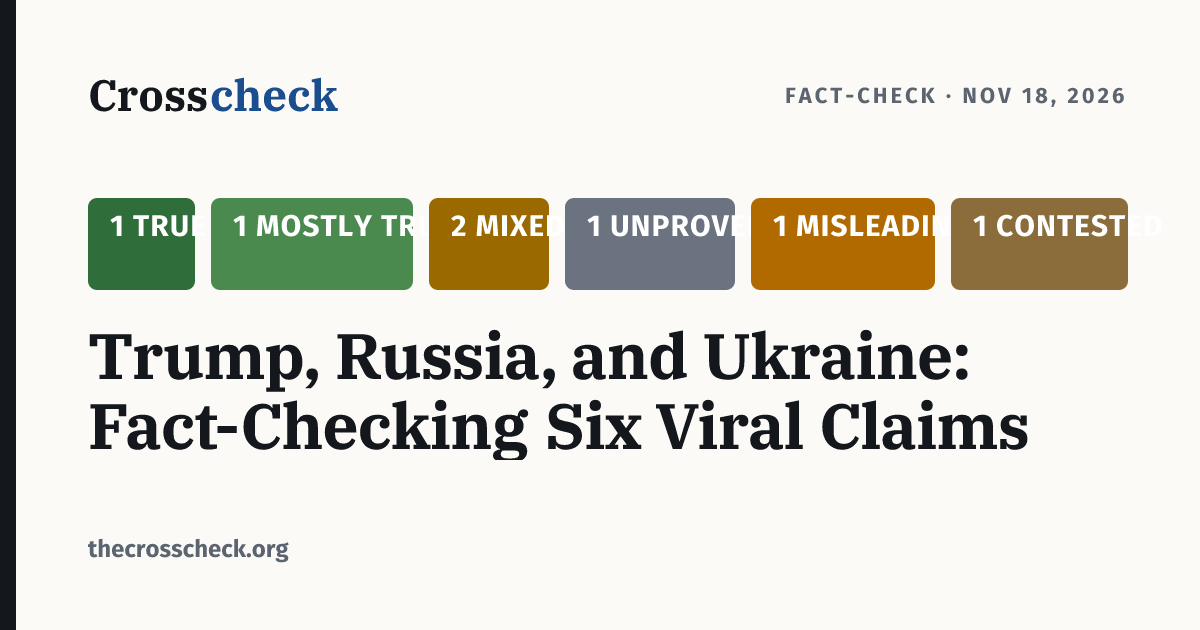
A post on social media made several claims about President Trump and Russia. It said Trump bought Russian diesel fuel, dropped Russia sanctions, cut off a military satellite service for Ukraine, withheld missile warnings from Ukraine, is setting up a peace summit without Ukraine, and reposted fake crowd chants. We checked each claim.
Claim 1: Trump bought hundreds of thousands of tons of Russian diesel — Verdict: Misleading
Trump announced a deal with Russian President Vladimir Putin on October 9, 2026 to buy 300,000 tons of Russian diesel fuel. That is hundreds of thousands of tons, so the number is accurate. But the word “bought” is wrong. No American company agreed to actually purchase the diesel. The largest US refiner, Phillips 66, said it had “no intent to acquire Russian diesel.” A tanker that appeared headed to the US ended up in Brazil instead. Trump negotiated the deal and changed the rules to make it legal. But the United States did not buy the diesel.
Claim 2: Trump waived the bipartisan Graham Russia sanctions act — Verdict: Mostly True
The Graham Act was a law passed to punish Russia economically for invading Ukraine. It passed the Senate 86 to 11. Republican Senator Lindsey Graham and Democratic Senator Richard Blumenthal wrote it together, so it was bipartisan. Trump signed it on September 18, 2026. Twenty-eight days later, he signed an executive order removing most of the law’s economic penalties. Ukrainian President Zelenskyy called this “wrong.” Russia’s representative called it “a truly historic moment.” The claim is mostly true: Trump did not remove the entire law, and some earlier sanctions on Russia still apply. But the main part of the law — the tariffs meant to pressure Russia — was suspended.
Claim 3: Trump throttled Starlink/Starshield access for Ukrainian forces — Verdict: Mixed
Starshield is a military version of SpaceX’s Starlink satellite internet, used by Ukraine’s military. In mid-October 2026, SpaceX cut the connection speed for terminals moving faster than about 100 miles per hour. This stopped drones from using the service and cost Ukraine tens of millions of dollars. Restrictions came back again on November 12. The throttling is real. But the claim says “Trump throttled” the access, suggesting he ordered it. The evidence says Elon Musk, CEO of SpaceX, made the decision. Trump said the White House did not order the restrictions and reportedly asked Musk to lift them. The throttling is confirmed; the blame on Trump specifically is not.
Claim 4: Trump withheld missile-warning intelligence from Ukraine — Verdict: Contested
On October 14, 2026, Russia attacked Ukrainian cities with over 39 ballistic missiles and more than 120 drones. Six people were killed. About 600,000 homes lost power. Ukraine said it received no early warning from the United States. CBS News reported that multiple unnamed sources said the US may have deliberately withheld the warning. Trump said this was not true, calling it a weather problem with the detection system. This claim is contested: there is credible reporting that the warnings were withheld on purpose, but Trump denied it. No document or named official has confirmed it. No verdict can be rendered at this time.
Claim 5: Trump is courting a Putin/Xi summit to pressure Ukraine into surrender and striking energy/mineral deals with Russia — Verdict: Mixed
Most of this claim is accurate but one part is wrong. Putin proposed a meeting with Trump and China’s President Xi Jinping. The meeting is set for November 18 and 19 in Shenzhen, China. Ukraine’s President Zelenskyy was not invited. Trump accepted. The energy deals with Russia are real: the diesel deal and the removal of Graham Act sanctions. But “mineral deals with Russia” is incorrect. Trump’s mineral deal talks are with Ukraine, not Russia — the US is negotiating with Ukraine for access to its natural resources in exchange for continued support. The claim about “pressure to surrender” is disputed: Zelenskyy said he felt pressure to capitulate but did not believe that was Washington’s stated goal. The Trump administration denied it.
Claim 6: Trump reposted fabricated crowd chants — Verdict: Unproven
On June 6, 2026, Trump posted an AI-generated video on Truth Social showing cartoon-like characters from around the world chanting “They love Donald Trump.” He posted this himself; he did not repost it from someone else. On October 12, he shared real videos from his rallies showing supporters chanting “USA.” Those were not fabricated. The claim says Trump “reposted” fabricated chants, meaning he shared someone else’s fake content. The only documented crowd-chanting video was his own AI creation, not a repost from another account. No specific example of Trump reposting fabricated crowd chants from this period has been confirmed. This claim is unproven.
What the post implies
The post implies that Trump is acting in Russia’s interests against Ukraine. This is a political conclusion that depends on how you view US obligations to Ukraine and whether the policies described count as a reasonable foreign policy. No rating.
The post implies Ukraine will be forced into a bad deal at the Shenzhen summit. This has not happened yet. No rating.
The post implies the diesel deal and sanctions waiver are the first time the US has helped Russia get around energy import restrictions since the 2022 invasion. This is true. The United States banned Russian energy imports in March 2022. Trump’s October 9 license was the first formal suspension of that ban.
What to watch
The Trump-Putin-Xi summit opens November 18. Watch for any framework that shapes Ukraine’s future without Ukraine’s input. The Treasury Department license allowing Russian diesel purchases expires in April 2027. Starshield restrictions are active again as of November 12.
Sources
- Ukraine faces another systematic Starshield speed restriction
- Trump’s Russian Diesel Deal, Explained
- Why is US turning to Russia for diesel despite sanctions?
- No U.S. buyer emerges after Trump’s deal on Russian diesel
- Trump waives broad new Russia sanctions, Zelenskyy condemns it as ‘wrong’
- Trump stands by Russia diesel plan despite backlash: ‘I made the right choice’
- Sanctioning Russia Act
- President Trump Waives Lindsey Graham Act Sanctions, Licenses Russian Diesel Transactions
- Trump signs order waiving Graham Act sanctions on Russia, drawing backlash
- Ukraine says SpaceX’s Starshield faces speed restrictions
- Musk chose to restrict Ukraine’s access to SpaceX satellite network, sources say
- Trump says White House didn’t order Starlink restrictions in Ukraine
- Trump asked Musk to lift Starlink slowdown, WSJ reports
- U.S. may have withheld warnings to Ukraine on deadly Kyiv strikes
- Ukraine Blames Trump Administration for Russian Missile Intel Blunder
- Putin reportedly proposes three-way summit with Trump and Xi on Ukraine war — without Zelenskyy
- Trump posts video of AI-generated characters from around the world chanting, ‘They love Donald Trump’
- Trump, 80, Hits Back Over His Dwindling Crowd Sizes in Frantic Posting Frenzy