The Claims at a Glance
The Trump Post: What’s Accurate, What Isn’t
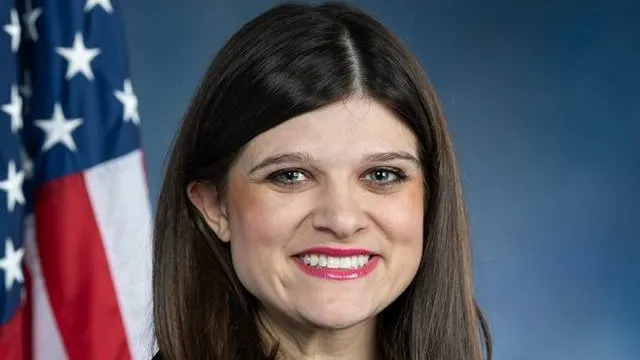
The factual core of Trump’s post is solid. Stevens is a sitting Democrat in the House (her term runs through January 2027). She did lose the Michigan Senate primary to Abdul El-Sayed by 1.5 percentage points (48.5% to 47.0% on August 4, 2026).[2] She did endorse Republican Mike Rogers on November 1, 2026, two days before the election.
Three elements of the post, however, misrepresent the context in ways that change the meaning of her endorsement.
“Breathlessly wined and dined by the Dumocrats.” Trump’s post implies Democrats spent weeks courting Stevens to serve as a campaign surrogate for El-Sayed, and that she bravely refused. What actually happened: El-Sayed’s campaign cut her. On the morning of November 1, Rep. Debbie Dingell, a senior Michigan Democrat, asked Stevens not to attend a planned church event with El-Sayed because the ongoing dispute between the two was “way too distracting.”[5] Stevens then called Mike Rogers and endorsed him. The endorsement was a reaction to being removed, not a defection from something she was being pursued for.
“The level of respect from the People of Michigan, especially our African American and Jewish populations, is virtually unparalleled.” Stevens represents Michigan’s 11th Congressional District, centered on Oakland County, a heavily Jewish suburb of Detroit. Her close ties to the Jewish community are well-documented: her fiancé is Democratic megadonor Jason Turkish, and she told the New York Times she was considering converting to Judaism for their wedding.[8] Trump’s claim about her Jewish-community connection has real grounding. The parallel claim about “African American populations” does not. Her district is predominantly white suburban; no polling or reporting establishes outsized African American support for her specifically.
Name rendering: “Abdul Mohamed El-Sayed.” The candidate’s full legal name is Abdulrahman Mohamed El-Sayed. He goes by Abdul El-Sayed. Trump’s post inserts his middle name, “Mohamed,” between his nickname and surname, which is not a standard rendering of his name in any official or press usage.[3] This follows a recognizable pattern of using Islamic names to signal a candidate’s religious background rather than to identify the person accurately.
The Endorsement Itself
Stevens appeared with Rogers at a Detroit church on November 1, 2026, and announced her endorsement on video. She said she could not support a campaign she associated with hate speech and cited El-Sayed’s association with political streamer Hasan Piker, who had made remarks comparing a heavily Jewish Michigan suburb to “a KKK neighborhood.” Stevens called the ads tied to El-Sayed’s campaign antisemitic; El-Sayed replied that he did not produce them.[5] Multiple major news outlets confirmed the endorsement on the day it occurred.[4][6]
Staff Resignations
Stevens’ chief of staff, Justin German, and communications director, Logan Basch, resigned immediately after the endorsement announcement on November 1. German confirmed that multiple members of the team had resigned, writing: “We are shocked and heartbroken by Congresswoman Stevens’s decision to support Mike Rogers.”[7] German’s statement also urged voters to support El-Sayed and Democrats on the ballot. The resignations were confirmed by multiple outlets on the same day.
Schumer’s Statement
Senate Democratic Leader Chuck Schumer posted on X on November 1, 2026: “This is a despicable betrayal from Rep. Stevens. Senate Democrats are united in our support for Abdul El-Sayed, because we know he will fight for the economic interests of working families in Michigan, unlike Mike Rogers, who is a tool of Donald Trump and billionaire donors.”[9] The claim that he called it “a despicable betrayal” is accurate. Notably, Schumer had recruited Stevens to run for the seat in the first place, and had backed her in the primary before switching support to El-Sayed after the August vote.
What Drove the Decision
The dispute between Stevens and El-Sayed stretched back several weeks and centered on AIPAC spending, Israel policy, and antisemitism allegations. An outside PAC supporting El-Sayed ran an advertisement linking U.S. military aid to Israel with American economic pain. Stevens demanded El-Sayed repudiate it. He declined and instead criticized AIPAC’s $54 million in independent expenditure spending for Stevens during the primary. The dispute went public the week before the election, and El-Sayed’s campaign concluded Stevens’ involvement was a liability.
Stevens’ fiancé, Jason Turkish, had also independently signaled he would vote for Rogers, an unusual move for a Democratic megadonor and party figure.
The Case for Stevens’ Decision
Stevens’ strongest argument is consistent: she was asked to leave El-Sayed’s campaign, not the other way around. If the Democratic nominee’s campaign removes the previous primary runner-up from campaign events over a disagreement about antisemitism, the runner-up has no particular obligation to campaign for him. Stevens also represents a heavily Jewish district where her credibility on antisemitism is a core element of her political identity. Endorsing a candidate whose outside allies ran ads she considered antisemitic would, in her framing, betray her constituents’ interests. Whether that reasoning justifies a cross-party endorsement two days before the election is a political judgment; the underlying facts she cited are, at a minimum, verifiable.
Precedent: “Almost Unprecedented Loyalty”
Compared against: Sitting House members who crossed party lines to endorse the opposing party’s Senate nominee in the same state. Prior notable case: Sen. Zell Miller (D-GA) delivered the keynote address at the 2004 Republican National Convention endorsing George W. Bush, the most prominent same-party-defection endorsement in modern U.S. Senate politics (though Miller was a Senator, not a House member).
Trump describes Stevens’ act as showing “great and almost unprecedented loyalty to the Great People of Michigan.” Endorsing the opposition party’s Senate nominee is unusual but has historical precedent, as Democratic elected officials have crossed party lines before for presidential and Senate contests. “Unprecedented” is not accurate; “uncommon” would be. The act is striking primarily because it occurred at the last moment in a contested swing-state race, not because nothing like it has ever happened.
Aftermath: The Election Outcome
El-Sayed won the November 3 general election 52.5% to 45.5%, a 7.0-point margin.[2] He became the first Muslim elected to the United States Senate, succeeding retiring Democratic Sen. Gary Peters. The endorsement did not change the outcome.
House Democratic Leader Hakeem Jeffries said Democrats would discuss “appropriate next steps” on Stevens when Congress returns to session on November 9. Michigan Democratic Party Chair Curtis Hertel declared Stevens no longer a member of the state party.
What happened
On November 1, 2026, two days before Election Day, Rep. Haley Stevens endorsed Republican Mike Rogers for the U.S. Senate in Michigan. This was a surprise. Stevens is a Democrat. She had just run for the same Senate seat herself in the August primary. She lost that race to Democrat Abdul El-Sayed by 1.5 percentage points.
President Trump posted about the endorsement on Truth Social. He praised Stevens and called her decision an act of bravery. He also said Democrats had been chasing her to campaign for El-Sayed, and that she had turned them down out of loyalty to Michigan.
Several things in Trump’s post are accurate. Several others are not. Here is what the evidence shows.
Claim 1: Trump’s Truth Social post — Verdict: Misleading
Trump’s post gets the basic facts right. Stevens is a Democrat. She did lose the primary to El-Sayed. She did endorse Rogers. But three parts of the post are misleading.
“Wined and dined by the Dumocrats.” Trump says Democrats spent weeks trying to get Stevens to campaign for El-Sayed, and she bravely refused. That is not what happened. El-Sayed’s campaign removed her from a planned event that same morning. She endorsed Rogers a few hours later. She was cut first. The endorsement came after the cut, not before.
“Virtually unparalleled” respect from African American communities. Stevens represents a heavily Jewish suburban district outside Detroit. There is no polling or reporting that shows she has an unusually large following among African American voters. This part of the post is not supported by evidence.
Name: “Abdul Mohamed El-Sayed.” El-Sayed’s full legal name is Abdulrahman Mohamed El-Sayed. He goes by Abdul El-Sayed. Trump’s version adds the Arabic middle name “Mohamed” next to the nickname, which is not how El-Sayed is identified in any official or news source.
Claim 2: Stevens’ staff resigned — Verdict: True
Stevens’ chief of staff, Justin German, and her communications director both resigned immediately after the endorsement. German said in a statement that he and many team members were “shocked and heartbroken.” Multiple news outlets confirmed the resignations on November 1.
Claim 3: Schumer called it “a despicable betrayal” — Verdict: True
Senate Democratic Leader Chuck Schumer posted on X: “This is a despicable betrayal from Rep. Stevens.” That is his exact phrasing. It matches the claim. Schumer is worth noting: he was the one who originally recruited Stevens to run for the Senate seat. After she lost the primary, he switched his support to El-Sayed.
Claim 4: Stevens endorsed a Republican — Verdict: True
This is confirmed by multiple major news outlets. Stevens appeared with Rogers at a Detroit church and released a video endorsement. The endorsement was made public on November 1, 2026.
Why did she do it?
The dispute between Stevens and El-Sayed was about Israel. An outside group supporting El-Sayed ran an ad connecting U.S. military aid to Israel with higher grocery prices. Stevens called the ad antisemitic. El-Sayed said his campaign did not make it. Stevens demanded he publicly condemn it. He declined. Stevens represents a heavily Jewish district and had been backed heavily by AIPAC, a pro-Israel lobbying group, during the primary.
El-Sayed’s campaign then told Stevens she was no longer welcome at his events. That is when she called Rogers and endorsed him.
What happened next
El-Sayed won the November 3 election 52.5% to 45.5%. He became the first Muslim elected to the U.S. Senate. The endorsement did not change the outcome.
House Democratic Leader Hakeem Jeffries said Democrats would discuss “what comes next” for Stevens when Congress returns on November 9. The Michigan Democratic Party said she is no longer a member. Stevens could lose her committee assignments before her House term ends in January 2027.
What to watch
When Congress returns on November 9, House Democrats will decide whether to remove Stevens from the Democratic caucus or strip her committee assignments. El-Sayed’s first votes on defense spending related to Israel will show whether the policy dispute that started all of this continues to divide the Democratic Party.
Sources
- Trump Truth Social post, November 1, 2026
- 2026 United States Senate election in Michigan
- Abdul El-Sayed
- Democratic Rep. Haley Stevens endorses GOP candidate Mike Rogers in Michigan US Senate race
- Democrat Haley Stevens endorses GOP’s Mike Rogers in Michigan Senate race 2 days before election
- Haley Stevens endorses GOP candidate in Michigan Senate race, spurning Abdul El-Sayed
- Haley Stevens’ Chief Of Staff And Others Resign Amid Mike Rogers Endorsement
- Pro-Israel Democrat Haley Stevens endorses Republican Rogers in Michigan US Senate race
- Chuck Schumer on X: “This is a despicable betrayal from Rep. Stevens…”