The claims
| Claim in the Rolling Stone piece | Verdict |
|---|---|
| The Trump administration is preparing a $2.8 billion transfer of bombs to Israel, paid for with US taxpayer money | True |
| The administration "is using a special program called Foreign Military Financing" | Misleading |
| The 2,000-pound bomb "was the only weapon that Joe Biden prohibited from being sold to Israel during the war in Gaza" | Mostly True |
| "In 2024, polling found that 52 percent of Americans said that the U.S. government should stop sending weapons to Israel" | Misleading |
What the Post actually reported
Rolling Stone is aggregating a Washington Post story published the same day, September 15, 2026, sourced to an unnamed US official.[2] The Post's figures are more specific than the summary built on them, and the differences are worth laying out because three of them shift the picture slightly.
| Washington Post | Rolling Stone |
|---|---|
| $2.8 billion package | $2.8 billion — matches |
| 40,000 bombs weighing 2,000 pounds each | "over 40,000" bombs, "2,000 pounds or more" |
| 20,000 MK-84s and 20,000 BLU-117s — all 40,000 | "The majority of the bombs are known as MK-84 or BLU-117s" |
| Plus 20,000 I-2000 Penetrator warheads, listed separately | "many of them bunker busters with 'penetrator' warheads" |
| "a mechanism known as Foreign Military Financing" | "a special program called Foreign Military Financing" |
| Informally notified to congressional committees | Congressional committees notified — matches |
None of the first three changes the substance. The count is 40,000 rather than "over" it, the two named types are all of them rather than most of them, and the penetrator warheads are a separate 20,000-unit line item rather than a property of some of the bombs. The fourth is the one that matters.
Claim 1: $2.8 billion, on the taxpayer True
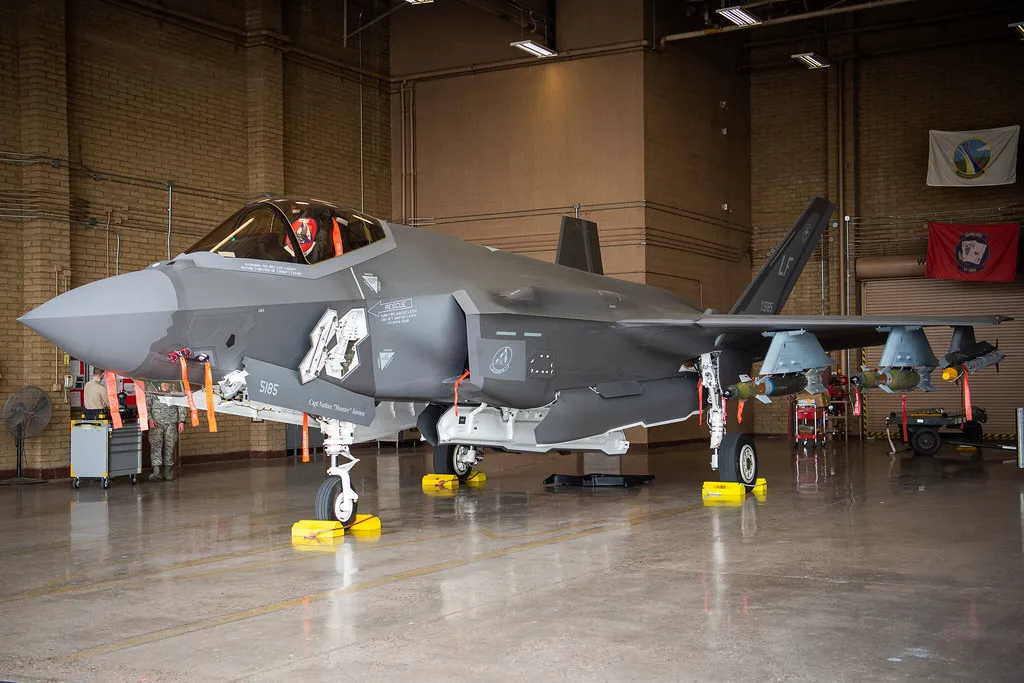
The Post reports a $2.8 billion package "which would be purchased with U.S. taxpayer dollars," comprising 20,000 MK-84s, 20,000 BLU-117s and 20,000 I-2000 Penetrator warheads, described as the largest single sale of 2,000-pound munitions in recent years.[2] Haaretz and the Times of Israel carried the same figures the same day.[10][9]
The headline proposition, that Americans are paying for bombs transferred to Israel, is accurate. It is also the part of the story that is least new, which is what the next claim turns on.
Claim 2: A "special program" called FMF Misleading
Rolling Stone writes that "the Trump administration is using a special program called Foreign Military Financing, in which the U.S. would essentially hand Israel the money to buy the weapons from its own coffers." The Post's wording was "a mechanism known as Foreign Military Financing." The adjective is Rolling Stone's addition.
Foreign Military Financing is the principal vehicle for US military aid, and for Israel it is close to the whole of it. The Congressional Research Service records that the 10-year memorandum of understanding signed on September 14, 2016 commits the United States to $38 billion for FY2019 through FY2028: $33 billion in FMF grants plus $5 billion for missile defense.[3] Section 1273 of the FY2021 NDAA authorises "not less than" $3.3 billion in annual FMF to Israel through 2028, and appropriators have matched or exceeded that every year since.[3]
It is not unique to Israel either. CRS notes that Egypt and Jordan were two of the three next-largest FMF recipients, and that Israel's share of the global FMF budget stood at roughly 40 percent under the previous memorandum.[3] Ten countries are permitted to use FMF for direct commercial contracts.[3]
Since 1999, U.S. assistance to Israel has been outlined in 10-year government-to-government Memoranda of Understanding. Congressional Research Service, RL33222
A reader who meets FMF for the first time as "a special program" the administration "is using," in a paragraph that follows a sentence about how Trump-era arms deals "have skirted traditional processes," will conclude that a loophole was found. No loophole was found. Using FMF to buy American weapons is what Israeli military aid has consisted of across five administrations, authorised by statute and appropriated annually by Congress.
The mechanics Rolling Stone describes are correct. The framing around them is not.
Claim 3: The only weapon Biden blocked Mostly True
Rolling Stone says the MK-84 "was the only weapon that Joe Biden prohibited from being sold to Israel during the war in Gaza, a decision that Trump reversed immediately after retaking office." The Post makes the same claim, calling it "the only munition that President Joe Biden's administration stopped sending to Israel during the Gaza war."[2]
The reversal half is solid. Trump lifted the hold in January 2025, his first month back in office.[8]
The "only weapon" half needs a qualifier that neither outlet supplies. The May 2024 pause covered two munitions, not one: roughly 1,800 bombs of 2,000 pounds and 1,700 of 500 pounds, held over the prospect of their use in Rafah. In July 2024 the Biden administration released the 500-pound bombs and kept the heavier ones withheld.[7][11]
So the 2,000-pounder was the only munition whose transfer remained blocked, which is the defensible version. It was not the only one Biden ever paused. Mostly True, with the missing qualifier noted.
Claim 4: 52 percent want weapons shipments stopped Misleading
Rolling Stone writes: "In 2024, polling found that 52 percent of Americans said that the U.S. government should stop sending weapons to Israel."
The number is real and the link resolves. The question does not say that. The YouGov survey commissioned by the Center for Economic and Policy Research asked respondents to agree or disagree with a conditional statement: "The US should stop weapons shipments to Israel until Israel discontinues its attacks on the people of Gaza."[4] Fifty-two percent agreed, 27 percent disagreed, 21 percent were unsure, in a sample of 1,000 adults surveyed February 27 to March 1, 2024, margin of error 3.5 points.[4]
Dropping "until Israel discontinues its attacks" converts a conditional suspension tied to one military campaign into standing opposition to arming Israel. Those are different positions, and CEPR's own framing stressed the conditionality, contrasting it with vaguer ceasefire polling.
The case for Rolling Stone's wording
The strongest defence of "special" is that it means distinctive rather than novel, and the sentence immediately after it supports that reading: "Often, traditional arms deals include an agreement to allow a country to purchase U.S. weapons, meaning that at least some of the proceeds make their way into the U.S. economy." Set against a commercial arms sale where the buyer pays, a grant-financed transfer is a different animal, and most readers do assume an arms "sale" means someone else's money. Naming that gap is a service.
Rolling Stone also gets the mechanism right in plain terms, links the Post, and does not claim the program was created for this deal.
What keeps this at Misleading is placement rather than definition. "Special" arrives attached to "the Trump administration is using," inside a piece whose adjacent sentence notes that past Trump-era deals "have skirted traditional processes for sale." The available inference is that something irregular is happening with the financing. Nothing irregular is happening with the financing. The irregularity in this story, if there is one, sits in the scale of the package and in the informal notification, both of which the piece reports accurately and neither of which needed the adjective.
What is still unresolved
One question decides how much of the $2.8 billion is new money, and no outlet in this source set answers it: whether the package is drawn from Israel's existing $3.3 billion annual FMF allocation or sits on top of it. At $2.8 billion it would fit inside a single year's grant, but fitting is not evidence, and the Post does not say. Until that is on the record, "you're paying for them" is true in the sense that FMF is always taxpayer money, and unproven in the stronger sense of an additional appropriation.
Two other threads are live. The transaction has only been informally notified to congressional committees, and the administration is pressing the chairs of the Senate Foreign Relations and House Foreign Affairs committees to approve it;[2] a formal notification would start the statutory review clock that a $2.04 billion sale in 2025 bypassed.[2] And the current memorandum of understanding expires at the end of FY2028, which makes the terms of any successor the place where the structural question, as opposed to this one package, gets decided.[3]
What would change these verdicts: a formal congressional notification specifying the funding source would resolve the open question above and could move claim 1 from true-as-stated to true-and-quantified. Evidence that the 500-pound bombs were never part of the May 2024 hold would lift claim 3 to True. And a poll asking Americans the unconditional question Rolling Stone described would retire claim 4's problem entirely, though it would not fix the citation, which points at a poll that asked something narrower.
What to watch, and on what clock
The Post frames the sale as "a potential litmus test for Democrats." The statute sets how long that test lasts, and the history sets the odds.
| Signpost | What it means |
|---|---|
| Formal §36(b) notification | Only an informal notification has happened. The formal one starts the clock and is the event to watch for.[2] |
| 15 calendar days | Israel is in the shortened-review group with NATO, Japan, Australia, South Korea and New Zealand. Everyone else gets 30 days. A recess does not pause it.[12] |
| Day 5 | AECA §36(b)(2) allows a senator to move to discharge a disapproval resolution from committee after five calendar days for this group of countries. Floor debate is capped at one hour.[12] |
| Thresholds | For Israel the notification triggers are $25m of major defense equipment and $100m of articles and services. At $2.8bn the package clears them by two orders of magnitude.[12] |
| FY2028 | The current memorandum of understanding runs out. A successor, or its absence, decides the structural question rather than this one package.[3] |
One number sets expectations for all of it. CRS records that Congress has never successfully blocked a proposed arms sale through a joint resolution of disapproval.[12] Attempts on Pakistan in 2016, Saudi Arabia in 2017 and the UAE in 2020 all died at the discharge-motion stage.[12] CRS also notes the quieter channel that has worked: opposition voiced during consultations has changed the timing and composition of sales, and appears at times to have deterred the executive from formally proposing them.[12] On this package, that pressure would have to land before the formal notification, not after.
Sources
- Trump Is Reportedly Sending Israel $2.8 Billion in Bombs. You're Paying for Them
- Trump preparing to send massive shipment of 2,000-pound bombs to Israel
- U.S. Foreign Aid to Israel: Overview and Developments since October 7, 2023
- Poll: Majority of Americans Say Biden Should Halt Weapons Shipments to Israel
- Poll: A majority of American voters now oppose sending additional aid to Israel
- Quinnipiac University national poll, release of June 24, 2026
- U.S. to again ship 500-pound bombs to Israel, reversing suspension
- Scoop: Trump lifts Biden's hold on 2,000-pound bombs to Israel
- US said planning $2.8 billion in munitions sales to Israel, including 2,000-lb bombs
- Report: U.S. to Sell Israel 40,000 Bombs Funded by $2.8 Billion in U.S. Taxes
- Arms Sales: Congressional Review Process
- US to resume 500-pound bomb shipments to Israel