What is Montana Initiative 194?
Montana Initiative 194, known as “The Montana Plan,” appeared on the November 3, 2026 general election ballot as a statutory measure. It was developed by former Montana Commissioner of Political Practices Jeff Mangan, who founded the Transparent Election Initiative in April 2025 to run the campaign. Tom Moore of the Center for American Progress drafted the legal architecture the initiative rests on.[1]
Voters approved it by 307,039 to 161,247 (65.57% to 34.43%), with 99% of votes reported.[2] More Montanans voted for I-194 than for any individual candidate on the same ballot. The measure takes effect January 1, 2027.[3]
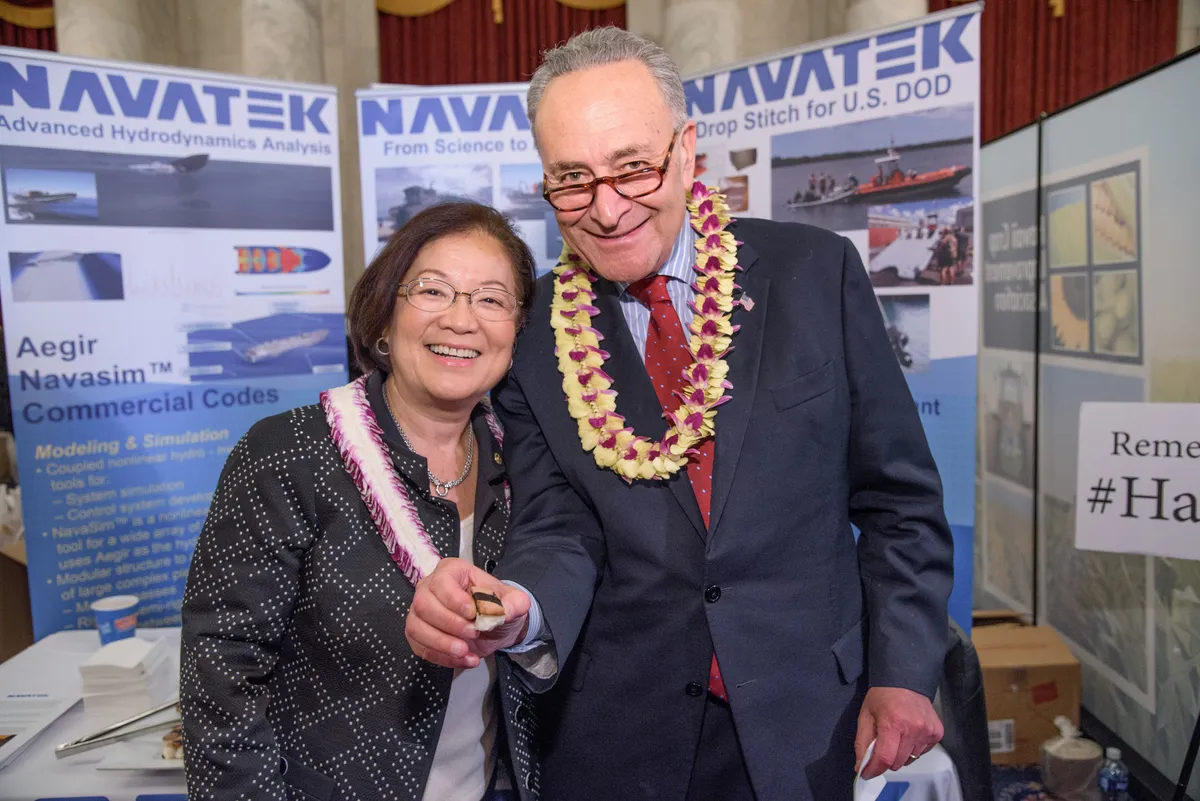
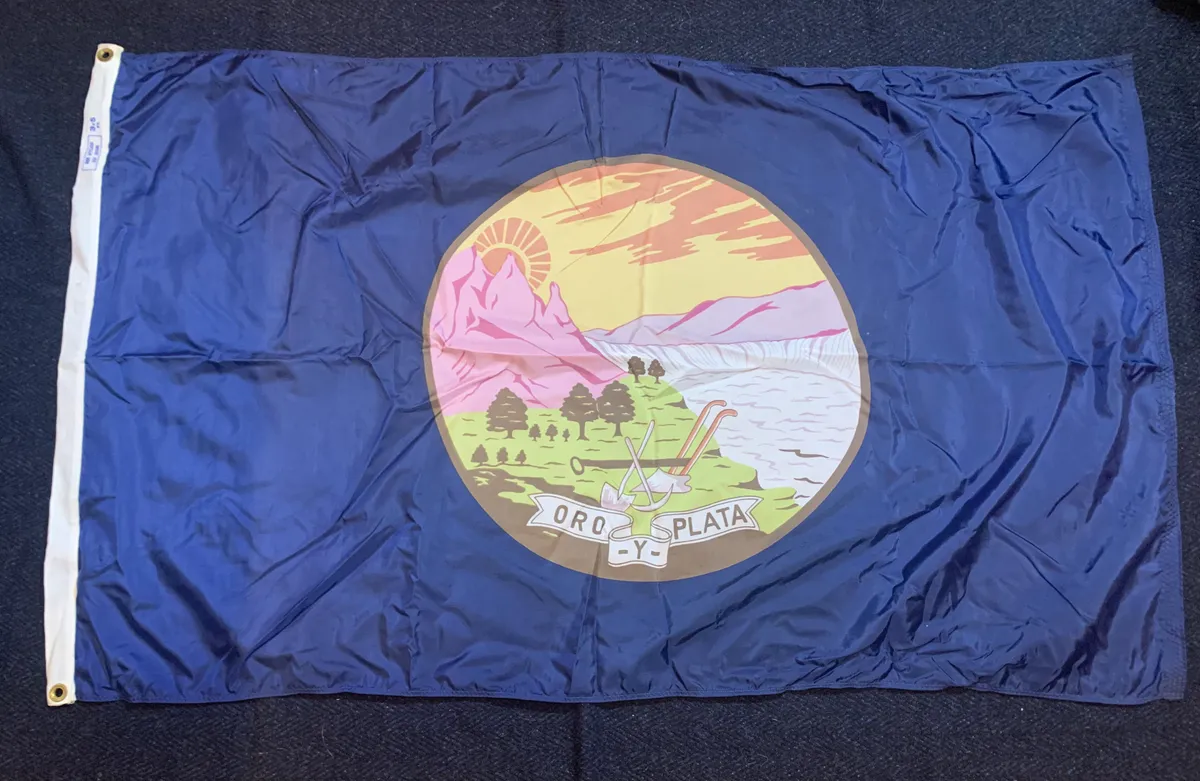
The DemzDeliver account posted on X at 10:41 PM on November 7, 2026: “BREAKING: Montana has now completely banned corporate spending in politics. Republicans are now suing to reverse it.” The post, which pairs a photo of a man with the Montana state flag, had accumulated approximately 506,000 views. No reporting has identified the man pictured.
Claim 1: “Montana has now completely banned corporate spending in politics”
Montanans did vote by a wide margin to restrict election-related spending by incorporated entities. But each key word in the post bends the fact.
“Has now”
As of November 7, 2026, when the post was published, no ban was in force. I-194 takes effect January 1, 2027, 59 days after the election.[3] Two lawsuits challenging the law were filed within nine days of the vote; a preliminary injunction motion was filed November 12.[4] If a court grants that motion before the new year, the law will never take effect as written. “Has now” implies enforcement is underway; it isn’t.
“Completely banned”
Initiative 194 contains explicit carve-outs. News organizations and their editorial content are exempt.[5] Entities that register as political committees under state or federal law can still spend; the initiative restricts corporate treasury funds, not money routed through a registered PAC structure.[5] The law also covers only election-related spending — supporting or opposing candidates, parties, and ballot measures — not political activity broadly defined.
“Corporate spending”
Initiative 194 applies to all “artificial persons“ chartered or doing business in Montana. That includes not just corporations but unions, nonprofits, partnerships, trusts, and trade associations.[5] Calling it a corporate ban undersells what it does and obscures that it reaches progressive organizations (labor unions, advocacy nonprofits) as readily as it reaches business interests. That breadth is both the initiative’s legal innovation and the basis of several First Amendment challenges.
What the law actually covers
Under I-194, any “artificial person” organized under Montana law or transacting business in Montana is prohibited from using its treasury funds to: contribute to a candidate, political party, or political action committee; make independent expenditures advocating for or against a candidate or ballot measure; or directly or indirectly finance such spending by another entity.[5]
Critically, the initiative closes the out-of-state loophole by defining “transacting business” in Montana to include the act of making a political expenditure in a Montana election.[6] A Delaware corporation that runs a TV ad in a Montana race would be subject to the law even if it has no other physical presence in the state. Violations result in forfeiture of the right to do business in Montana, with reinstatement possible after compliance and disgorgement.[3]
The Citizens United question
Citizens United v. FEC (2010) held that the First Amendment prohibits government from restricting independent political expenditures by corporations, associations, and labor unions. It did not distinguish between rights and powers; it held that the government may not restrict independent spending as such.
Legal experts are split on whether I-194’s reframing survives that ruling. Tom Moore (Center for American Progress), who designed the initiative’s legal architecture, argues that “corporations may have constitutional rights, but their powers come from the states,” and that states may therefore reclaim what they granted.[8] Michael Kang of Northwestern Law calls the distinction “a distinction without a difference” and predicts courts will recognize the reframing as a Citizens United end-run.[8] Brad Smith of the Institute for Free Speech argues that the law would restrict organizations far beyond corporations, silencing nonprofits and trade groups that have never been restricted under federal law.[8]
The initiative also runs against First National Bank of Boston v. Bellotti (1978), which bars state restrictions on corporate ballot-measure spending and predates Citizens United. Montana’s new law covers ballot measures, so both precedents are directly in play.[7]
Hawaii enacted a nearly identical “corporate powers” law in May 2026 and faces three separate federal lawsuits.[8] Neither that case nor the Montana challenges have reached a circuit court; no precedent from those cases currently applies.
Claim 2: “Republicans are now suing to reverse it”
The Montana Republican State Central Committee is a named plaintiff in the first lawsuit, filed November 5, 2026, and the GOP complaint explicitly states that the party relies on corporate contributions to its independent-expenditure account.[4] “Republicans are suing” is accurate as a description of that case.
But the picture is wider than that framing suggests. The first suit was filed by the Institute for Free Speech on behalf of four plaintiffs: the Frontier Institute, the Frontier Action Fund, the Montana Family Foundation, and the Montana Republican State Central Committee. The first three are conservative nonprofits, not partisan Republican organizations.[4] A second, separate lawsuit was filed November 12 by the Chamber of Commerce of the United States, the Montana Chamber of Commerce, the Kalispell Chamber of Commerce, and the Billings Chamber of Commerce; all are business organizations unaffiliated with the Republican Party.[9] Both cases were consolidated before U.S. District Judge Brian Morris in Great Falls.[10]
The DemzDeliver post appeared November 7, three days before the Chamber of Commerce filed its separate suit. The description “Republicans” reflected only the first lawsuit. Even so, that first lawsuit included conservative nonprofits alongside the Montana GOP, and the broader legal opposition is plainly a business coalition rather than a partisan one.
The lawsuits and the AG’s refusal
Both lawsuits allege that I-194 violates the First Amendment’s protections for free speech, association, assembly, petition, and press. The plaintiffs in the first case also argue the law is unconstitutionally vague and overbroad, arguing that unclear definitions leave organizations uncertain whether posting ordinary commentary on a local property-tax ballot measure would trigger a violation.[4] Frontier Institute president Kendall Cotton said the case “potentially could go to the U.S. Supreme Court.”[11]
A preliminary injunction motion was filed November 12, 2026 in the first case, seeking to block enforcement before the January 1 effective date.[4] No ruling had been issued as of November 18.
Republican Attorney General Austin Knudsen added an unusual complication: on November 17, he announced he would not defend the law’s constitutionality in court, saying the initiative is “consistent with the Attorney General’s prior legal position when evaluating similar proposals that restrict the political speech for entities with corporate charters.”[12] Knudsen said he will enforce the law until a court rules otherwise. The Transparent Election Initiative filed to intervene as a defendant, since the state itself will not make the affirmative case for the law’s validity.[12]
Historical precedent
Montana’s prior corporate ban
Compared against: Montana’s 1912 Corrupt Practices Act — also a corporate political spending ban; struck down in 2012 after Citizens United
Montana has been here before. In 1912, in the wake of copper-mining corporations buying elections wholesale, Montana voters passed the Corrupt Practices Act, banning corporate political contributions. For nearly a century that law stood. In 2010, the U.S. Supreme Court decided Citizens United. In 2012, the Montana Supreme Court tried to uphold the state ban anyway, arguing that Montana’s specific history of corporate election interference justified an exception. The U.S. Supreme Court reversed in American Tradition Partnership, Inc. v. Bullock (2012), holding that the Montana law conflicted with Citizens United and must fall.[7]
Initiative 194 is designed to reach a different result by changing the legal argument rather than simply reasserting the old ban. Whether that reframing survives is the central legal question the courts now face.
Hawaii’s precedent
Montana is not the first state to try the “corporate powers” strategy in this form. Hawaii enacted a nearly identical law in May 2026, before Montana’s vote.[8] Three federal lawsuits have been filed against Hawaii’s law, including one by the U.S. Chamber of Commerce. No federal court has yet ruled on the merits; Hawaii’s law also remains unenforced while litigation proceeds. Any ruling in the Hawaii cases, especially at the circuit level, will directly shape what happens to I-194.
What the post implies
The phrasing “has now completely banned” implies the ban exists and is currently operating. It is not. The law passed at the ballot box but takes effect January 1, 2027, and faces an injunction motion that could block enforcement before that date.
The post’s framing carries a novelty implication, but Hawaii enacted an essentially identical law in May 2026, before Montana voted.[8] Montana is the second state, not the first, to use the “corporate powers” strategy against Citizens United.
The Montana GOP is one plaintiff, but as of November 18, three national and state chambers of commerce (all business groups, not partisan organizations) have filed a separate suit. The Montana Chamber of Commerce, Billings Chamber, and Kalispell Chamber also opposed the initiative during the campaign. Calling the opposition “Republicans” gives a partisan frame to what is substantially a business-community legal challenge.
The measure applies to all “artificial persons,” a category that encompasses labor unions, advocacy nonprofits, and trade associations alongside corporations. Supporters on the left who backed I-194 have called this breadth a feature of the law, saying it levels the playing field. But the viral post’s “corporate spending” framing implies a narrower restriction than the law imposes.
The post does not assert that I-194 is constitutional or will survive legal challenge. Whether courts will ultimately uphold the law turns on contested questions of First Amendment doctrine that no source can settle as a factual matter; this article takes no position on the likely legal outcome.
Implications
The gap between “passed at the ballot box” and “in effect” matters because it is precisely the window in which a preliminary injunction operates. If Judge Morris grants the pending motion, spending restrictions will never apply; the law will have been approved by voters but blocked by the courts before a single enforcement action occurs. The gap between popular will (65.57% support) and constitutional limits is the story, not the ballot result alone.
The Montana AG’s decision not to defend is as consequential as the lawsuits themselves. When a state’s chief law-enforcement officer declines to argue for a voter-passed law, it signals constitutional weakness, can embolden courts to grant preliminary relief, and forces the law’s survival onto a private organization (the Transparent Election Initiative) with fewer procedural protections in federal court.
The “corporate powers” theory, if it survives to the Supreme Court, would reopen a question the Court treated as closed in 2010: whether states can condition the grant of corporate status on a waiver of political spending power. The current 6-3 conservative majority on the Court has consistently expanded First Amendment protections in the campaign-finance context. Legal analysts across the political spectrum treat the theory as a creative long shot, not a probable winner.[7][8]
The DemzDeliver post casts this as a partisan win with Republicans as the obstacle. That framing misses the actual structure: a voter-approved populist restriction (backed heavily in a state Trump won by roughly 20 points in 2024) being challenged by a coalition of business groups and conservative nonprofits, with the state’s own Republican attorney general standing aside. It is a more complex story than partisan scorekeeping captures, and the complexity matters for anyone trying to assess whether the law will ultimately stand.
What to watch
Preliminary injunction ruling: Judge Morris in Great Falls must decide before January 1, 2027 whether to block enforcement while litigation proceeds. A denial would put the law into force on New Year’s Day; a grant would suspend it indefinitely pending appeal. The injunction hearing is the single most consequential near-term event in this story.
Hawaii cases: Three federal lawsuits challenging Hawaii’s identical law are ahead of Montana in the docket. A Ninth Circuit ruling on the “corporate powers” theory would bind Judge Morris; both states’ laws use the same legal architecture.
Attorney general’s posture: Knudsen said he will enforce the law until a court orders otherwise, but his refusal to defend it means the enforcement regime will be tested by the initiative’s private sponsors. If the Transparent Election Initiative’s motion to intervene is denied or limited, enforcement may be effectively undefended even if no injunction is granted.
Parties affected
| Party | Effect | Why |
|---|---|---|
| Montana corporations | Costs | Barred from treasury-funded political spending in state elections if the law takes effect; must route activity through registered political committees or cease it. |
| Labor unions and nonprofits | Costs | Covered equally by the “artificial persons” definition; left-leaning nonprofits face the same restrictions as corporations. Many backed the initiative despite this. |
| Montana Republican State Central Committee | Costs | Explicitly relies on corporate contributions to its independent-expenditure account; named plaintiff in the first lawsuit. |
| Transparent Election Initiative / initiative supporters | Mixed | Won a landslide ballot vote; now responsible for defending the law in federal court without state backing, an expensive and uncertain position. Analysis. |
| Montana news organizations | Gains | Explicitly exempted by I-194; editorial-content spending is not restricted. No impact from the law if it takes effect. |
| Out-of-state corporations / national groups | Unclear | Covered if they transact business in Montana or make a political expenditure there; practical enforcement against out-of-state entities is untested and may require additional litigation. Analysis. |
What happened
On November 3, 2026, Montana voters approved Initiative 194, also called “The Montana Plan.” It passed with about 66% of the vote. The measure would stop corporations, unions, nonprofits, and trade associations from spending money in elections. It was designed by Jeff Mangan, a former state election official.
Four days later, on November 7, a social media account called Democrats Deliver posted about it on X. The post said: “BREAKING: Montana has now completely banned corporate spending in politics. Republicans are now suing to reverse it.” That post got about 506,000 views. But several key parts of it are misleading.
Claim 1: “Montana has now completely banned corporate spending in politics” — Verdict: Misleading
The law is not in effect yet. Montana voters approved Initiative 194 on November 3, 2026. But the law does not take effect until January 1, 2027. Courts may also block it before then. Two groups filed lawsuits within two days of the vote. One of those lawsuits asked the court to stop the law before it starts. As of November 18, the court has not ruled yet.
“Completely” overstates it. The law has exceptions. News organizations are exempt. Organizations that officially register as political committees under state or federal law can still spend money in elections. The post implies that all corporate political spending is now shut down. That is not accurate.
“Corporate” is too narrow. The law covers all “artificial persons.” That includes not just corporations, but also unions, nonprofits, partnerships, and trade associations. So labor unions and left-leaning advocacy groups face the same limits as corporations.
What the law actually does
Initiative 194 says that any company or organization doing business in Montana cannot use its funds to support or oppose candidates, political parties, or ballot measures. The law also applies to companies based in other states. If a company from another state buys a political ad in a Montana election, it would be covered. The penalty is losing the right to do business in Montana.
The law rests on a legal idea: Montana gives companies their legal status (called a corporate charter). Montana can take back rights it granted. Supporters say this means Montana can say “you can operate here, but not in politics.” Critics say courts will not accept this reasoning.
Can this law survive in court?
In 2010, the U.S. Supreme Court decided a case called Citizens United v. FEC. It ruled that corporations and unions have the right to spend money on elections. That ruling is still in effect.
Legal experts are divided on whether Montana’s law can get around it. Tom Moore, who helped design the law, says states created corporations and can limit what they are allowed to do. Michael Kang of Northwestern Law says that argument probably will not work in court. Brad Smith of a group called the Institute for Free Speech says the law goes too far by limiting nonprofits and trade groups as well.
There is also an older Supreme Court case from 1978 called Bellotti that blocks states from restricting corporate spending on ballot measures. Montana’s law covers ballot measures, so that older case is also a problem for the new law.
Claim 2: “Republicans are now suing to reverse it” — Verdict: Mostly True
The Montana Republican Party is a named plaintiff in the first lawsuit, filed November 5. So saying “Republicans are suing” is accurate for that case.
But the full picture is wider. The first lawsuit was filed on behalf of four groups. Three of them are conservative nonprofit organizations, not the Republican Party. A second lawsuit was filed on November 12 by several chambers of commerce, including the U.S. Chamber of Commerce and the Montana Chamber of Commerce. Those are business groups. When the Democrats Deliver post appeared on November 7, only the first lawsuit had been filed. Even so, the word “Republicans” gives a partisan frame to what is largely a business-community legal challenge.
The attorney general’s unusual decision
Republican Attorney General Austin Knudsen announced on November 17 that he will not defend the law in court. He believes it violates the First Amendment. He said he will still enforce the law until a judge says otherwise.
This puts the law in an unusual position. The group that created the initiative, the Transparent Election Initiative, has asked to step in as the law’s defender in court. Private groups have fewer legal tools than the government in court. This could make it harder to protect the law from being blocked.
Montana has tried this before
In 1912, Montana passed a law called the Corrupt Practices Act. It banned corporations from spending money in elections. That law stood for about 100 years. Then in 2010, the Citizens United ruling changed things. In 2012, the U.S. Supreme Court struck down Montana’s old law. Initiative 194 uses a different legal argument to try again.
Montana is also not the first state to try this new approach. Hawaii passed a nearly identical law in May 2026, before Montana. Hawaii’s law is also being challenged in court. No court has ruled on the main legal question yet in either state.
What the post implies (and gets wrong)
Implied: The ban is currently in effect. Verdict: False. The law takes effect January 1, 2027. It was not in force when the post was published on November 7, 2026.
Implied: Montana is the first state to ban corporate election spending. Verdict: Misleading. Hawaii passed a similar law in May 2026, before Montana.
Implied: Only Republicans are suing. Verdict: Misleading. The U.S. Chamber of Commerce and state chambers of commerce have filed a separate lawsuit. The legal opposition is a business coalition, not just a partisan one.
Implied: The ban only affects corporations. Verdict: Misleading. The law covers all “artificial persons,” including unions and nonprofits.
What to watch
The most important upcoming event is whether a judge will block the law before January 1, 2027. The plaintiffs in the first lawsuit asked for a court order to pause the law. If the judge grants it, the law will not take effect on New Year’s Day. The court cases in Hawaii are also important. If a federal appeals court rules on the main legal question there, that ruling will likely affect Montana too.
Sources
- Backers of plan to ban corporate spending in Montana elections try again
- 2026 Montana Initiative 194
- Montanans overwhelmingly approve 3 ballot measures
- After win at the ballot box, The Montana Plan draws legal challenge
- Initiative 194 voter guide
- New Campaign Finance Rules Emerge from Ballot Measures in Michigan and Montana
- Want to Upend “Citizens United”?
- Montana votes to ban corporate political money. Next stop? Probably the Supreme Court
- Chamber of Commerce v. Knudsen
- Frontier Institute, et al. v. Knudsen, et al.
- Lawsuit Challenges Montana Anti-Dark Money Initiative Days After Voters Approve It
- Attorney General won’t defend anti-dark money ballot initiative in court