What Was Posted
On November 23, 2026, at 7:19 PM Eastern, Brian Krassenstein posted on X:
First Dan Bongino. Then Andrew Bailey. Now Christopher Raia.
Three FBI deputy directors departing within a year” — Brian Krassenstein, X, November 23, 2026 at 7:19 PM ET[1]
The post attributes the retirement news to The Washington Post[2] and frames it as the latest in a string of FBI leadership departures. This fact-check evaluates the core claim about Raia, the “three-in-a-year” count, and two additional claims implied by the post’s framing.
Claim 1 (Main): Raia’s December Retirement
“FBI Deputy Director Christopher Raia is reportedly planning to retire in December, less than a year after taking the job, according to The Washington Post.”
— Brian Krassenstein, X, November 23, 2026
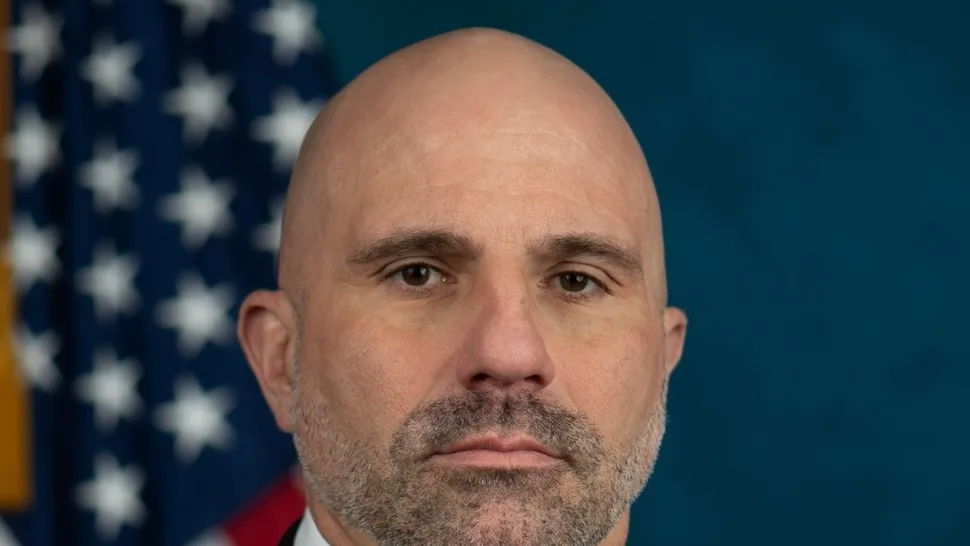
TrueThe Washington Post’s reporting is corroborated by multiple independent outlets.[2][3][4][6] Christopher Raia, a career FBI agent who built a 23-year Bureau career focused on counterterrorism, assumed the office of deputy director on January 12, 2026, succeeding Dan Bongino under FBI Director Kash Patel.[5] A retirement in December 2026 would end a tenure of between 10.6 and 11.6 months, by any reckoning less than one year.
The International Business Times noted that “there is no indication that he was forced to leave,” and no public statement from Raia has confirmed or denied the reporting as of this writing.[4] No outlet has denied the story; it circulated without contradiction across both conservative and mainstream news organizations.[6]
The timing is notable. In the days before the reports emerged, Raia appeared before the House Homeland Security Committee. During testimony, Democratic Ranking Member Bennie Thompson pressed Raia to name a single right-wing domestic terrorism group. Raia declined, saying: “I don’t wanna paint [with] a broad brush here,” and explaining that the FBI “deal[s] in the people in those organizations” rather than the organizations themselves, a position consistent with the Bureau’s charging philosophy but one that drew sharp partisan criticism from Democratic members.[7] The Daily Beast headlined his retirement announcement as the product of “public humiliation” from that exchange; that is the outlet’s editorial characterization, not a documented statement from Raia about his motivations.
Raia was born April 17, 1976, and joined the FBI in 2003, giving him approximately 23 years of federal law enforcement service by December 2026. Under federal law, FBI agents may retire at age 50 with at least 20 years of service, and are subject to mandatory retirement at 57.[8] Raia turned 50 in April 2026 and exceeds the 20-year minimum by three years. His departure fits the pattern of an agent exercising normal federal retirement eligibility; whether the specific timing, immediately following a contentious Congressional hearing, is coincidental is not established by any sourced reporting.
Claim 2: Three Deputy Director Departures Within a Year
“First Dan Bongino. Then Andrew Bailey. Now Christopher Raia. Three FBI deputy directors departing within a year.”
— Brian Krassenstein, X, November 23, 2026
Mostly TrueThree individuals have held or currently hold the title of FBI Deputy Director under Director Kash Patel, and all three departed or are set to depart within roughly one calendar year. The core count is accurate. The span from Bongino’s departure (January 3, 2026) to Raia’s planned departure (December 2026) is approximately 11 months, within a year. But the sequential “first…then…now” framing implies a clean chain of succession that the documented record does not support.
| Official | Role | Start | End | Duration | Stated Reason |
|---|---|---|---|---|---|
| Dan Bongino | Deputy Director | Mar 17, 2025 | Jan 3, 2026 | ~9.5 mo. | Policy dispute over Epstein files[9] |
| Andrew Bailey | Co-Deputy Director † | Sep 15, 2025 | Oct 2, 2026 | ~12.6 mo. | Stated: return to family in Missouri[10] |
| Christopher Raia | Deputy Director | Jan 12, 2026 | Dec 2026 (planned) | ~11 mo. | No public statement[5] |
† Bailey was appointed to a newly created co-deputy role; the FBI had not used dual deputies before his tenure.[11]
The table shows two overlapping periods the post’s sequential framing obscures. Bongino and Bailey served simultaneously as co-deputy directors from September 15, 2025, through January 3, 2026 (a 3.6-month overlap). When Bongino left, Raia was appointed, but Bailey remained. Bailey and Raia then served simultaneously from January 12 through October 2, 2026 (an 8.7-month overlap). For roughly the entire period under review, the FBI operated with two deputy directors at once. The post’s “first…then…now” framing describes the departure sequence but implies a succession sequence that did not occur.
The count of “three” is accurate. The timeframe of “within a year” is accurate: all three departures fall within calendar year 2026, and the span from first (January 3) to last-planned (December) is approximately 11 months. The verdict is Mostly True rather than True because the sequential narrative understates how the Bureau actually operated during this period, and because Raia’s departure is as of publication date reported but not yet completed.
Claim 3: “Fleeing a Sinking Ship”
Implied: The departures signal a collapsing administration whose officials are “fleeing a sinking ship.”
Editor’s characterization of what the post implies; not Krassenstein’s words.
ContestedThe original post does not use “collapsing” or “fleeing a sinking ship.” Those phrases represent the conclusion a significant portion of readers drew from the juxtaposition of three departures. The claim as stated is worth rating directly.
What supports the reading
The FBI’s deputy director turnover under Patel is objectively unusual. All three deputy directors have departed, or plan to, within about two years of Patel’s February 2025 confirmation. Prior to this period, deputy directors had typically occupied the role for multi-year terms, and the Bureau had never used a co-deputy structure until Bailey’s August 2025 appointment.[11] Former FBI officials quoted in news reporting have consistently characterized the current pace as historically high.[14]
Each departure also bears marks of institutional strain beyond personal circumstance. Bongino, a conservative commentator with no prior FBI experience, left after publicly clashing with Attorney General Pam Bondi over the Justice Department’s handling of the Epstein files.[9] Bailey, a Missouri attorney general without FBI background, cited family reasons but left a role that sources described as carrying unusual constraints. Raia, the most experienced of the three, is departing shortly after a Congressional hearing in which he would not answer a basic classification question about domestic terrorism groups, drawing accusations of political accommodation from Democratic lawmakers. The pattern across three different officials, with three different stated reasons, is consistent with an institution under political pressure that makes the role difficult for seasoned operators.
What contests the reading
“Fleeing” implies officials are abandoning a vessel because it is visibly sinking. The documented record does not establish that. All three officials departed with public expressions of gratitude toward Trump, Patel, and their colleagues. Bongino’s departure was tied to a specific intra-administration policy dispute, not a general flight from failure. Bailey gave a family rationale. Raia has given no public reason. Raia is also federally retirement-eligible by any standard metric: 50 years old, 23 years of service, three years past the 20-year threshold. A December 2026 retirement fits a standard federal law enforcement career endpoint, whatever additional factors may have accelerated its timing.
The “sinking ship” claim conflates real, documented turnover with an editorial conclusion about why the officials left. The turnover is real. The motivation attributed to it goes beyond what any sourced reporting has established. Reasonable analysts examining the same record have reached different conclusions. The rating is Contested.
Claim 4: Democratic Subpoenas
Implied: Departing FBI officials will face Democratic subpoenas once Democrats control Congress.
Editor’s characterization; not in Krassenstein’s post.
UnprovenThe predicate is real. Democrats won both chambers of Congress in the November 3, 2026 midterms, gaining a 258-seat House majority and a 56-seat Senate majority.[12] Democrats take power in January 2027. The question of whether they will specifically issue subpoenas targeting Raia, Bailey, or Bongino is a separate matter.
Al Jazeera’s reporting on Democratic oversight plans documents pledges to “exercise oversight over the executive branch by launching probes and issuing subpoenas,” with stated targets including Nvidia and Commerce Secretary Howard Lutnick. No reporting examined for this article documents any specific Democratic plan to subpoena former FBI deputy directors.[13] Democrats may also choose different oversight mechanisms: hearings, budget restrictions, or document requests rather than individual subpoenas of departed officials. The specific prediction remains unverified as of publication.
Three Departures Against FBI History
Compared against: All 22 FBI Deputy Directors since the position was established in the Bureau’s post-Hoover structure (approximately 1973–2026). Prior documented instances of three or more deputy director departures within a single calendar year: none found in the public record.[11]
Wikipedia’s list of FBI Deputy Directors documents 22 incumbents across roughly 50 years of the modern Bureau. Under the Bureau’s pre-Patel leadership, deputy directors typically served for two to five or more years, with departures tied to changes in FBI direction or personal retirement after long careers. No previous calendar year appears to have seen more than one deputy director departure.
The co-deputy structure itself was without precedent: Bailey’s appointment in August 2025 created the FBI’s first simultaneous dual-deputy arrangement. Former officials quoted across multiple outlets have characterized the current rate of turnover as historically unusual for the Bureau.[14] If Raia departs as planned, Patel will have appointed his fourth deputy director in roughly two years, a pace without clear precedent in the Bureau’s post-Hoover history. The record comparison is limited here by the absence of a comprehensive database of tenure lengths; this comparison rests on the Wikipedia list and news reporting, not an exhaustive archival review.
What the Post Implies
Implied: Raia left involuntarily or was pushed out.
UnprovenMultiple outlets reported “there is no indication that he was forced to leave.”[4] Raia is retirement-eligible under federal law. No documentation of directed pressure or forced departure has been published. The claim cannot be rated in either direction with available evidence.
Implied: The FBI under Kash Patel is in institutional crisis.
ContestedDeputy director turnover is objectively unusual by historical standards, the co-deputy arrangement was unprecedented, and former officials have called the pace historically high. Patel supporters counter that restructuring is intentional and that turnover is an expected feature of institutional reform, not evidence of failure. Whether “crisis” is the right characterization is a contested analytical judgment.
The post’s juxtaposition of three departures invites the inference that the Trump administration has broadly mismanaged FBI leadership. That conclusion, if drawn, rests on a political judgment about governance competence. Whether this level of turnover reflects poor management, deliberate restructuring, or coincidental individual decisions is a live debate that this fact-check is not positioned to resolve with a True/False verdict.
What This Changes
Raia’s planned departure creates a vacancy at the FBI’s operational center. The deputy director oversees day-to-day operations: investigations, personnel decisions, and field-office coordination. The absence of an experienced occupant creates genuine continuity challenges regardless of the reason for leaving.[2]
Patel must now identify a fourth deputy director in roughly two years. The pool of career agents willing to accept the Bureau’s second-highest position under his directorship has visibly narrowed: each of the three incumbents departed earlier than typical career trajectories would suggest. Whether the next occupant will be a career agent (as Raia was) or a political ally (as Bongino and Bailey were), and whether that choice shapes the confirmation fight, is an open institutional question.
The midterm results complicate the confirmation environment significantly. With Democrats controlling the Senate from January 2027, any Patel nominee for deputy director will face a chamber now inclined toward scrutiny of the Trump administration’s FBI management record. That does not automatically block a nomination; deputy directors have historically been confirmed with bipartisan support. But the political temperature around FBI leadership is higher than at any point in recent memory, and each of the three departures provides Democrats with potential confirmation-hearing material.
What to Watch
- December 2026 Raia’s actual retirement date will confirm or revise the reporting, and may come with a public statement explaining his reasons. Any clarification about whether the Congressional testimony controversy accelerated his timeline would directly bear on the “fleeing” claim.
- January 2027 Democrats take control of Congress. Whether early oversight activity targets FBI leadership changes — hearings, document requests, or subpoenas — will establish whether the “Democratic subpoena” prediction materializes.
- Early 2027 Patel’s choice of a fourth deputy director. The nominee’s background (career agent vs. political ally), Senate confirmation dynamics, and stated management priorities will indicate whether the Bureau is stabilizing or continuing to turn over at the executive level.
- Ongoing The substantive policy question Raia’s testimony surfaced: whether the FBI has changed its approach to publicly identifying right-wing domestic terrorism groups, and whether a new deputy director will address it differently before Congress.
Parties Affected
| Party | Effect | Why |
|---|---|---|
| FBI career agents and staff | Mixed | Leadership continuity disrupted; some may welcome a next deputy with deeper FBI experience than Bongino or Bailey had; institutional uncertainty at the top continues. |
| Kash Patel / Trump administration | Costs | Must fill a third vacancy at operational command; faces increased Democratic scrutiny from January 2027; the historic turnover rate is a credible oversight target. † |
| Congressional Democrats | Gains | New majority provides subpoena and hearing powers from January 2027; FBI leadership instability is well-documented and a credible platform for oversight activity. † |
| Christopher Raia | Mixed | Retirement-eligible departure avoids mandatory retirement age; Congressional testimony controversy shapes public legacy; no documented evidence of forced exit or penalty. |
| Federal investigations / national security operations | Costs | Operational leadership vacuum at the deputy level creates coordination risk during ongoing national security matters, regardless of any specific deputy’s identity or departure reason. |
† These rows reflect analytical inference about likely outcomes, not documented statements of position from these actors.
What This Fact-Check Is About
On November 23, 2026, Brian Krassenstein posted on X that FBI Deputy Director Christopher Raia was planning to quit in December. He said this made Raia the third FBI deputy director to leave within one year. This fact-check rates four claims in and around that post.
Claim 1 (Main): Raia Is Retiring in December After Less Than a Year
Verdict: True.
Multiple news outlets confirmed the Washington Post report. Raia became deputy director on January 12, 2026. If he retires in December 2026, that is about 11 months — less than a year. No one has denied the reports. Raia has not commented publicly.
Raia is 50 years old and has worked at the FBI since 2003. Federal law lets FBI agents retire at age 50 if they have at least 20 years of service. Raia has 23 years. So his retirement is a normal option at his age, even if the timing is unusual.
A few days before the reports, Raia testified before a House committee. A Democratic lawmaker asked him to name one right-wing domestic terrorism group. Raia would not. He said the FBI focuses on individual people, not organizations. That answer drew criticism. His retirement was announced shortly after. Whether one caused the other is not documented in any sourced reporting.
Claim 2: He Is the Third Deputy Director to Leave Within a Year
Verdict: Mostly True.
Three people have held the title of deputy director under FBI Director Kash Patel:
- Dan Bongino — left January 3, 2026, after a dispute over the Epstein files
- Andrew Bailey — left October 2, 2026, citing family reasons
- Christopher Raia — plans to leave December 2026
All three departures happened within about 11 months of each other. That is within one year. The count and the timeframe are accurate.
But the post says “first Bongino, then Bailey, then Raia” — as if each replaced the last one. That is not quite right. For most of this period, the FBI had two deputy directors at the same time. This is called a co-deputy structure, and the FBI had never done it before. Bongino and Bailey overlapped. Then Bailey and Raia overlapped. The departures are real. The idea that they were one clean chain of replacements is not accurate.
Claim 3: Officials Are “Fleeing a Sinking Ship”
Verdict: Contested.
The original post does not use this phrase. But it implies it by listing three departures in a row. The claim is worth checking.
The case for it: Three senior FBI officials left in less than two years. Each one gave a different reason, but the pattern is unusual. Turnover this fast in the second-highest job at the FBI is rare.
The case against it: All three officials left with public statements thanking the president and their colleagues. Raia was eligible to retire. Bailey said he was leaving for family. Bongino had a disagreement about one specific policy issue. None of them publicly said they were leaving because the administration was failing. “Fleeing” suggests panic or desperation. The documented facts do not prove that.
People can reasonably disagree about what this pattern means. The verdict is Contested.
Claim 4: These Officials Will Face Democratic Subpoenas Once Democrats Control Congress
Verdict: Unproven.
Democrats did win both the House and Senate in the November 3, 2026 midterm elections. They will take power in January 2027. That part is real.
But there is no documented plan to subpoena Raia, Bailey, or Bongino specifically. Democrats have announced plans for oversight investigations, but those focus on other officials, not former FBI deputy directors. The prediction may turn out to be right, but it is unverified as of now.
What the Post Implies
Implied: Raia was forced out. Unproven. No reporting supports this. He is eligible to retire.
Implied: The FBI under Patel is in institutional crisis. Contested. The turnover is unusual. Whether it rises to a “crisis” is a judgment call that analysts disagree on.
Implied: The Trump administration has mismanaged the FBI. This is a political opinion. It cannot be rated True or False here.
What This Changes
Raia handled the FBI’s day-to-day work. His departure creates a gap at the top of the Bureau. Patel will need to find a fourth deputy director in roughly two years.
Democrats now control the Senate starting in January 2027. Any new FBI deputy director nominee will face a Senate that is likely to ask tough questions about the Bureau’s recent leadership changes.
Sources
- Post by Brian Krassenstein
- Deputy FBI director plans to retire in latest departure from bureau
- Deputy FBI director to retire in December, Washington Post reports
- FBI’s No. 2 Official Plans December Exit. Another Leadership Shake-Up Hits Kash Patel’s Bureau.
- Christopher Raia
- Deputy FBI director to retire in December, Washington Post reports
- Keystone Kash’s Deputy FBI Director Christopher Raia Flees After Public Humiliation
- Federal Law Enforcement Retirement: 2026 FERS LEO Guide
- Dan Bongino to exit FBI in January as deputy director
- FBI co-Deputy Director Andrew Bailey resigns
- Deputy Director of the Federal Bureau of Investigation
- Final 2026 midterm election results: Democrats reach 258 House seats
- What could Democrats do with their expanding congressional majority?
- Former deputy director of the FBI on the bureau’s high turnover