Live near Middletown or downwind? Check the newest Army plume map, stay inside with windows shut and HVAC off or on recirculate during the blast window, and clean with damp cloths afterward. Full guidance below.
A post shared by people with family near the Iowa Army Ammunition Plant in Middletown in southeast Iowa, warns that the Army is about to set off five tons of lead azide, that the Army threw out a safer chemical option, that the toxic plume will spread more than 100 miles, and that the cleanup plan amounts to baby wipes. We checked each claim against the Army’s environmental assessment, the EPA’s emergency permit, court filings, and reporting from Iowa and national outlets.
Verdicts
- True“This planned detonation is 10,000 pounds of lead azide. 5 tons. All at once.”Reports put the total at 68 drums and roughly 9,500 to 10,000 pounds. The drums sit in two bunkers, and the Army’s permit application says the contents of both will be detonated simultaneously.
- Mostly True“The Army had a contract with a chemical company to neutralize the azide towards the beginning of this year, then cancelled the contract two months later and chose detonation instead.”The Army contracted MuniRem Environmental on March 26 and canceled on May 14, 49 days later, citing safety. Its scope is disputed: the Des Moines Register describes it as a contract “to provide information about the possible alternative,” while KCRG says the Army hired the firm “to clean up the lead azide for about $120,000.”
- Mixed“Experts from around the world have advised the Army how to dispose of the azide safely. The Army rejected help.”The Army did reject the chemical method pushed by MuniRem’s CEO and two outside experts who filed court declarations. No source shows experts “from around the world” weighing in, and the ATF, the FBI and the EPA backed the Army’s view that the drums cannot safely be opened or moved.
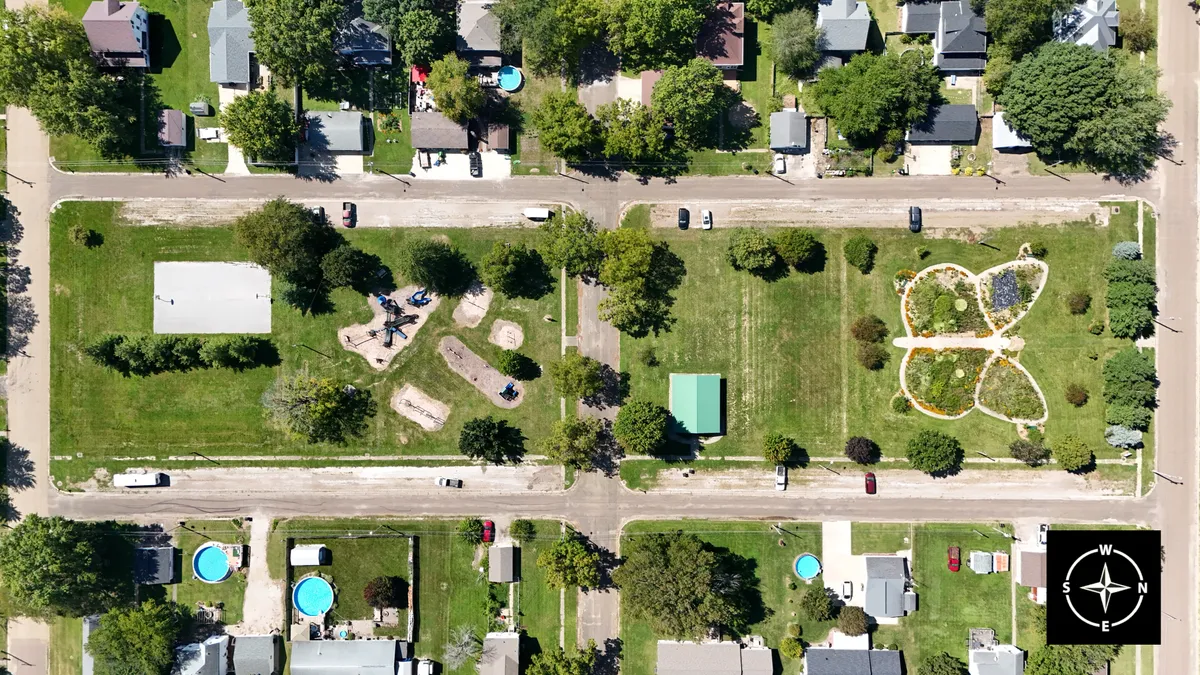
- Mostly True“The Army has told surrounding neighbors their windows will be blown out.”The Army warned the blast “could potentially break windows” and asked residents near Middletown City Park and Butterfly Park to leave for the day. It said “could,” not “will.” The window warning covers Middletown generally; the request to leave covers that neighborhood.
- Mostly True“They told them to turn off HVAC… spray down their houses with hoses… wipe down exterior surfaces like porch furniture with baby wipes.”The Army advised turning off HVAC or switching it to recirculate, and an Army spokesperson told residents to hose down areas they were worried about. The Army’s advisory also says to wet-clean “tables and chairs.” The baby-wipe line came from the EPA, and wet-wiping is standard lead-dust guidance.
- Mixed“The water used to spray down houses and vehicles will seep into the ground. It’ll be contaminated for years.”Hosing does move lead dust into the soil, and lead never breaks down, so that part holds. Lead tends to stay in the top layer of soil rather than spreading deeper. Whether a yard ends up “contaminated for years” depends on how much lands there, and no one has published an estimate.
- True“The lead dust can make people and pets have central nervous system and neurological issues. Permanently.”The CDC says no safe blood lead level is known for children and that effects can be permanent. Veterinary references list seizures and other nervous-system signs in dogs, cats and cattle, though permanence in pets is less clearly documented than in children. Whether this event delivers a harmful dose is a separate question no one has answered.
- Mixed“The Army has already stated they never tried anything this big before and don’t know what will happen.”An Army spokesperson confirmed that lead azide had never been detonated inside earth-covered bunkers in her experience, a statement about method rather than size. We found no Army statement that it doesn’t know what will happen; its public materials predict low, short-lived air levels. The Army does concede unknowns when estimating cleanup waste.
- Misleading“The toxic plume is expected to travel over a hundred miles in several directions.”The 100-mile figure comes from the Army’s own Nov. 20 model, which showed airborne dust reaching about 100 miles northeast and settling within about 40. Forecasts have since pointed southwest. Each forecast shows one plume following that day’s wind, and none of the published maps we found shows more than 100 miles.
- False“There is no cleanup plan.”The Army’s signed environmental finding lays out crater-soil excavation, sampling across 44 zones up to 3,000 feet out, water and groundwater testing, and disposal at licensed landfills. EPA requires off-site air, dust and soil sampling. The real gaps are narrower: off-base soil is tested only where owners sign up, and nothing is done below the 200 ppm screening level.
- Misleading“The Army has been doing smaller detonations for years they haven’t told the public about.”The plant does detonate explosives, under a public EPA permit issued after a 2018 comment period and capped at 100 pounds an hour. We found no record of lead azide being detonated there before and nothing showing detonations were hidden.
- MisleadingSeparate claim, not from the post. Donald Trump: the Obama administration “improperly stored a vast number of explosives” in 2009.The Army itself wrote in 2014 that its concern about a “40-year-old stockpile of lead azide deteriorating” at this plant dated to 2004, under George W. Bush. Some drums may have arrived later from a Texas plant closed in 2009, but that rests on one source, the contractor’s CEO.
- UnprovenImplied: the blast will contaminate the region for decades.Lead persists, so any that lands stays until removed. But neither the Army nor the EPA has published how much will land where, and no air or soil results exist yet. The Army’s wind analysis puts the areas most often downwind within about 2 kilometers of the bunkers.
- ContestedImplied: a safe alternative existed, and the Army refused it.MuniRem and two court experts say chemical treatment was viable. The Army, ATF, FBI and EPA say opening the crystallized drums could set them off. The appeals court refused to pause the EPA permit, but the merits case is unresolved.
- Mostly TrueImplied: Army neglect created the emergency.The Army recorded a deteriorating lead azide stockpile at the plant in 2004, the storage liquid evaporated within months of its yearly refill, and a neutralization solicitation went out in September 2025, before the Army’s stated March discovery. No investigation has yet assigned fault.
- MixedImplied: the current administration’s military leadership caused this.The decay spans decades and several administrations. The 2026 choices, canceling the chemical contract and choosing detonation, were made by this administration’s Army leadership, then backed by EPA and a federal court.
What lead azide is, and what went wrong
Lead azide, Pb(N3)2, is a primary explosive: a small amount sets off the larger charge in a detonator. The Army’s own fact sheet says it is “a primary explosive used to initiate munitions.”[6] Federal hazard data says that when dry it “may explode from shock, heat, flame or friction.”[39] By weight it is about 71% lead, which the Army’s permit application turns into “the potential release of nearly 7,000 pounds of lead into the area.” That figure is used to estimate cleanup waste; it is not a measure of how much becomes airborne.[9]
How much is there? Reuters counts 68 barrels, “or nearly 10,000 pounds,” AP says “about 5 tons,” and PBS says 9,500 pounds.[20][28][21] The drums are stored in two earth-covered bunkers, and the Army’s advisory announced “two controlled detonations.”[2][7] That means one per bunker, set off together: the permit application says “the contents of each ECM will be detonated simultaneously,” because separate blasts could disturb the charges in the second bunker.[9] So “5 tons… all at once” is accurate.
The material is stored wet, under an ethanol and water mix, because wet lead azide is far less sensitive. The Army’s environmental assessment describes what happens when that fails: temperature swings let lead azide “recrystallize into its pure state as needles and platelets, which are significantly more sensitive to shock and friction,” and the process is “especially evident during colder months.”[4] Routine testing in March found the liquid had evaporated.[16] An Army explosive-ordnance declaration filed in court says the operating contractor, American Ordnance, checked the drums monthly and refilled them yearly; the last refill was September 2025, and the lids have not been safe to remove since.[17] In April, an Army bomb squad found crystals in all but 10 of the 68 drums.[17]
That is why the EPA’s emergency permit, effective Nov. 13, rests on a finding of “an imminent and substantial endangerment”: the recrystallization “has increased the material’s sensitivity to friction and shock, creating a highly unstable and dangerous situation.”[1] The cold matters too. The EPA said on Nov. 21 there was an immediate risk because temperatures were expected to fall below 30 degrees.[20]
How it got here: a timeline
| Date | Event |
|---|---|
| 2004 | Army starts a “green” primer project over “a 40-year-old stockpile of lead azide deteriorating” at the Middletown plant.[12] |
| Sept. 2025 | Last refill of the drums’ ethanol and water.[17] An Army solicitation for “Lead Azide Neutralization” at the plant is posted Sept. 9.[41] |
| Jan. 2026 | A multi-agency working group starts studying treatment options, according to court filings.[15] |
| Mar. 12, 2026 | EPA notified of 68 drums of “potentially unstable” lead azide.[2] |
| Mar. 26–May 14 | MuniRem Environmental contract, then cancellation.[14] |
| Apr.–Sept. | EPA issues three emergency storage permits.[2] |
| Oct. 15 | Army open house in Middletown with nearly 200 residents.[2] |
| Nov. 13 | EPA emergency treatment permit takes effect; EPA says it is “neither requesting nor accepting comments.”[1][3] |
| Nov. 19 | Environmental groups sue in the 8th Circuit; the Army postpones from Nov. 20 to Nov. 23; the court issues a temporary stay late that night.[23][10][49] |
| Nov. 22 | Army moves the date to Wednesday, Nov. 25, for “more optimal weather conditions.”[11] |
| Nov. 23 | Trump says the military will wait for the court and Gov.-elect Rob Sand; that afternoon the court denies the stay; that night the Army says it will proceed Wednesday morning.[22][24] |
Sources disagree on how long these particular drums sat in Middletown. The 2004 Army record and KCRG’s reading of plant documents point to decades; TIME and Al Jazeera say about 20 years; MuniRem’s CEO says the drums came from Texas’s Lone Star Army Ammunition Plant, which closed in 2009.[12][16][25][14] No Army document we found gives a production or arrival date.
The canceled chemical contract
This claim holds up. The New York Times first reported that “the Army awarded a contract to MuniRem Environmental, a Georgia-based firm that uses chemicals to neutralize munitions. But it canceled the deal two months later, citing safety concerns.”[38] CNN confirmed the award and cancellation from court filings.[15] The Des Moines Register, drawing on CEO Valentine Nzengung, gives the dates, March 26 to May 14, and describes the contract as being “to provide information about the possible alternative.”[14] KCRG describes a hire “to clean up the lead azide for about $120,000.”[16] The Army has not said how far the work got.
The reason for the cancellation is disputed. Court filings and the company both say “safety concerns.” But the Times reviewed an email in which an Army contracting officer told the company the cancellation “was unrelated to shortcomings in its technical proposal,” and Nzengung says then-Army Secretary Dan Driscoll made the final call to detonate.[13] A joint statement from the Army, EPA and HHS did not address the cancellation.[13]
“Two months” is a slight stretch: the contract lasted 49 days. “Towards the beginning of this year” fits March.
Did the Army reject outside help?
The Army did reject the alternative outside experts pressed on it. Nzengung says he served on an Army review panel, sent the EPA and the Army a memo in June opposing detonation, and has neutralized unstable lead azide before.[14] In court, engineer Ranajit Sahu argued the Army dismissed chemical treatment too quickly and called for an independent review, and retired EPA scientist Mark J. Thomas said the Army had published no data on how the material’s sensitivity changes with temperature.[24][15]
The Army’s reason is handling risk. Its assessment says chemical treatment would mean “significantly more ‘hands-on’ time and physical manipulation of the drums by personnel over a prolonged 7-to-22-day period, drastically increasing the probability of accidental, fatal detonation.”[4] The EPA says the Army, the FBI and the ATF all found that “movement of the barrels, or even removing the lids given the advanced crystallization, could cause a spontaneous detonation.”[2] The ATF told the Register it found “no evidence that the chemical neutralization approach proposed by a contractor could be safely applied on material of this quantity, condition or age.”[14]
So the core of the claim is right, but two parts are not supported. We found no expert offers “from around the world”; MuniRem’s CEO says his firm works in Europe and the Middle East, which is the closest match. And the Army did not decide alone. Federal explosives agencies agreed with it.
What residents were told
Windows
The Army’s October fact sheet: “Residents in Middletown will hear loud noises and feel vibrations. The blast could potentially break windows.”[6] Its open-house slides warn that “older glass windows are more fragile.”[8] Its Nov. 18 advisory asked residents near Middletown City Park and Butterfly Park to leave from 8 a.m. to 2 p.m.[7] The Army’s environmental finding sets a 6,269-foot exclusion zone, about 1.2 miles, around the site.[5] The Army’s advisories do not promise repairs, and we found no published claims process for broken windows. That is a fair question for residents to ask.
HVAC, hoses and baby wipes
The advisory tells people who stay home to close windows and “turn off or place heating, ventilation, and air conditioning (HVAC) systems in recirculation mode.”[7] Afterward it says to “wet-clean surfaces that may be contacted by children, including outdoor play equipment, toys, tables and chairs” and to wash cars at a car wash.[7] Army spokesperson Justine Barati told the Iowa Capital Dispatch: “hose down the area around their house that they’re concerned about, and if they hose it off, it should be safe.”[18] She told The Intercept: “all they have to do is hose that off, and it’s gone.”[19]
The baby wipes came from the EPA’s regional administrator, who wrote that “areas of concern should be cleaned with a garden hose, wet rag, or baby wipe.”[2] That advice sounds flimsy, but wet-wiping is how lead dust is supposed to be cleaned; the EPA’s general lead guidance says to “wipe down hard surfaces… with a wet cloth” and to avoid dry sweeping, which puts dust back in the air.[34] Wipes are for porch furniture and windowsills. They are not a plan for fields, gardens or soil, a point University of Iowa engineer David Cwiertny made: “You cannot simply wipe down farm fields, gardens, or topsoil.”[27]
Does the hose water poison the ground?
Partly. University of Iowa professor emeritus Peter Thorne told The Intercept that “hosing lead dust off of cars and other surfaces will indeed move it to the soil or into surface water.”[19] Lead never breaks down; the federal toxic-substances agency says deposits “leave their legacy as higher concentrations of Pb in the environment.”[30] The same report says lead “adsorbs strongly to most soils” and that “very little is transported through runoff to surface water or leached to groundwater except under acidic conditions.”[30] So hosed-off lead mostly stays in the top layer of soil near the house. Whether that layer ends up above the EPA’s 200 ppm screening level depends on how much lands, which no one has published.
Where the plume goes
The “100 miles” figure is real and came from the Army’s own modeling. For the original Nov. 20 date, the Army’s model showed dust spreading “about 100 miles northeast of the detonation site,” with dust settling on surfaces for “about 40 miles.”[18] Tri States Public Radio described the airborne zone as up to 20 miles wide and the settling zone as up to 10 miles wide.[44] A National Weather Service run for Monday showed the plume heading southwest.[17] For Wednesday, University of Iowa professor Patrick O’Shaughnessy told Reuters the plume “would likely… travel 40 to 50 miles… southwest,” while PBS reported it “could extend as far as 100 miles away.”[20][21]
So the direction has changed from forecast to forecast, and nobody will know Wednesday’s path for certain until the day. Each forecast shows one main plume, not several. Lead particles stay in the air about 10 days on average, so trace amounts can travel far, but no published map shows meaningful levels beyond 100 miles.[30] The permit requires the Army to publish plume estimates 48 hours and six hours before the blast, then hourly, and a final estimate within six hours after.[17][2] Those maps, not older ones, show who is downwind on Wednesday.
The models do have a gap critics have pointed out. O’Shaughnessy said the Army’s map is “basically a colored blob” that does not show “the projected or estimated concentration of settled dust within that plume.”[19] He also called the situation “unprecedented.”[48] The Army’s permit application, analyzing November wind patterns, found that the areas most often downwind are “within roughly 2 km” of the bunkers.[9]
Health: what lead does, and what nobody has measured
The warning is right about lead itself. The CDC: “No safe blood lead level (BLL) in children has been identified,” and “the effects of lead poisoning can be permanent and disabling.”[29] In adults, lead is linked to reduced attention, memory and learning, and it stays in bone for decades.[31] Children absorb 40% to 50% of swallowed lead, compared with 3% to 10% for adults.[31] For animals, the Merck Veterinary Manual says lead poisoning is most common in dogs, cattle and pet birds, with “ataxia, tremors, and seizures” in dogs and cats.[32] The Army’s own advisory says, “Lead is toxic to humans and animals.”[7]
What is missing is a dose. The Army’s assessment says its worst-case model could push air levels past the threshold for “temporary and reversible discomfort” but not to the higher levels of concern.[4] The EPA says levels will be “elevated, but low” for “only a few hours.”[2] The Army predicts a plume lingering “no more than one hour.”[7] Iowa’s health department tells people to keep windows closed for 24 to 48 hours.[33] None of these documents publishes the numbers behind them, and no independent expert we found estimated how much lead any person would take in.
Experts split. Toxicologist Devra Davis warned ultrafine lead can stay in the air “sometimes for weeks.”[27] Cwiertny said the breathing risk should pass “relatively quickly,” but that fields and gardens need “actual field samples after the event.”[27] Barati said, “We do not anticipate long-term health impacts.”[19]
For livestock, Iowa State extension specialists advised that animals should not drink from ponds or creeks, and the state agriculture department recommends talking with a vet about testing before and after.[40]
Is there a cleanup plan?
Yes, on paper. The Army’s signed finding of no significant impact sets out four phases. After a 24-hour safety hold, crews “excavate heavily impacted crater soils,” then carry out “systematic debris recovery, soil stabilization (if required for D008 waste), transport to licensed RCRA disposal facilities, backfilling, grading, and final closure certification.”[5] It calls for soil sampling across 44 zones reaching up to 3,000 feet, before-and-after testing at seven surface-water stations and up to six groundwater wells, and a report to the EPA within 60 days.[5] Removed soil goes to a regular landfill if it passes a lead leaching test and is handled as hazardous waste if it fails.[4]
The EPA’s permit requires the Army to take “corrective action for releases… both on the Permitted Facility and beyond the Permitted Facility boundary.”[1] It also requires air and dust-deposition sampling “in the nearby communities,” and pre- and post-blast soil sampling for property owners who sign up. The EPA separately offers filters to public water customers if their tap water exceeds the lead action level.[2] An EPA field team has been on site since Nov. 16.[2]
The gaps are real but narrower than “no plan”:
- Off-base soil is sampled only where owners sign a right-of-entry form. The Army counted 28 at its October open house.[42]
- The Army “does not plan actions for any detections found to be above the baseline conditions but below” the screening level, 200 ppm for homes and farmland under EPA’s 2025 lead directive.[9][35]
- The finding names only the 800 ppm industrial level for the plant itself; the 200 ppm residential level appears in the permit application.[5][9]
- The water filter offer covers public water systems. We found no provision for private wells.[2]
The post describes asking the detonation coordinator how soil would be disposed of and getting no answer. We cannot verify that conversation. The answer the Army wrote down: tested, then landfilled or treated as hazardous waste.
Secret detonations and “never done before”
The plant has a standing EPA permit for open burning and open detonation of explosives, issued in 2018 after a public comment period announced in The Hawk Eye newspaper and on radio. Open detonation is limited to munitions “that cannot be safely transported off-site” and capped at 100 pounds an hour (the EPA’s response to comments says 60).[36] So the plant is publicly permitted to detonate small amounts; we found no record of how often it does. We also found no record of lead azide being detonated there before and nothing showing detonations were concealed.
“Never tried anything this big”
Compared against: Army statements on prior lead azide disposal, and the Army’s own modeling documents for this event. We found no public record of a larger single lead azide detonation in the U.S.; we also found no complete list of past demilitarization detonations to rule one out.
Barati “confirmed that the detonation of lead azide in earth-covered magazines has never been done before — at least, in her experience since she joined in 2008,” the Des Moines Register reported.[26] That is narrower than “anything this big”: it covers this method, and it is one official’s experience. On uncertainty, the closest Army admission is in its permit application, which explains that it estimates cleanup waste as a range because “there are too many variables and unknowns about the impacts of this treatment on the distribution of the lead contamination to provide a reliable” single estimate.[9] That concedes uncertainty about the aftermath, in the context of waste planning. The Army has not said it does not know what will happen overall; its public materials say “this is a highly controlled environment, and we are prepared to respond.”[6]
Who is at fault
No investigation has assigned blame yet, but the record points at the Army as owner and its contractor as caretaker. The plant is government-owned and run by the contractor American Ordnance since 2008.[14] The contractor checked and refilled the drums; the Army set the storage program and decided what to keep.[17] When asked why the hazard was not caught sooner, the Army answered: “Safety protocols are working as designed.”[6]
That answer is hard to square with the Army’s own 2014 article, which says the Defense Department was worried in 2004 about “a 40-year-old stockpile of lead azide deteriorating at the Iowa Army Ammunition Plant.”[12] It also sits uneasily with the September 2025 neutralization solicitation, posted before the March 2026 “discovery.”[41] Sahu told KCRG that lead azide stored properly “should not deteriorate.”[16] O’Shaughnessy told CNN “the problem should have been evaluated 20 years ago.”[48] The appeals court noted that “the parties agree, that the controlled detonation of the lead azide barrels will result in harm,” while finding the alternative, an uncontrolled explosion, worse.[47]
On the political blame: President Trump wrote that the Obama administration “improperly stored a vast number of explosives” in 2009.[21] As PBS noted, the Army’s 2004 concern about a 40-year-old stockpile dates to George W. Bush’s term.[21] Nzengung’s account that these drums came from Texas’s Lone Star plant after it closed in 2009 would put part of the story in Obama’s first year, but no Army source confirms it.[14] On the other side, the 2026 decisions belong to this administration: then-Army Secretary Dan Driscoll chose detonation, according to Nzengung, and Acting Secretary Adam Telle is carrying it out.[13][24] We found no public statement on the plan from the Secretary of Defense.
Officials in both parties have weighed in. Gov.-elect Rob Sand, a Democrat: “Iowans deserve transparency over how we got here, then answers and accountability.”[25] Sen.-elect Josh Turek, a Democrat, wants to know why the stockpile “was allowed to degrade into this critical state.”[43] Republican Rep. Mariannette Miller-Meeks said controlled detonation is “the safest and best option” because no one can say when the drums might go off.[37]
The court fight and the politics
The Iowa Environmental Council and the Sierra Club, represented by Earthjustice, asked the 8th Circuit on Nov. 19 to stay the EPA permit. They argued the EPA skipped the 45-day public comment its own rules require and published notice “three days after the permit became effective.”[23] The court granted a temporary stay that night. Over the weekend, federal lawyers said the Army could act under separate emergency authority anyway, “to protect the public from the more significant threat from an uncontrolled explosion.”[20][17]
On Monday, Trump posted that he had “ordered the Military not to do so until such time as the Eighth Circuit agrees that we can go forward,” and made the decision “fully subject to the incoming Governor Elect, Rob Sand, agreeing.”[22] That afternoon the court denied the stay, writing that “a controlled detonation with attendant safety measures better alleviates the risk of irreparable harm than the risk of an uncontrolled explosion.”[22] The order does not resolve the groups’ underlying challenge.[45] Sand did not explicitly approve; he said the decision should rest on the experts’ information.[22][24] Telle called it “a consensus decision” and said the Army would proceed Wednesday.[24] Illinois Gov. JB Pritzker, both Illinois senators and a bipartisan group of lawmakers had asked for a delay to explore “safer alternatives.”[46]
What the warning implies
Decades of regional contamination: Unproven. Lead does not degrade, so whatever lands stays until removed.[30] But the amount that becomes airborne has not been published, and the Army’s wind analysis puts the areas most often downwind within about 2 kilometers.[9] Post-blast sampling will answer this; nothing yet does.
A safe alternative was refused: Contested. Both sides have credentialed experts. The question turns on whether crystallized drums can be opened at all, and the evidence on that is held by the Army and not published.[15] The 8th Circuit only denied an emergency stay of the EPA’s permit.[24]
Army neglect caused the emergency: Mostly True. The 2004 record, the evaporated storage liquid and the 2025 solicitation all predate the official March discovery, though the 2004 record may concern different drums.[12][17][41] Even the plaintiffs’ framing, “this emergency is of the Army’s own making,” is about the Army as an institution.[43] Until an investigation reports, “neglect” is the strongest reading of the record, not an official finding.
The current leadership caused it: Mixed. The decay began long before 2025. The choice to cancel MuniRem and detonate was made in 2026 under this administration’s Army leadership.[13]
What it means
The warning gets the most important facts right: a canceled alternative, a real neurotoxin, windows at risk, and an Army whose own records show concern about aging lead azide at this plant since 2004. Where it goes wrong, it makes the danger sound wider and more hopeless than the documents show. That matters for people in the region. A reader told the plume will run more than 100 miles in several directions has no way to tell whether they are downwind on Wednesday. A reader told there is no cleanup plan may not learn that signing a right-of-entry form is how a yard near the plant gets tested.
The case also tests a legal question. The EPA issued an emergency permit with no comment period, and federal lawyers argued the Army could act without it. If the 8th Circuit later rules for the environmental groups on the merits, it may limit how emergency permits for military waste are used. That is a forecast; the case is pending. The open questions are an independent investigation into how the stockpile degraded, whether other Army sites hold aging lead azide, and whether the Army publishes its post-blast sampling results promptly.
What to watch
| When | What |
|---|---|
| Before the blast | Army plume estimates 48 hours and six hours ahead, then hourly. These show who is downwind.[17] |
| Wed., Nov. 25, morning | Scheduled detonation; no exact time announced as of Monday night.[45] |
| Within 6 hours after | Army must publish a final plume estimate using the actual weather.[2] |
| Days to weeks after | Air, dust and soil sampling results from the Army and EPA’s field team. Watch whether they are posted publicly and how quickly.[2] |
| Within 60 days of cleanup | Closure report to EPA Region 7.[5] |
| Feb. 11, 2027 | The EPA emergency permit expires.[1] |
| No date set | The 8th Circuit’s ruling on the environmental groups’ underlying challenge, and any investigation into how the stockpile degraded.[45][25] |
Who is involved
| Who | Position |
|---|---|
| U.S. Army | Owns the stockpile and is proceeding; Acting Secretary Adam Telle calls it “a consensus decision.”[24] |
| American Ordnance | Contractor that runs the plant and maintained the drums.[14][17] |
| EPA Region 7 | Issued the emergency permit and runs its own monitoring.[1][2] |
| Iowa Environmental Council, Sierra Club | Sued to stop the permit; call the emergency “of the Army’s own making.”[23][43] |
| MuniRem Environmental | Canceled contractor; says chemical treatment remains viable.[14] |
| President Trump | Said the military would wait for the court and Sand; blamed the Obama administration.[22][21] |
| Gov.-elect Rob Sand | Did not explicitly approve; wants public answers on how it happened.[24][25] |
| Gov. Kim Reynolds | Says planning was “managed at the federal level by the Army.”[37] |
| Illinois officials | Asked for a delay to explore “safer alternatives.”[46] |
| Residents | Asked to leave near the parks for the day; soil testing off the base depends on signing a right-of-entry form.[7][42] |
What people in the area can do
- Check the newest plume map, not an old one. The Army must post updates before the blast and a final estimate within six hours after.[17][2]
- If you are downwind, stay inside with windows and doors shut and HVAC off or on recirculate. Iowa HHS says to keep windows closed for 24 to 48 hours and suggests a HEPA air cleaner.[33]
- Clean wet, never dry. Wet-wipe surfaces children touch, wet-mop porches, take shoes off at the door, and do not sweep or leaf-blow.[33][34]
- Wash and peel garden produce, and keep livestock off ponds and creeks until testing is done.[34][40]
- Ask about a blood lead test for young children and pregnant people. Iowa HHS calls it “the only recommended method for evaluating potential exposure.”[33]
- Sign the Army’s right-of-entry form if you live near the plant and want your soil tested. If you have a private well, ask your county health department about testing it, and ask specifically for lead.
Sources
- Emergency Hazardous Waste Management Facility Permit for Storage and Treatment of Lead Azide
- Letter from Region 7 Administrator Jim Macy to Gov. Kim Reynolds
- Public Notice: Iowa Army Ammunition Plant, Middletown, Iowa
- Environmental Assessment for Lead Azide Risk Mitigation at the Iowa Army Ammunition Plant
- Mitigated Finding of No Significant Impact
- Questions & Answers: Lead Azide Management and Disposal at IAAAP
- Public and Media Advisory
- Open House presentation
- RCRA Emergency Permit Application, Controlled Detonation of Lead Azide
- Postponed: Lead Azide Detonation
- Army update on Iowa Army Ammunition Plant
- Picatinny aims for green with new type of primary explosive
- Army canceled a chemical treatment contract for toxic explosives in Iowa
- With Army’s lead detonation in doubt, could a chemical fix still work?
- US Army to detonate explosives in Iowa on Wednesday after court green-lights plan
- Documents show lead azide concerns at Iowa Army Ammunition Plant date back decades
- Army plans to go ahead with detonation by Nov. 24, according to DOJ filing
- Army detonation coverage (Cami Koons)
- Iowa lead ammunition detonation
- Explainer: What to know about US Army plans to blow up a stockpile of lead azide in Iowa
- Trump told the Army to pause the detonation of 9,500 pounds of lead azide in Iowa
- Trump postpones planned detonation of toxic drums at Iowa Army facility
- Emergency motion for stay pending review (8th Cir.)
- Court lifts administrative stay, Army confirms detonation will move forward Wednesday
- Iowa lead azide detonation controversy
- Army explanation of Iowa lead azide detonation
- Toxicologist on plan to detonate lead azide
- Iowa residents brace for lead dust cloud
- About Childhood Lead Poisoning Prevention
- Toxicological Profile for Lead, Chapter 5
- Lead ToxGuide
- Lead Poisoning in Animals
- Lead azide detonation fact sheet for local public health
- Actions to Reduce Potential Lead Exposure
- Residential Lead Directive for CERCLA Sites and RCRA Facilities
- Final Hazardous Waste Management Permit and Response to Comments, IAAAP
- Iowa leaders, lawmakers react to planned detonation
- Army canceled chemical contract before planned lead azide blast
- Lead Azide
- Lead exposure from detonation could harm livestock
- Lead Azide Neutralization at Iowa Army Ammunition Plant, W519TC-25-R-IA31
- IAAAP open house article
- U.S. Army plans to carry out detonation at Iowa plant on Wednesday despite indefinite pause
- Iowa Army Ammunition Plant to detonate lead azide, issues safety warning
- Army confirms Wednesday morning detonation of degraded lead azide in Middletown
- Bipartisan group of Illinois, Iowa lawmakers call on Army, EPA to consider delaying detonation
- Federal appeals court clears Army to detonate lead azide following Pres. Trump’s statement
- Federal appeals court temporarily blocks controlled detonation in Iowa
- What we know about the Army’s plan to detonate lead azide in Iowa