Fact-check
2026-09-30 · 15 min read · 18 sources
Bottom line: Tesla is in court, and its lawyer did say the N-word in his opening. He argued that friendly use among Black workers is not a slur, and drew a difference between that and a white person aiming it at a Black worker. No published account counts how many times he said it; the “more than ten times” figure in trial coverage describes a witness’s testimony about a coworker.
Verdicts at a glance
- TrueTesla is in court right now in a discrimination trial over its treatment of Black workers.
California’s Civil Rights Department case against Tesla opened Sept. 21, 2026 in Alameda County Superior Court and is scheduled to run through Oct. 30.[4]
- FalseTesla is in court defending its right to call Black employees the N-word.
Tesla’s lawyer argued that the state ignores how many Black people use the word with each other, and he drew a line between that and a white person directing it at a Black worker. Tesla’s stated position is that it disciplines and fires workers who use racial slurs. No reported filing or statement claims a right for Tesla or its managers to call Black workers the slur.[2][10]
- UnprovenTesla’s attorney said the N-word more than 10 times in his opening statement.
Courtroom reporting says he said it repeatedly. None published a count, and no transcript is public. The phrase “more than ten times” in the coverage describes a former security manager’s testimony that a white coworker called her the slur more than ten times in a row.[1][7]
- Mostly TruetheGrio graphic: Tesla’s defense argued the N-word can be acceptable in some workplace contexts, and its attorney repeated the slur in opening statements.
The second half matches courtroom reporting. The first half is a fair reading but drops the qualifier: the lawyer was talking about friendly use among Black workers, which he set apart from a white person aiming the word at a Black worker. “Acceptable” is theGrio’s word, not a quote from him, and theGrio’s own follow-up described the argument more precisely.[1][2][6]
- FalseImplied: Tesla’s lawyer argued that non-Black coworkers or managers may call Black workers the N-word.
He argued the reverse distinction, telling the court there is a clear difference between a white person calling a Black person the slur and Black people using it with each other.[2]
- MisleadingImplied: Tesla as a company endorses the use of racial slurs against its Black workers.
Tesla’s written policy position opposes slurs, and nothing in the record shows the company endorsing them. But in the Diaz case a federal jury found Tesla liable for failing to prevent racial harassment of one Black worker at Fremont, and the state’s case alleges a wider failure. Tolerating harassment is the legal question at trial; endorsement is a different claim the record does not show.[10][13]
The post’s last line, “This brand is dead to me,” is the author’s opinion and is not rated.
The post
A viral Threads post, about Sept. 29, 2026 (about 9.9K likes and 4.5K reposts, as supplied to us; no link was available)
“Tesla is in court right now defending their right to call Black employees the N-word. Their attorney said the N-word more than 10 times in his opening statement. This brand is dead to me.”
Attached theGrio graphic, with a photo of Elon Musk:Tesla’s defense argued the N-word can be acceptable in some workplace contexts during discrimination trialDuring opening statements, Tesla’s attorney repeated the racial slur.
The post makes no claim about Musk himself, and neither does this fact-check. Musk is not expected to testify, according to The Guardian.[1] The graphic matches the headline theGrio published on Sept. 25, minus the word California.[5]
Which trial
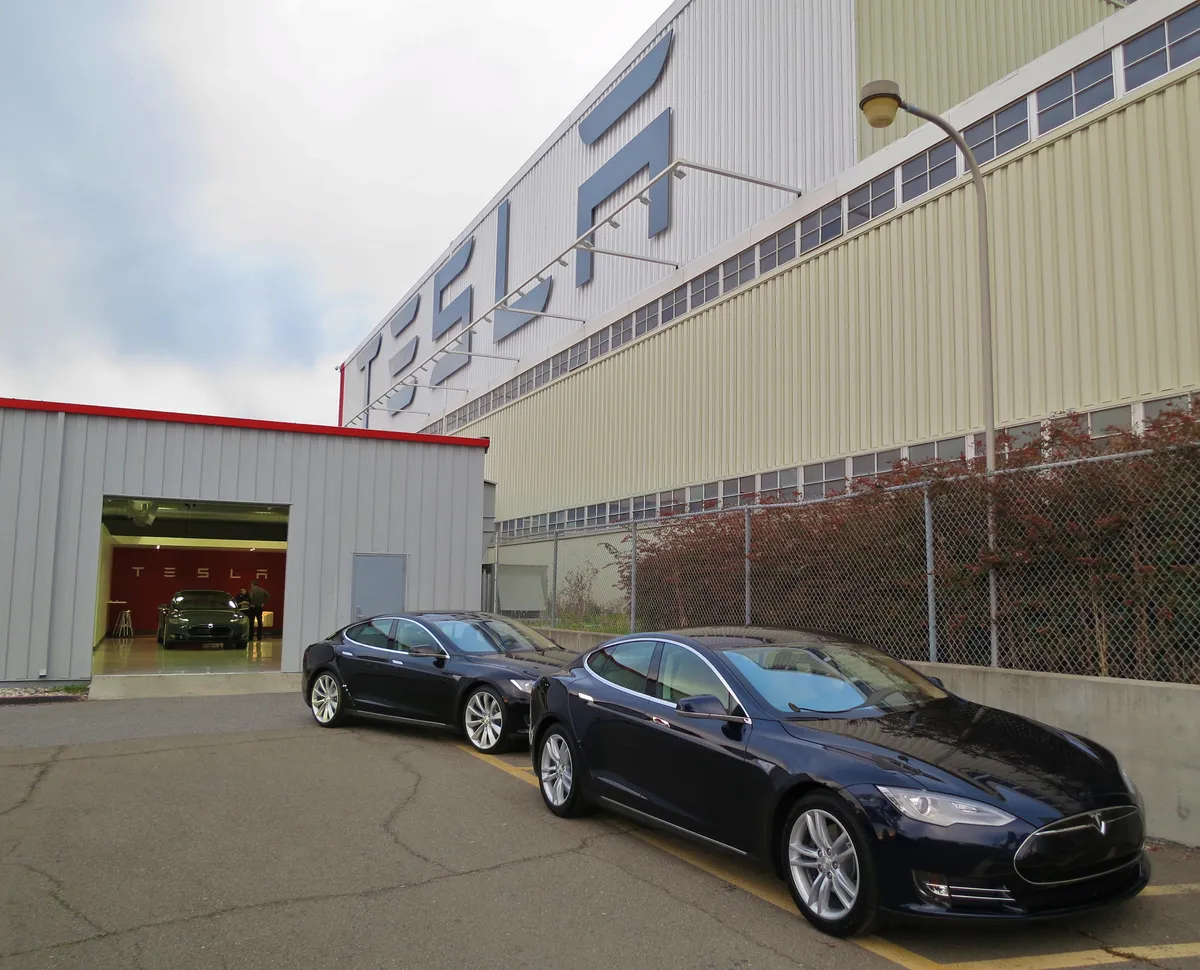
The case is Department of Fair Employment and Housing v. Tesla, Inc., Case No. 22CV006830, in Alameda County Superior Court. The agency, since renamed the California Civil Rights Department, filed it on Feb. 9, 2022 under the Fair Employment and Housing Act and the California Equal Pay Act.[9][8] The plaintiff is the state agency, not individual workers. Its amended complaint says the department brings the action “on behalf of the state and a group of Black and/or African American workers.”[8]
The state alleges racial harassment, segregated job assignments, unequal pay, harsher discipline and retaliation at the Fremont factory. The complaint says one Black worker heard racial slurs “as often as 50-100 times a day,” and that workers called the factory the “slaveship” or “the plantation.”[8] Tesla denies wrongdoing.[4]
Status as of Sept. 30, 2026
Opening statements were Monday, Sept. 21. Judge Peter Borkon is hearing the case without a jury and has scheduled it to run until Oct. 30, according to Reuters.[4] Bloomberg Law reported that Borkon will decide whether to order changes to Tesla’s internal policies, and that a second phase will address civil penalties.[2] Reuters noted that California law, unlike federal law, does not cap the damages a court can award.[4] No liability finding has been made. As of today the trial is in its second week, 9 days after openings and 30 days before its scheduled end.
A side dispute opened on day one. According to Law360, as cited by Electrek, the state’s first witness testified that a senior in-house Tesla lawyer called him the week before trial and that he at first believed the lawyer represented the state. A state attorney asked the judge to bar Tesla’s counsel from contacting the agency’s witnesses; Borkon told the agency to file a formal motion, Electrek reported.[3] No court has found misconduct.
How it fits with the other Fremont cases
| Case | What happened |
|---|
| Diaz v. Tesla (federal, N.D. Cal.) | A federal jury in San Francisco ordered Tesla to pay former contract elevator operator Owen Diaz $137 million in 2021.[12] Judge William Orrick cut it to $15 million; a 2023 retrial on damages produced $3.2 million ($175,000 for emotional distress and $3 million in punitive damages).[13] Diaz later settled for an undisclosed amount.[2] |
| Vaughn v. Tesla (Alameda County, RG17882082) | Certified in May 2024 as a class action covering roughly 6,000 Black workers, then decertified.[14] Borkon issued that reversal last year, Reuters reported.[4] Three of five named plaintiffs, including Marcus Vaughn, settled confidentially in 2026; hundreds of workers are still pressing individual claims.[14] |
| EEOC v. Tesla (federal) | The U.S. Equal Employment Opportunity Commission sued in 2023, alleging Tesla violated federal law by tolerating “widespread and ongoing racial harassment” of Black employees at Fremont.[15][2] Bloomberg Law reported that the parties entered settlement talks.[2] |
A source conflict on scope: Electrek describes the state’s case as covering more than 6,000 workers, while Reuters attaches the 6,000 figure to the separate Vaughn class.[3][4] The state’s complaint names no headcount in the passage quoted above, so this article does not use one for the state case.
What Tesla’s lawyer argued
Tesla’s trial lawyer is Tyree P. Jones Jr. of the Polsinelli law firm.[3] Bloomberg Law reported that Jones, who is Black, said the state’s focus on the N-word lacks context, and quoted him directly:[2]
“By this action, the state of California attacks the way that many Black people greet each other, express respect for each other, and express endearment and love for each other.”Tyree Jones, opening statement, Sept. 21, 2026, as quoted by Bloomberg Law
Bloomberg Law reported that he said there is a clear difference between a Black person being called the N-word by a white person and Black people using the term with each other in a friendly manner. It quoted him: “The state refuses to even recognize that there is a difference in the use of the N-words.”[2]
The Guardian reported that Jones began his opening by saying the word repeatedly in a familiar tone, and quoted him: “What’s up my [N-word], my [N-word] …,” followed by “none of which is used as a racial slur.”[1] Electrek reported that he pointed to lyrics by Kanye West and Jay-Z, and quoted him: “This trial is not about the N-word — the N-word is not on trial here.”[3]
The rest of the opening was a liability defense, not a defense of slurs:
- The evidence is too thin. Bloomberg Law reported that Jones said the state lacks the data to show that “Tesla’s standard operating procedure was to engage in racial harassment,” and that the company’s human resources staff acted on complaints.[2]
- The graffiti was done to Tesla, not by it. “The state is blaming the employer, when it’s the victim,” he said, according to The Guardian.[1]
- Nothing is left to stop. “The question is what is there to enjoin? The answer to that is: nothing,” he said, per Electrek.[3]
Electrek, in its own words, summarized the opening as telling the judge that the word is a term of respect and endearment in the Black community.[3]
Tesla’s public position, from its 2022 response to the lawsuit, is that it has “always disciplined and terminated employees who engage in misconduct, including those who use racial slurs or harass others in different ways.”[10] Its 2021 statement after the Diaz verdict went further, saying that “any discriminatory slurs – no matter the intent or who is using them – will not be tolerated.”[11] The in-group use the defense now describes as greeting is use that Tesla’s own stated policy says it does not tolerate.
Rating the post’s version
The post says Tesla is defending “their right to call Black employees the N-word.” That reverses the distinction Jones drew. He argued that some use among Black coworkers is greeting or affection and is not evidence of harassment. He did not argue that Tesla, its managers or non-Black workers may direct the slur at Black employees, and Tesla’s written position is that it disciplines and fires employees who use racial slurs. The post’s framing is False. The kernel that survives is narrower: Tesla’s defense does treat some workplace use of the word, between Black coworkers, as outside what the law punishes.
The “more than 10 times” count
We found no published count of how many times Jones said the word. The Guardian wrote that he said it “repeatedly” and quoted two uses in one sentence.[1] CNET’s account says he was “repeatedly uttering the racial slur to illustrate his defense.”[18] No outlet we read gives a number, and no transcript of the opening has been published.
The figure does appear in the same coverage, attached to someone else. The Guardian reported that a former Tesla security manager testified that a white employee called her the N-word “more than ten times in a row in front of other workers.”[1] Quartz reported the same testimony.[7] That witness testified on the same day as the opening statements, so a reader skimming the coverage could attach her number to the lawyer. We cannot show that is how the post’s author got the figure.
The framing matters too. Per the quotes above, Jones used the word to illustrate a greeting he said Black workers use, not to quote trial evidence and not to insult anyone. Rating: Unproven. He said it more than once; whether it was more than ten times is not on the public record.
theGrio’s headline
theGrio’s Sept. 25 story said Jones repeated the slur while arguing that some Black people use it as a greeting, and that he argued not every use of the word is racial harassment. It sourced that to The Guardian and Futurism.[5] Futurism had written that Tesla’s attorneys argued it is acceptable to use the word in certain situations.[16]
Two days later theGrio described the argument with more care: the N-word “can be used in certain workplace contexts without necessarily constituting racial harassment.”[6] That sentence matches Bloomberg Law’s account of the opening. The page’s browser title is blunter still: “Tesla Lawyers Defend N-Word Use as Black Workers Testify.”[5] “Acceptable” is a fair reading of an argument that calls the word a greeting among Black workers and calls the state’s challenge to it offensive.[1] What the headline drops is the qualifier the argument depends on: use among Black workers, as distinct from a white person aiming the word at a Black worker.[2] “Some workplace contexts” leaves readers to supply the context, and the Threads post supplied the wrong one. The subhead, that he repeated the slur in openings, is accurate. Rating: Mostly True, accurate but missing the qualifier that matters most.
What the post implies
Two takeaways a reader would likely carry from the post, both rated in the verdicts above:
- Implied: Tesla’s lawyer argued that non-Black coworkers or managers may call Black workers the N-word. False. Bloomberg Law’s account has him drawing exactly that line, between a white person calling a Black person the slur and Black people using it with each other.[2]
- Implied: Tesla as a company endorses the use of racial slurs against its Black workers. Misleading. Tesla’s stated policy runs the other way.[10] But the record is not clean. In the Diaz case, a federal jury found that Tesla failed to prevent racial harassment at Fremont; the 2023 retrial set damages only.[13] After the 2021 verdict, Tesla’s then vice president of people wrote that trial witnesses agreed the word “was not appropriate in the workplace” but that “most of the time they thought the language was used in a ‘friendly’ manner and usually by African-American colleagues.”[11] The defense now in court echoes that 2021 framing. Failing to stop harassment, the legal question the state is trying, is different from endorsing it, and the post collapses the two.
The case for the post
The strongest version of the post runs like this. Tesla’s lawyer chose to say the slur in open court in a case brought on behalf of Black workers who say they were called it, and he asked the judge to treat some of its workplace use as harmless. The state’s first witness testified that a non-Black coworker called him the N-word while threatening him and that Tesla wrote him up, not the coworker.[1][3] A former regional security manager testified that his supervisor, now a senior Tesla security executive, told him to warn a Black veteran he was hiring that “he’ll be called those words.”[3] Tesla has been found liable before for failing to act on exactly this kind of harassment.[13] On that reading, “defending their right” is rhetorical shorthand for a company fighting accountability for slurs at its plant.
That case is strong on tone and weak on the words the post chose. It does not reach the specific claim that Tesla asserted a right to call Black employees the slur, which the reported argument contradicts, and it supplies no count for the “more than 10 times” figure. The verdicts hold, with this as the surviving caveat: the defense does ask the court to excuse some workplace use of the word, and commenters quoted by theGrio rejected that premise outright.[6]
Implications
The trial is about more than one word. The state’s case covers pay, job assignment, promotion, discipline and retaliation, and the state cites a pay analysis finding that Black workers earned an average of $1,533 less per month than white workers between June 2018 and June 2024.[17] A boycott argument built only on the lawyer’s remarks skips most of what the judge will rule on.
The legal stakes are larger than the individual suits. Because the state is not bound by the arbitration agreements that have limited workers’ own suits, and California does not cap damages, a loss could bring injunctive changes to Tesla’s employment practices plus penalties.[1][4] Whether a defense that frames in-group use of the slur as context persuades Borkon is a forecast, not a finding; he alone decides.
For readers, the episode shows how a quote drifts. Bloomberg Law’s direct quote became theGrio’s “acceptable,” then a Threads post’s “right to call Black employees the N-word,” and a witness’s count became the lawyer’s. Each step is small. The end point says something the lawyer did not say.
What to watch
- The scheduled end of the bench trial on Oct. 30, and whether a civil-penalty phase follows.[4][2]
- Any formal motion on Tesla’s contacts with state witnesses, and how Borkon rules.[3]
- Whether a transcript of the Sept. 21 openings becomes available. That would settle the count.
Sources