The quote and the transcript
As posted by @Poeslawisalive
“If we buy 2 billion dollars worth of Bananas from Brazil, we’re actually losing 2 billion dollars. So if we stop eating bananas, we actually save 2 billion dollars.”
What Trump said, Charlotte, 16 September 2026
“If we lose 50 billion dollars a year with a country and we say we’re not gonna trade with you anymore, we don’t lose 50 billion dollars a year. It’s very simple.”
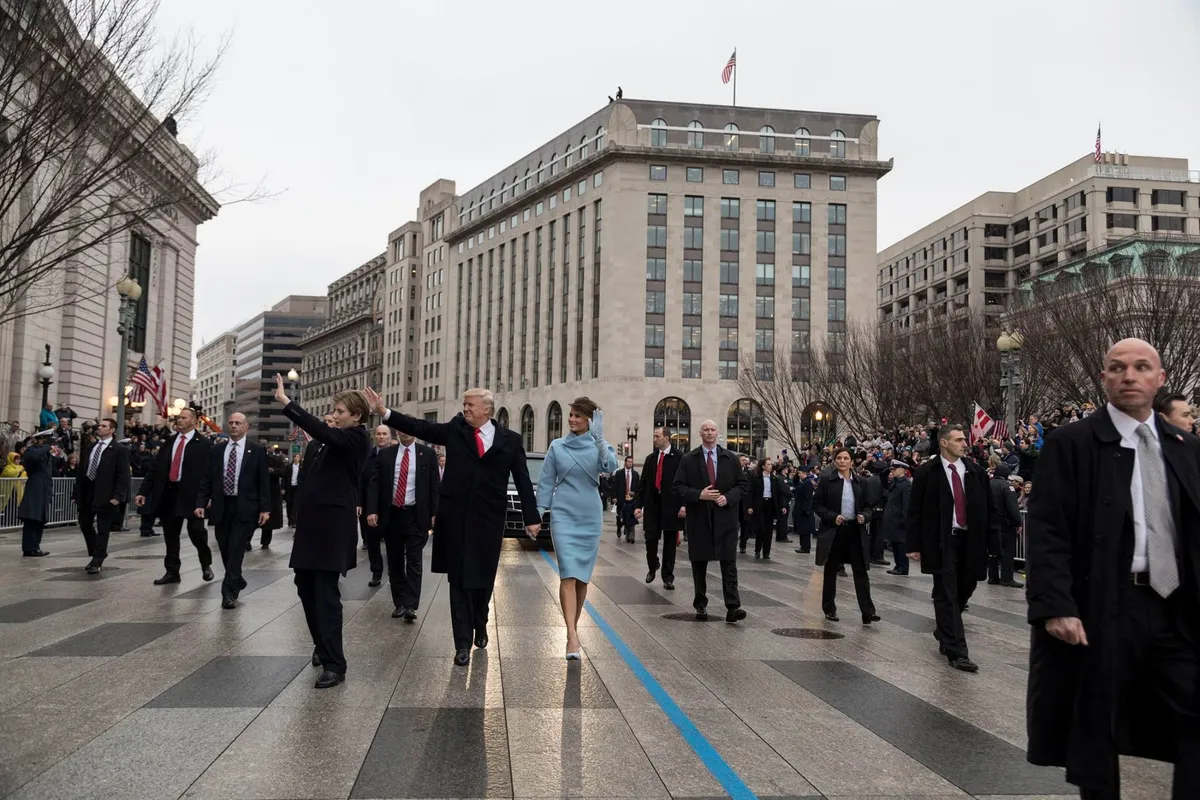
The post attaches the banana quote to a Fox News clip captioned “Trump takes questions in North Carolina.”[1] That clip matches a real event: Trump’s press gaggle after landing at Charlotte on 16 September, which the White House posted and Roll Call’s Factba.se transcribed.[2][3] The words “banana” and “Brazil” appear nowhere in the full transcript. The trade argument does, in two places:
“If we wanted to get rid of deficits, which we could do with a swipe of a pen with every country, we’d make a trillion and a half dollars a year. We’d pay off our debt, we’d do all sorts of things, but we haven’t chosen to do that, but at some point we will.”[3]
And, a few minutes later, the “50 billion dollars” line quoted above.[3]
Verdicts at a glance
- False
Trump said buying $2 billion of Brazilian bananas loses $2 billion, and not eating them saves it
No such words appear in the transcript of the appearance shown. The line originated with a parody account.
- True
Implied: Trump treats a trade deficit as money the US loses
He said so on 16 September: stop trading with a country “and we don’t lose 50 billion dollars a year.”
- False
Trump: ending trade deficits would “make a trillion and a half dollars a year” and pay off the debt
The whole 2025 US trade deficit was $901.5 billion, and a deficit is not income forgone. The national debt comes from the federal budget, not from trade.
- False
Trump: a deficit with a country is a loss that ending trade would avoid
Buyers receive goods for what they pay, and the dollars return as purchases of US exports and assets. Federal Reserve economists describe the deficit as the gap between national saving and investment.
- False
Implied: the US runs a deficit with Brazil
The US ran a surplus with Brazil in 2025: $14.4 billion in goods and $27.4 billion in services, according to the US Trade Representative.
- False
Implied: tariffs make foreign countries pay
New York Fed economists found 94% of the 2025 tariff burden fell on the US in the first eight months. Studies of the 2018 tariffs found the full cost landed on US consumers and importers.
Where the banana line came from
The account that posted it, @Poeslawisalive, takes its name from Poe’s Law, the internet maxim that parody of an extreme view is hard to tell from the real thing.[1][11] The handle signals the joke; the transcript settles it, since the words appear nowhere in the appearance the post shows.[3] Other accounts reposted the line with the same wording, presented as a Trump quotation.[4] The joke lands because it exaggerates something Trump says. Quoting it as his words is still false.
The parody also picked a country that undercuts it. The US does not run a deficit with Brazil. According to the Office of the US Trade Representative, the US had a goods trade surplus with Brazil of $14.4 billion in 2025 and a services surplus of $27.4 billion.[5]
Is a trade deficit money lost?
What a $50 billion deficit with one country means
A purchase exchanges money for something of the same agreed price. If an American retailer pays $50 billion for imported goods, it receives $50 billion of goods, which it chose because they were cheaper or better than the alternatives. Ending that trade does not keep $50 billion in the country as profit; it means buying substitutes, usually at a higher price, or going without.
The dollars also come back. Foreign sellers use them to buy American exports or American assets, such as Treasury bonds, stocks, real estate and factories. That is why economists describe the overall deficit through the national accounts rather than as a tally of wins and losses. Economists at the Federal Reserve Bank of New York put it this way: the deficit reflects “a persistent shortfall in domestic saving that requires funds from abroad to finance domestic investment spending,” and reducing it “requires both more exports relative to imports and a narrowing of the gap between saving and investment spending.”[6]
“A trillion and a half dollars a year”
The Bureau of Economic Analysis reported that the US deficit in goods and services for 2025 was $901.5 billion.[7] Trump’s figure is about 1.7 times that. More fundamentally, eliminating the deficit would mean Americans buying about that much less from abroad or selling that much more; it would not deposit that sum anywhere. The national debt is the accumulation of federal budget deficits, spending above tax revenue, which is a separate account from the trade balance.
Who pays the tariffs
If imports are losses, tariffs look like a way to shrink them and collect from foreigners. The evidence on who pays points the other way.
The 2018 tariffs. Amiti, Redding and Weinstein, writing in the Journal of Economic Perspectives, found “the complete pass-through of the tariffs into domestic prices of imported goods” and concluded that “the full incidence of the tariffs has fallen on domestic consumers and importers so far.”[8]
The 2025 tariffs. Economists at the New York Fed found that “94 percent of the tariff incidence was borne by the U.S.” in the first eight months of 2025: “a 10 percent tariff caused only a 0.6 percentage point decline in foreign export prices.” By the end of the year, they found, “a larger share of the tariff incidence was borne by foreign exporters.”[9] Foreign sellers absorb more over time; most of the cost still lands in the United States.
The strongest case for tariffs is not the deficit-as-loss argument. Tariffs can protect industries needed for national security, rebuild supply chains for goods like chips and medicines, and serve as leverage in negotiations, and a large deficit with one country can signal real problems such as currency manipulation or subsidies. Those are serious debates. They stand or fall on their own evidence, and none depends on the idea that buying imports loses money.
What the post implies
Implied: Trump treats a trade deficit as money the US loses (True)
This is the part of the parody that holds up. In the appearance the post uses, he said stopping trade with a deficit country means “we don’t lose 50 billion dollars a year,” and that ending all deficits would “make a trillion and a half dollars a year.”[3]
Implied: the US has a trade deficit with Brazil (False)
It has a surplus in both goods and services.[5]
Implied: tariffs are paid by other countries (False)
The research on both the 2018 and 2025 rounds finds most or all of the cost borne in the United States.[8][9]
Implications
For readers sharing it. Posting the banana line as a Trump quote spreads a fabrication, and a false quote is easy to discredit, which lets the real one escape scrutiny. The accurate version is stronger: quote the Charlotte transcript.
For the tariff debate. Policy built on the idea that deficits are losses aims at the wrong target. Cutting imports with tariffs raises prices at home, and the deficit is driven by saving and investment, which tariffs do not directly change. A case for specific tariffs has to be made on security, resilience or bargaining grounds.
What to watch. In July 2026 the New York Fed reported that nearly half of firms paying tariffs still planned further price increases to cover them.[10] Monthly trade data from the Bureau of Economic Analysis will show whether the deficit shrinks under current tariffs; in 2025 it fell by just $2.1 billion.[7]
The quote is fake and the joke is fair: the economics it lampoons is what Trump said on camera.
Sources
- “President Trump Explains Trade Deficits”
- President Trump Gaggles with Press Upon Arrival at Charlotte, NC, Sep. 16, 2026
- Press Gaggle: Donald Trump Speaks to Reporters After Air Force One Arrival, September 16, 2026
- “TRUMP EXPLAINS TRADE DEFICITS”
- Brazil
- Why Does the U.S. Always Run a Trade Deficit?
- U.S. International Trade in Goods and Services, December and Annual 2025
- The Impact of the 2018 Tariffs on Prices and Welfare
- Who Is Paying for the 2025 U.S. Tariffs?
- More Tariff Pass-Through Is in the Pipeline
- Poe’s law