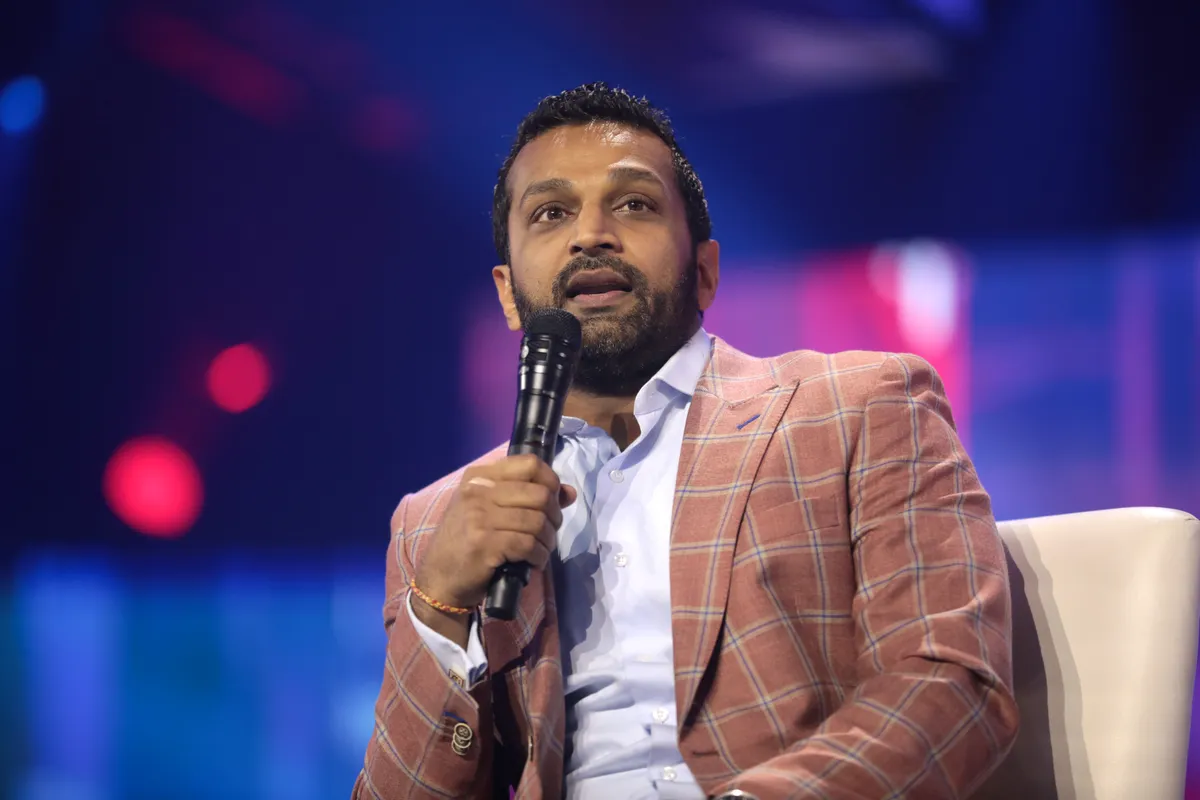
FBI Director Kash Patel appeared before the Senate Judiciary Committee on September 15, 2026, for an oversight hearing in Hart 216.[1] The exchange that travelled furthest was about bestiality: senators from both parties asked why the bureau had stopped treating it as an automatic bar to employment, and Patel answered that the change was there to protect people who had been forced.
The question this piece tests is narrow. Not whether the policy is wise, which is an argument rather than a fact, but whether Patel's description of the rule matches the rule as it is documented.
The claims
| Claim | Verdict |
|---|---|
| "Applicants who have engaged in bestiality means they were victims of bestiality because they were forced to do so." Kash Patel, to Sen. Dick Durbin | False |
| Asked whether a human who had sex with an animal could still be an FBI agent: "They cannot." Kash Patel, to Sen. John Kennedy | Misleading |
| The hiring changes "were there before I got there" and did not start with him. Kash Patel, to Sen. John Kennedy | Misleading |
| The FBI removed "engagement in prostitution or bestiality" from its public eligibility document on February 28, 2025, eight days after Patel's confirmation. Senate Judiciary Committee Democrats, letter of Sept. 14 | Mostly True |
What the two FBI documents say
Two documents sit on fbijobs.gov right now, and they disagree with each other. Both were retrieved and read for this piece.
Special Agent FAQ
- Non-U.S. citizenship
- A felony conviction
- Domestic violence conviction
- Violating the drug policy
- Defaulting on a federal student loan
- Failing a urinalysis drug test
- Failure to register with Selective Service
- Acts designed to overthrow the government
- Engagement in prostitution or bestiality
- Failure to pay child support
- Failure to file income tax returns
Employment Eligibility
- Non-U.S. citizenship
- A felony conviction
- Domestic violence conviction
- Violating the drug policy
- Defaulting on a federal student loan
- Failing a urinalysis drug test
- Failure to register with Selective Service
- Acts designed to overthrow the government
- (no such line)
- Failure to pay child support
- Failure to file income tax returns
The 2023 Special Agent FAQ lists "Engagement in prostitution or bestiality" among the factors that "will automatically disqualify job candidates."[6] The Employment Eligibility guide currently posted contains no occurrence of either word; its disqualifier list is otherwise the same ten items.[7] The second file's embedded metadata gives a creation date of February 28, 2025 and a last-modified date of March 27, 2025.
Behind the public documents is an internal one. CBS News reported on August 28, 2026 that the bureau had circulated a June 16, 2026 memo, an "electronic communication," to staff who run background checks.[5] Per sources described as having direct knowledge of its contents, it stops treating three things as automatic bars: paying for sex fewer than three times and more than ten years ago, theft from an employer more than three years ago, and bestiality or animal cruelty that occurred before the applicant turned 18. That memo has not been published. Everything known about its text comes from those sources.
Claim 1: "Engaged in" means "were victims" False
Durbin read the policy back to Patel and asked whether people who had stolen from employers, solicited sex, or engaged in bestiality were the qualified candidates the FBI was losing.[4] Patel's answer:
Applicants who have engaged in bestiality means they were victims of bestiality because they were forced to do so. At this FBI we are not going to criminalize and prevent victims from serving the United States of America. Kash Patel, Senate Judiciary Committee, September 15, 2026
Durbin's reply was that the policy says applicants who have engaged, "Not victims of bestiality — applicants who have engaged."[4]
The documented rule does not carry the meaning Patel gave it. The carve-out reported by CBS turns on one variable, the applicant's age at the time. A person coerced at 19 gets no relief from it. A person who acted willingly at 17 does. A coercion test and an age test sort applicants into different groups, and the rule as described is an age test.
CBS addressed the point directly: its sources said the new eligibility requirements "do not distinguish between candidates who were coerced into sexual activity with animals, as opposed to those who engaged in such acts willingly."[5]
Patel's sentence also fails on its own terms. "Engaged in" describes what a person did; it carries no information about whether they chose it. Treating the two as synonyms is what lets the rest of the answer follow, and it is the step that does not hold.
Claim 2: "They cannot" be an FBI agent Misleading
Kennedy, a Republican, spent several minutes trying to get a plain answer. The closing stretch:[10]
Kennedy If Joe participated in bestiality, not as the animal but as the human, don't you think he ought to be disqualified?
Patel If he voluntarily did it, sure, but if he was trafficked into it, then…
Kennedy But how do you involuntarily do it?
Patel …they then explained to me and showed me cases in which people were forced into it and had applied to the FBI, and so I thought they should be considered. It's not an automatic disqualification. That's all.
Kennedy But you're not telling us today that if a human being had sex with an animal that they can still be an FBI agent?
Patel No. […] They cannot.
Four lines earlier Patel said the conduct is "not an automatic disqualification." Then he told the committee such a person cannot be an agent. Both cannot describe the same rule.
The charitable reading is available and worth stating: Patel had just drawn a line between voluntary and coerced conduct, so his "they cannot" may have answered the narrower question of a willing adult. That reading survives the transcript. It does not rescue the statement, because the age carve-out has no voluntariness test in it either. Someone who acted willingly at 17 sits inside the carve-out and can be considered. A senator who took "they cannot" at face value would have left the room with a rule in mind that the documents do not describe.
Misleading rather than false, because the ambiguity in what Kennedy was asking is real.
Claim 3: The changes predate him Misleading
Kennedy asked whether the changes started with Patel. Patel said they did not, and earlier told him the rules "wrote it up in a fashion before I arrived that addressed prostitution, bestiality and trafficking. They were there before I got there."[10]
Part of that is accurate. Bestiality appears in the 2023 FAQ, so the subject predates his tenure. What predates him is the prohibition, not its removal.
- 2023 Special Agent FAQ lists engagement in prostitution or bestiality as an automatic disqualifier.[6]
- Feb 20, 2025 Senate confirms Patel as FBI director, 51–49.[13]
- Feb 28, 2025 Employment Eligibility guide created, without the line. Eight days after confirmation.[7]
- Jun 16, 2026 Internal memo relaxes the bars on theft, paid sex, and bestiality.[5]
- Aug 28, 2026 CBS News reports the memo's contents.[5]
- Sep 14, 2026 Judiciary Democrats demand records by September 28.[2]
Patel also told Kennedy that someone brought him the recommendation and that his own first reaction was the same as the senator's, before staff showed him cases. On the record he approved it. "Did not start with me" and "I approved it after pushing back" can both be true, and the first, said on its own, leaves out the second.
Claim 4: The Democrats' February 2025 timeline Mostly True
The letter Durbin and every Judiciary Democrat sent on September 14 makes a specific dating claim: the FBI "appears to have changed its public document denoting employment eligibility standards on February 28, 2025, just eight days after your confirmation."[2]
The arithmetic holds. February 20 to February 28 is eight days. The metadata holds too: the posted PDF reports a creation timestamp of February 28, 2025, matching the footnote in the letter.
Two qualifications keep this short of a clean True. A PDF creation date records when the file was made, not when it went up on the website. And the comparison runs between two different publications, a Special Agent FAQ and a general Employment Eligibility guide, rather than two revisions of one document. The letter's own hedge, "appears to have," is the right amount of caution, and the claim is otherwise supported.
The prostitution half, and a DOJ order still on the books
The bestiality line drew the attention; the prostitution change is the one with a live legal conflict behind it.
The reported criterion covers applicants who paid for sex, fewer than three times, more than ten years ago, and who were not in a position the FBI deems one of "public trust" at the time.[5] The Democrats' letter notes that the bureau does not classify some of the pools it recruits from, including members of the armed forces, as positions of public trust.[2] Buying sex is not a thing that happens to a trafficking victim, so Patel's framing has less purchase here than on the other half.
An FBI spokesperson offered CBS a different defense on this point: a person may have hired a sex worker somewhere prostitution is legal.[5] A 2015 order signed by Attorney General Eric Holder, which the Justice Department told CBS remains in effect, forecloses that argument in its own words. It prohibits all Department personnel from "soliciting, procuring, or accepting commercial sex," and specifies that the rule "applies regardless of whether the activity is legal or tolerated in a particular jurisdiction, foreign or domestic."[8] The memo gives its reason in the same paragraph the senators quoted back: solicitation "undermines the Department's efforts to eradicate the scourge of human trafficking."
The case for Patel
Set out at its strongest, the defense runs like this. The June 16 memo has never been released, so every description of its text comes from one outlet's unnamed sources. The FBI told CBS the changes are confined to a narrow set of circumstances, "such as in cases where a person was sexually abused with animals as a child."[5] On that account the age threshold is a proxy for childhood abuse rather than a licence for willing conduct, and Patel was describing the purpose of a rule whose operative text the public has not seen. He also said staff showed him case files of applicants who had been forced, and nobody has contradicted that.
Two things keep this from carrying the day. The FBI's own spokesperson described intent, not the criterion, and CBS's sources spoke to the criterion directly when they said it does not distinguish coerced from willing. And an agency that wants credit for a narrow rule can publish it. The committee asked for the unredacted memo on September 14; the bureau has had it since June.
The defense would land if the memo turned out to contain a coercion test. Until it is produced, the only description of the rule anyone can check is the one Patel's answers contradict.
What would settle this
One document decides all four claims. The Judiciary Democrats asked for a complete, unredacted copy of the June 16, 2026 memorandum, the records showing who approved it, counts of applicants reviewed under it since June 16 and since February 28, 2025, any analysis of the blackmail and courtroom-credibility exposure it creates, and the guidance issued to polygraph examiners and adjudicators.[2] The deadline they set is September 28, 2026, thirteen days from this hearing.
If the memo contains a coercion test, Patel's answer to Durbin was accurate and this piece is wrong about claim 1. If it contains an age threshold and nothing else, the record stands as read. The committee also asked for officials to brief it "without delay," which is the part with no date attached and therefore the part most likely to slip.
One factual aside, since it was said under oath. Kennedy closed by asking whether people who commit bestiality ought to be in jail, and Patel answered, "They all are."[10] That last line appears in the Irish Star's extended transcript and was not picked up by the wire coverage, so it rests on one account of the exchange. They are not all in jail. Prosecutability is close to universal across the states, with West Virginia reported as the last without a dedicated statute,[12] but conduct being chargeable everywhere is not the same as every person who has done it being incarcerated. The carve-out under discussion covers conduct by minors, who would rarely be in prison for it. The claim was offered as reassurance and does not survive contact with its own subject matter.
Sources
- Oversight of the Federal Bureau of Investigation
- Letter from Senate Judiciary Committee Democrats to Director Patel
- Durbin, Senate Judiciary Democrats Scrutinize Director Patel's Decision To Gut FBI's Hiring Standards
- Durbin Grills Director Patel On Record Of Failed Leadership At FBI
- At the FBI, a history of hiring prostitutes or stealing from employer may no longer be a barrier to being hired
- Special Agent FAQ: Frequently Asked Questions and Answers
- Employment Eligibility
- Memorandum: Prohibition on the Solicitation of Prostitution
- Kash Patel Defends the FBI Welcoming Applicants Who Have Engaged in Bestiality
- Kash Patel struggles to explain why bestiality was dropped as FBI disqualification
- Kash Patel Twists Himself in Knots on FBI Hires and Bestiality
- West Virginia is the Only Remaining State That Doesn't Ban Bestiality
- Senate confirms Kash Patel, fierce critic of FBI, to head the bureau
- FBI chief Kash Patel defends hiring standards changes on prostitution, bestiality at fiery hearing