What the WSJ Actually Reported
“The Warnings That Came Before a War Now Reaching the Six-Month Mark,” published August 25, 2026, by Alexander Ward, Lara Seligman, and Alex Leary, is a WSJ investigation drawing on people familiar with the pre-war deliberations.[1] The free portion confirms the following, and secondary reporting corroborates it:[2]
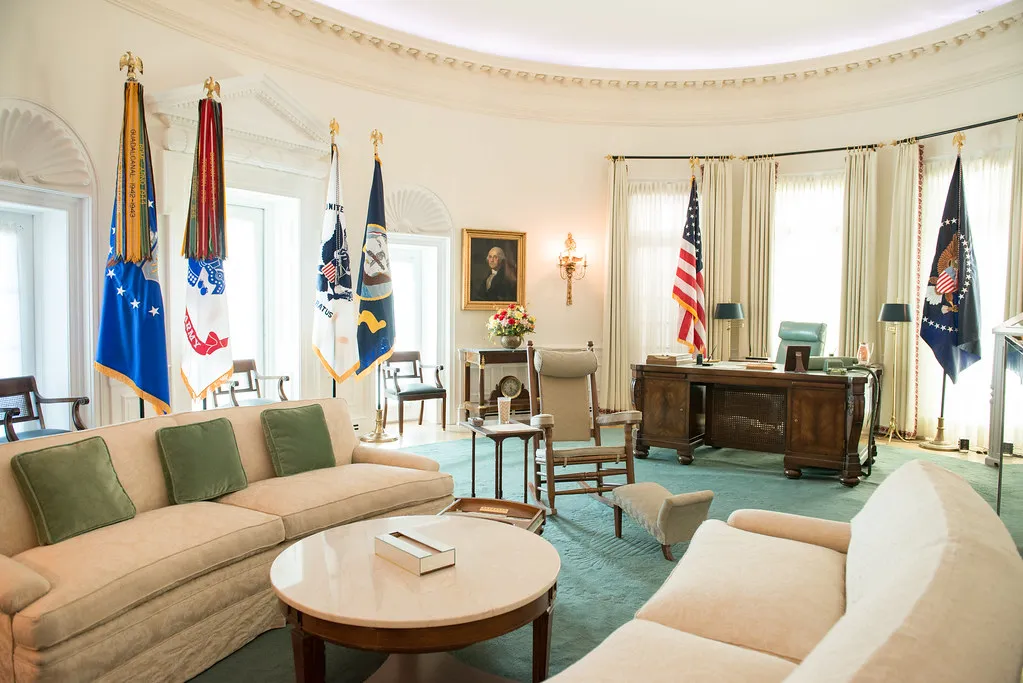
Days before the February 28 strikes, Trump summoned then-Director of National Intelligence Tulsi Gabbard to the Oval Office to ask whether a full assault was a good idea. Gabbard outlined three concerns from the intelligence community: (1) eliminating Iran’s Supreme Leader would likely produce a more hard-line successor open to acquiring nuclear weapons; (2) Tehran would rush to close the Strait of Hormuz, destabilizing global energy markets; and (3) Iran would strike U.S. forces and regional partners. Vice President JD Vance separately advocated for negotiation rather than war, arguing that existing sanctions had already weakened Iran’s economy and that failed talks would provide greater legitimacy for military action if force later became necessary. Joint Chiefs Chairman Gen. Dan Caine and Defense Secretary Pete Hegseth briefed Trump on casualties, stockpile concerns, and readiness challenges.
But in the same set of deliberations, according to the WSJ and confirmed by Political Wire’s summary of the piece,[3] senior aides and Israeli Prime Minister Benjamin Netanyahu told Trump that Iran was “at its weakest point in decades” and that the moment offered “the rare opportunity to dismantle Iran’s nuclear program and bolster his legacy as a peacemaker.” Hegseth and Caine also said they could manage complications that arose. Trump chose to proceed, relying on the optimistic assessment over the cautionary one.
That is the record. Trump received competing assessments from senior officials with genuine disagreements, and he sided with the more aggressive view. The sourcing method is background attribution: “people familiar with the meeting,” which is standard background sourcing for sensitive deliberations, not a document leak.
The Central Distortion: “Ignored” vs. “Chose One View”
The elhayat-life.com rewrite, headlined “Secret Oval Office Warning That Trump Ignored Is Leaked,” reports only Gabbard’s cautionary briefing and the military warnings about casualties, then states Trump ignored them. The Netanyahu/Hegseth/Caine pro-attack assessment does not appear anywhere in the rewrite.
This is the fact-check’s central finding, because the distortion changes what kind of event this was. The WSJ describes a president who weighed competing counsel from officials he appointed (some warning against, some urging forward) and made a decision. The aggregator describes a president who received a single coherent warning and dismissed it. These generate different moral and political readings, and only one of them matches the sourced record.
It is accurate that Trump did not follow Gabbard’s or Vance’s advice. It is not accurate that he had no counsel on the other side. The word “ignored” carries a connotation of dismissing uncontested expert opinion, which is precisely what the WSJ record does not show.
The aggregator’s headline asks: “Did Trump ignore a warning?” The WSJ investigation asks a better question: “What competing assessments did Trump receive, and how well did the cautionary ones hold up?” Answering the second question requires carrying both sides of the briefing, which the rewrite does not do.
“Secret Warning…Leaked”: A Framing Problem
The WSJ attributes its reporting to “people familiar with the meeting,” which is standard anonymous background sourcing. There is no evidence that a classified document was leaked. Intelligence briefings given to presidents are not public by nature, but their existence becoming known via background sourcing is routine investigative journalism, not a leak of a document.
The word “leaked” implies classified material was improperly disclosed, carrying connotations of illegality or scandal. The available record does not support that framing. Calling such a briefing “secret” in a headline is accurate only in the trivial sense that all presidential intelligence briefings are not public; it implies a more dramatic disclosure than the sourcing reflects.
Prediction-by-Prediction: What Held Up
The composite claim that “all” predictions came true is the aggregator’s strongest assertion and must be evaluated prediction by prediction.
Strait of Hormuz closure True
Gabbard warned the Strait would close and destabilize energy markets. Iran closed the Strait to commercial traffic on February 28, 2026, immediately following the strikes. The Islamic Revolutionary Guard Corps confirmed closure to “unfriendly nations” by March 2–4. A brief memorandum of understanding reopened it around June 17, but the agreement collapsed July 8 after Iran struck commercial vessels. As of August 25, the Strait is effectively closed to routine commercial shipping, operating at roughly 10 vessels per day against a pre-crisis baseline of 88–130.[4] Brent crude stood at approximately $94 per barrel as of August 24;[5] U.S. gasoline prices averaged $4.11 per gallon, up from $2.98 the day before the war began, a 37.9% increase.[6] This prediction is confirmed.
A more hard-line successor Mostly True
Gabbard warned that eliminating Khamenei would “likely usher in a more hard-line regime open to acquiring nuclear weapons.” Ali Khamenei was killed in a joint U.S.-Israeli airstrike on February 28, 2026, confirmed the same day by Iranian state television and acknowledged by both Trump and Netanyahu.[7] Iran’s Assembly of Experts appointed his son, Mojtaba Khamenei, as Supreme Leader on March 8, 2026.[8] U.S. intelligence assesses Mojtaba as more inclined than his father to pursue nuclear weapons, with deeper ties to the IRGC.[9] That assessment was based on intercepted conversations and information gathered before the war — not on actions Mojtaba has taken since assuming power, a distinction intelligence officials themselves noted when the finding was first reported. The prediction is confirmed in direction. Rating this “Mostly True” rather than “True” because the succession of a harder-line leader is confirmed as fact, while the nuclear-acquisition piece remains an intelligence assessment of intentions, not an established action, and the two should not be treated as equivalent.
Iran strikes U.S. forces and partners True
Gabbard warned Iran would strike U.S. forces and regional partners. Stars and Stripes, reporting DoD figures as of August 21, 2026, records 18 U.S. service member deaths and 757 wounded.[10] The International Maritime Organization confirmed 46 attacks on vessels in the Strait since February 28 and 14 seafarer deaths as of June 2026.[11] Iran launched hundreds of retaliatory missiles and thousands of drones across the region in response to the initial strikes. This prediction is confirmed.
Military warnings: casualties, stockpile depletion, readiness Mostly True
Military leaders warned of casualties, weapons-stockpile depletion, and readiness problems. Casualties are confirmed above. On stockpile concerns and readiness, the wider record (including related Crosscheck coverage[12]) documents reported munitions pressures during the campaign. The IAEA assessed that U.S. and Israeli strikes only delayed Iran’s nuclear program by “a matter of months” rather than fundamentally preventing it,[1] a finding consistent with concerns about the limits of what an air campaign could achieve. The coalition-building the U.S. sought did not materialize; experts concluded reopening the Strait by military means alone was “not feasible.”[4] The warnings were borne out in broad terms. Specific stockpile figures cited in pre-war briefings remain disputed and are not independently confirmed here — the WSJ article is hard-paywalled, and the detail on internal readiness assessments was not in the free-preview portion.
Four Specific Details, Checked
The rewrite makes four specific factual claims that can be checked against the primary record. Two are outright false; one is misleading on a technical point; and one checked out: the casualty figure.
White House spokesperson name False
Trump’s age at the February 28 event False
Eric Brewer’s title Misleading
U.S. casualty figure Mostly True
Actors and Outcomes
| Actor / Stakeholder | Position going in | Outcome so far | Rationale |
|---|---|---|---|
| Trump / Hegseth / Caine | Proceed — rare opportunity, Iran at its weakest | Mixed | Khamenei killed, nuclear facilities struck. But war persists at six months; Strait still closed; 18 deaths; gas prices up 38%; midterm political cost mounting. |
| Gabbard / Vance (cautionary) | Do not proceed — significant downside risks | Vindicated (largely) | Three of four core warnings have borne out. Strait closed; hardline succession confirmed; U.S. casualties incurred. Nuclear delay minimal per IAEA. |
| Netanyahu / Israel | Strike — dismantle nuclear program, historic opening | Mixed | Khamenei eliminated, nuclear facilities struck. But program only months delayed per IAEA; successor more aggressive; broader regional instability. |
| Iran (Mojtaba Khamenei) | Retaliate and close Hormuz | Objectives largely achieved | Hormuz effectively closed; regional strikes imposed costs on U.S. and partners; successor regime consolidated; nuclear program intact in fundamentals. |
| Global energy markets / U.S. consumers | Bystander | Harmed | Gasoline up 38%; hundreds of ships and ~6,000 seafarers stranded per IMO (Jul 8); Brent ~$94/barrel (Aug 24). |
| U.S. Republicans (midterm exposure) | Supported war | Unresolved | Gas prices and casualty count cited as electoral liabilities by Republican leaders; midterms remain the key test. |
The Strongest Version of the “Ignored” Claim
The most defensible version of the “ignored warnings” frame is a more precise one: Trump received cautionary intelligence assessments that were more accurate than the optimistic assessments he acted on, and he chose to discount them. Hegseth and Caine told him they could manage complications; they could not, or not fully. Netanyahu offered an opportunity framing that the six-month record has not vindicated. The Gabbard/Vance camp was, on the main predictions, more right than the Hegseth/Netanyahu camp. So “ignored” has some purchase as shorthand for “chose the wrong advice.”
The steelman holds up on substance: if you weight advice by its ex-post accuracy, Trump systematically chose the optimistic camp over the analytical one. The aggregator’s framing collapses a real pattern into a false binary (no competing advice) and adds the fictional “secret leak,” but the underlying critique — that Trump discounted intelligence-community judgment in favor of political and military hawks — is grounded in the record.
This does not change the central verdict. “Ignored” implies no competing counsel existed; the record shows there was. The steelman survives as a characterization of the decision’s outcome, not its process.
What to Watch
- ongoing Strait of Hormuz status: The June 17 memorandum of understanding collapsed July 8. Negotiations are reportedly continuing. The Strait running at roughly 10 vessels per day versus a pre-war baseline of 88–130 is the single largest driver of the energy-price impact. Any durable reopening would change the political calculus significantly.
- unresolved Iran’s nuclear posture under Mojtaba Khamenei: U.S. intelligence assesses him as more open to nuclear weapons than his father based on pre-war intercepts; Iran has not conducted a nuclear test or publicly declared pursuit of a weapon since he took power. Iran possesses sufficient 60%-enriched uranium for approximately ten devices if further enriched. The IAEA has not conducted verified inspections since June 2025. Whether Gabbard’s specific fear (a successor regime that actively pursues nuclear weapons) becomes concrete is the most consequential open question from the pre-war warnings.
- Nov 2026 U.S. midterm elections: Republican leaders have cited gas prices ($4.11/gallon) and casualties (18 deaths, 757 wounded) as electoral liabilities. The midterm result will serve as the first formal political test of whether the war’s costs have shifted public opinion.
- ongoing Pentagon casualty accounting: The DoD divides casualties into two operational categories; the total of 18 deaths is current as of August 21 per Stars and Stripes. The number is a running total. Watch for DoD casualty releases, which have been irregular.
What happened
The Wall Street Journal published a story on August 25, 2026. It found that before the Iran war started on February 28, 2026, President Trump heard two very different sets of advice.
One group warned him not to attack. That group included intelligence chief Tulsi Gabbard and Vice President JD Vance. Gabbard said that if the U.S. killed Iran’s Supreme Leader, Iran would likely get an even harder-line leader who might want nuclear weapons. She also warned that Iran would close the Strait of Hormuz and drive up world energy prices. And she said Iran would strike U.S. troops and partners in the region.
A second group pushed in the other direction. Israeli Prime Minister Benjamin Netanyahu and Defense Secretary Pete Hegseth said Iran was weaker than it had been in decades. They argued this was a rare chance to destroy Iran’s nuclear program and make history. Gen. Dan Caine said the military could handle whatever came up.
Trump chose to listen to the second group and ordered the attack.
A separate website — elhayat-life.com — rewrote the Wall Street Journal story. That rewrite left out Netanyahu’s and Hegseth’s advice. It made it sound like Trump only heard one warning and ignored it. That is not what the Wall Street Journal reported.
Did the predictions come true?
The Strait of Hormuz would close True
Iran closed the Strait of Hormuz on the same day the war started. It is still mostly closed as of August 25, 2026. Gas prices in the U.S. went from $2.98 per gallon before the war to $4.11 per gallon — a rise of about 38%. World oil prices were near $94 per barrel as of August 24, 2026.
A harder-line leader would take over Iran Mostly True
Iran’s Supreme Leader, Ali Khamenei, was killed in a joint U.S.-Israeli airstrike on February 28, 2026. His son, Mojtaba Khamenei, was named the new Supreme Leader on March 8, 2026. U.S. intelligence says Mojtaba is more likely to pursue nuclear weapons than his father was. We cannot say for certain he will — that has not happened yet. But the warning that a harder-line person would take over came true. Iran’s nuclear program also suffered only a short delay from the strikes, not the major setback that was hoped for.
Iran would attack U.S. forces True
18 American service members have been killed. 757 more were wounded. The Pentagon officially confirmed these numbers as of August 21, 2026. Iran also fired hundreds of missiles and thousands of drones at U.S. forces and partner countries in the region.
The military would face casualties and shortages Mostly True
Military leaders had warned about casualties, weapons running low, and forces being stretched too thin. Casualties are confirmed. Reports of weapons shortages during the campaign are widely documented elsewhere. Experts also found that reopening the Strait of Hormuz by military force alone was “not feasible.”
Four specific errors in the rewrite
“Secret warning that was leaked” Misleading
The Wall Street Journal spoke to people who were at the meeting. That is how normal news reporting works. It is called background sourcing. There is no evidence that a secret document was taken and given to reporters. Calling it a “leak” suggests something illegal or scandalous happened. The evidence does not support that.
White House spokeswoman named “Olivia Wells” False
Her real name is Olivia Wales. She is the Assistant Press Secretary at the White House. The Daily Beast, reporting on the same Wall Street Journal story, spelled her name correctly as “Olivia Wales.” The rewrite got it wrong. There is no White House official named “Olivia Wells.”
Trump was “80 years old” at the February 28 event False
Trump was born on June 14, 1946. On February 28, 2026, he was 79 years old, not 80. He turned 80 on June 14, 2026 — more than three months after the event. The Wall Street Journal, writing in August 2026, could correctly call him 80 right now. But the rewrite applied that to a past event when he was still 79.
Eric Brewer called “Vice President of the NTI” Misleading
Eric Brewer’s actual title is deputy vice president of one of the Nuclear Threat Initiative’s programs (not Vice President of the whole organization). His exact quote was “This was all predictable and predicted.” The rewrite changed it to “All of this was anticipated and predicted,” which is close but not his exact words.
The big picture
The Wall Street Journal found that Trump heard two very different sets of advice and chose the more aggressive one. The intelligence officials who warned against attacking turned out to be more right than the officials who said to go ahead. That is a significant finding.
But saying Trump “ignored a secret warning” is misleading. He did not dismiss a single uncontested expert view. He chose between two competing camps, and the camp he chose was wrong about the outcomes. Those are different things.
What to watch
- The Strait of Hormuz: Still mostly closed. A durable reopening would lower fuel prices and ease economic pressure on the president.
- Iran’s nuclear program: The new Supreme Leader, Mojtaba Khamenei, is considered more likely to pursue nuclear weapons. Iran still has enough uranium to build roughly ten nuclear devices if further processed. This is the most consequential open question.
- November 2026 midterm elections: High gas prices and casualties are being cited as problems for Republicans heading into the midterms.
Sources
- The Warnings That Came Before a War Now Reaching the Six-Month Mark
- Secret Oval Office Warning That Trump Ignored Is Leaked
- The Warnings That Came Before the Iran War
- Strait of Hormuz Crisis — IMO Tracking Hub
- Current price of oil as of August 24, 2026
- US gas prices up nearly a dollar from a year ago as Hormuz traffic remains low
- Iran confirms Supreme Leader Ali Khamenei dead after US-Israeli attacks
- Khamenei’s son Mojtaba named as new supreme leader of Iran, state media announces
- US assesses Mojtaba Khamenei more interested in nuclear weapons than predecessor — report
- Pentagon adds 60 wounded to Iran war casualty count
- IMO Secretary-General condemns new attacks on ships in the Strait of Hormuz
- Trump Munitions/TruthSocial Fact-Check (2026-08-06)
- Olivia Wales — White House Office of the Press Secretary
- Secret Oval Office Iran War Warning That Trump Ignored Is Leaked
- Trump was warned an Iran war could spiral. Six months later, it has
- Iran’s War With Israel and the United States