The post named no specific dataset. It circulated alongside a broader argument that the increase is a consequence of Trump administration and HHS Secretary Robert F. Kennedy Jr. policy: CDC and FDA budget reductions, cuts to grants funding state and local traceback investigations, the removal of Cyclospora cayetanensis from CDC’s FoodNet active-surveillance network in 2025, and the 30-month delay to the FDA Food Traceability Rule compliance date.
These are three separable claims. They deserve separate verdicts.
Contents
The Situation
The United States is in the middle of the largest cyclosporiasis outbreak ever recorded. The CDC’s surveillance page, last updated August 11, 2026, counted 13,895 laboratory-confirmed domestically acquired cases since May 1, 2026, with an additional 10,455 cases still awaiting further analysis.[1] Two people have died, both in Michigan. Across all confirmed cases nationwide, at least 740 hospitalizations have been reported (ABC News, Aug 12, citing CDC data).[1]
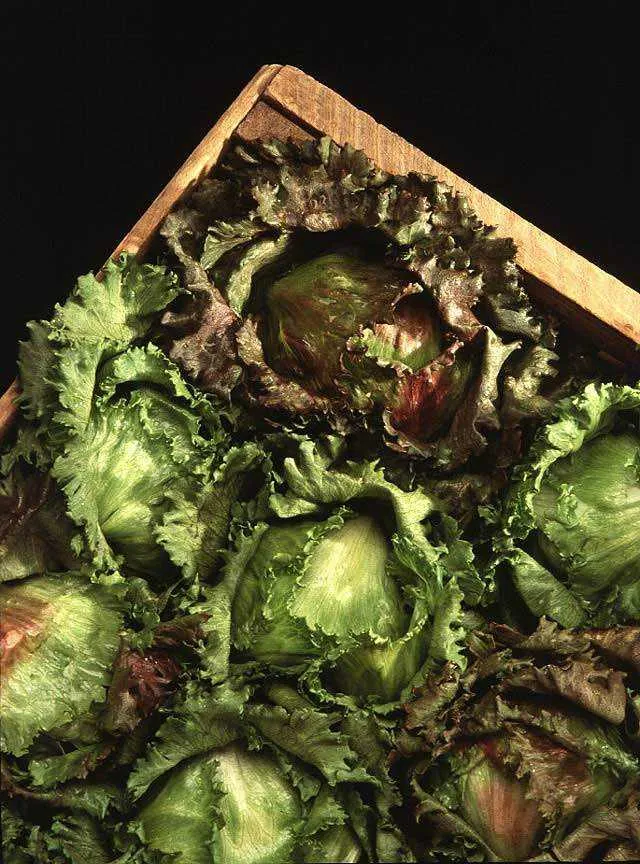
The outbreak traces to shredded iceberg lettuce processed by Taylor Farms de Mexico, a central-Mexico facility. Taylor Farms initiated a recall on July 17, 2026.[2] Illness onsets in the iceberg-lettuce cluster began June 22, according to FDA and CDC investigation data;[3] a separate, broader cyclosporiasis cluster tracked by CDC had onset dates beginning June 14. A substantial share of people in the lettuce cluster got sick before the recall. The multistate cluster linked specifically to the iceberg lettuce had grown to at least 6,358 confirmed illnesses across 15 states, with 278 hospitalizations within that cluster, as of the most recent CDC update before this analysis.[3]
The outbreak is not the only foodborne illness story of 2026. CNN, citing FDA and CDC data, reported on August 13 that there are roughly 10,500 outbreak-associated foodborne illness cases in the United States so far this year, against a 2021–2025 annual average of about 1,500.[4] The FDA had posted 20 outbreak investigations as of mid-August 2026, with 18 clusters still active; in a typical recent year it posts about 25 investigations over the full 12 months.[4]
Senators, public health advocates, and food-safety experts have been pressing HHS Secretary Kennedy for answers. Sen. Jon Ossoff wrote to Kennedy calling the FoodNet change a “foolish and self-indulgent demolition” of cyclosporiasis tracking.[5] Kennedy said the cyclospora cuts were “redundant surveillance.”[6]
Is the “nearly 400%” figure accurate against federal data?
The most directly comparable federal data point comes from CNN’s August 13 report citing FDA and CDC: roughly 10,500 outbreak-associated foodborne illness cases in 2026 against a 2021–2025 annual average of about 1,500.[4] That is a 600% increase over baseline, not 400%.
For a 400% increase to be accurate on those figures, the 2026 case count would need to be approximately 7,500 (five times the baseline). The actual count is 10,500, which is seven times the baseline.
The Polymarket post named no specific dataset. Without a named source, the provenance of the “nearly 400%” figure cannot be determined — it could reflect an earlier case count, a different baseline, a different scope, or simply an error. No arithmetic reconstruction can be confirmed. What the available data do show is that the error runs in an unexpected direction: on any plausible reading of the federal numbers, the real outbreak-associated increase is larger than “nearly 400%,” not smaller.
The direction of the error matters: the “400%” claim, if anything, understates the increase the federal data shows. This does not make the claim accurate, but it means the error runs opposite to what political framing would suggest — the real number, on the outbreak-associated metric, is worse than the claim implies.
Does “foodborne illness cases” accurately describe what this figure measures?
This is the more consequential error in the viral claim. The CDC estimates roughly 48 million total foodborne illnesses in the United States each year — roughly 1 in 6 Americans — producing an estimated 128,000 hospitalizations and 3,000 deaths annually.[7] The vast majority of these cases are never linked to a specific outbreak, never formally investigated, and never enter the counts being discussed here.
The 10,500 figure (or the 13,895 cyclosporiasis-specific figure) measures something categorically different: outbreak-associated cases, a small and highly volatile subset of total foodborne illness. These are cases formally counted in the course of an active public-health investigation and linked by epidemiological evidence to a common source. In a year without a major single-vehicle outbreak, this count tends to run low. A single outbreak involving widely distributed produce can multiply it several times in a few weeks.
Total U.S. foodborne illness burden — the 48 million figure — has not risen 400% (or 600%, or any comparable amount). There is no federal data showing that. The underlying disease burden is essentially stable year to year; what changes is how many cases cluster into identified outbreaks.
Using the unqualified phrase “foodborne illness cases” allows the reader to reasonably infer the whole pool is affected. It is not. The claim measures a surge in the visible, investigated tip of an iceberg whose overall size has not changed.
This distinction is not merely statistical. Public communication that collapses outbreak-associated cases into total foodborne illness makes the overall risk picture appear far more dire than the evidence supports, while simultaneously making it harder to understand what the real, significant problem actually is: a specific, large outbreak of a specific parasite linked to a specific recalled product.
Does the 2026 increase trace to Trump administration and RFK Jr. policy?
What is documented
The policy changes named in the claim are real:
- FoodNet contraction: Beginning July 1, 2025, CDC reduced FoodNet’s mandatory reporting to two pathogens (Salmonella and STEC), removing Cyclospora from its active-surveillance footprint.[8]
- FDA staffing cuts: The FDA lost approximately 3,500 positions under the Trump administration. Foreign facility inspections had already fallen to historic lows before 2026.[9]
- CDC budget proposal (not enacted): The administration proposed cutting CDC’s budget from $9.68 billion (FY2025 request) to approximately $4.24 billion for FY2026. This is a budget request, not an appropriated outcome; the proposed cut had not been enacted into law as of August 2026.[10]
- COVID-era grant clawback — announced March 2025, enjoined by court: HHS announced the termination of approximately $11.4 billion in COVID-era public health grants to state and local health departments effective March 24, 2025. Twenty-five states and D.C. sued. A federal district court (D.R.I.) issued a temporary restraining order in April 2025 and a preliminary injunction in May 2025, declaring prior terminations “null and void” and requiring full reinstatement of all funds. HHS appealed to the First Circuit, then withdrew its appeal in July 2025. As of August 2026, the preliminary injunction remains in place and the case is ongoing; the announced cut did not substantially take effect.[15]
- FERN suspension: The FDA’s Food Emergency Response Network was suspended in April 2025 following staffing cuts; planned quality-control testing for cyclospora in produce was paused.[11]
- Parasitic disease surge capacity: USAID-funded staff who normally covered global malaria but served as surge support during outbreaks like cyclosporiasis were eliminated, reducing the lab’s outbreak response capacity.[12]
- FDA Food Traceability Rule delay: In March 2025, the FDA extended the compliance date by 30 months (to July 20, 2028), following heavy lobbying by the grocery industry. The rule would have required enhanced supply-chain recordkeeping including for the produce category that includes iceberg lettuce.[13]
The FoodNet question: the spike is real, not a counting artifact
An important claim circulated alongside the policy attribution: that the removal of Cyclospora from FoodNet may have inflated or rendered non-comparable the year-over-year case counts. This is incorrect.
Cyclosporiasis is a nationally notifiable disease, reportable in 47 states, the District of Columbia, and New York City. National case counts come from the National Notifiable Diseases Surveillance System, which operates independently of FoodNet. FoodNet is a sentinel network covering approximately 15% of the U.S. population across 10 sites; its function is trend analysis, not outbreak detection.[14] The removal of Cyclospora from FoodNet’s mandatory reporting did not alter the national case-count infrastructure.
Food-safety experts who reviewed the question confirmed as much. Barbara Kowalcyk of George Washington University noted that “FoodNet is not designed to detect outbreaks. It is designed to monitor trends.”[12] FactCheck.org found that FoodNet’s 10 states do not include the Midwest states where the largest cluster occurred, further limiting any plausible connection between the FoodNet change and current case counts.[14] The 2026 spike is real, not a counting artifact.
Where the causal chain is stronger
The cuts do bear on the causal chain, but on a specific part of it: not whether the outbreak happened, but how quickly it was detected, traced, and stopped.
The source of the 2026 contamination is a foreign produce processor (Taylor Farms de Mexico) operating in central Mexico. The contamination event itself occurred outside direct U.S. regulatory reach at the point it originated. U.S. policy did not plant Cyclospora in Mexican irrigation water or cause Taylor Farms’ facility to be compromised.
What U.S. policy plausibly affected is the response timeline. The FERN suspension paused lab quality-control work specifically involving cyclospora in produce. The parasitic disease division’s loss of surge capacity meant fewer personnel available to support a complex multistate traceback. The traceback-grant cuts to state and local health departments reduced the field investigation capacity that identifies contaminated vehicles. The Traceability Rule delay means that when an outbreak is finally detected, the supply-chain records needed to trace it quickly may not exist or may be incomplete.
Sarah Sorcher of the Center for Science in the Public Interest summarized the expert consensus: “FoodNet cuts didn’t cause this outbreak, but they are a symptom of a deeper problem, and that is that our outbreak response programs are running out of money.”[12]
The FDA’s counterargument — and its limits
The FDA told CNN that “strengthened surveillance efforts often lead to increased detection.” The argument is that the case counts look higher in part because surveillance has improved, not purely because the underlying problem is worse. Taken on its own, this is a legitimate epidemiological point: expanded testing and reporting can reveal cases that would previously have gone undetected.
The difficulty is that the FDA’s own documented actions — FERN’s suspension, reduced foreign inspection capacity, parasitic disease lab cuts — run against the “strengthened surveillance” narrative. An agency that has simultaneously cut its investigative lab capacity, reduced the staff available to respond to outbreaks, and paused quality-control testing cannot straightforwardly argue that the detection infrastructure is getting stronger. The claim should not be accepted without that context.
What would move the evidence further: a documented timeline showing that specific investigative steps (lab confirmation, traceback interviews, federal-state coordination handoffs) were delayed due to resource constraints rather than the inherent complexity of a multistate parasite outbreak. No such timeline has been published as of August 15. The causal attribution to response delay is plausible and worth investigating; it is not yet established.
Stakeholder Scorecard
| Actor | Outcome | What happened |
|---|---|---|
| Consumers (esp. Midwest) | Lost | 6,358+ linked illnesses in 15 states; 2 deaths, 278+ hospitalized; recall came 25 days after earliest illness onset |
| State health departments | Lost | Reduced federal grant support; field investigation capacity strained; Michigan absorbed 8,000+ cases with reduced CDC surge backup |
| Taylor Farms de Mexico | Lost | National recall; facility under FDA inspection; multi-state litigation exposure; reputation damage |
| HHS / RFK Jr. | Mixed | FoodNet cuts did not cause outbreak (some political blowback overstated); other capacity cuts legitimately scrutinized; Senate pressure campaign ongoing |
| FDA / CDC | Mixed | National notifiable-disease system detected the outbreak; response speed and depth questioned; FDA’s “strengthened surveillance” claim against the grain of its own documented cuts |
| Food-safety reform advocates | Won (near-term) | Outbreak has elevated policy salience for Traceability Rule restoration and FoodNet funding; Senate letters filed; bipartisan food-safety attention |
What to Watch
- FDA Taylor Farms inspection: FDA began on-site inspection at the Taylor Farms Mexico facility. Findings will determine whether the facility reopens and whether U.S. import controls on the product change. No timeline given for release of results.
- Senate Kennedy hearing: Senators Ossoff, Murphy, and others have pressed for a formal hearing on cyclosporiasis surveillance. Whether Kennedy appears and what he discloses about the FERN suspension’s effect on the outbreak response timeline is the key causal datapoint not yet in the record.
- FDA Traceability Rule: Congress directed the FDA not to enforce the rule before July 20, 2028. Legislative proposals to restore the original January 2026 date have been introduced. The 2026 outbreak is the highest-profile argument yet for earlier enforcement.
- FoodNet cyclospora restoration: Senators have formally requested restoration of cyclospora to FoodNet. The administration has not committed. A policy reversal here would have limited direct effect on the current outbreak but significant effect on long-run trend data.
- Outbreak end date: CDC’s case curve shows the rate of new illnesses slowing as of early August, consistent with the July 17 recall reducing new exposures. The outbreak’s official end (typically declared after two incubation periods with no new cases) would allow a full retrospective of the response timeline.
The claim
On August 13, 2026, Polymarket posted on X: “Federal data reveals U.S. foodborne illness cases are up nearly 400% this year compared with the recent annual average.” No source was named. The post spread alongside the argument that Trump administration policy caused the rise.
Three claims need separate checks.
Claim A: Is the 400% number right?
The real increase is larger than 400%, not smaller. CNN reported August 13, citing FDA and CDC data, that there have been about 10,500 outbreak-linked foodborne illness cases in 2026. The 2021-2025 average was about 1,500 per year. That makes 2026 roughly 7 times higher, a 600% increase, not 400%.
A 400% increase would mean roughly 7,500 cases. The actual count is 10,500.
Caution about a number circulating online: Some posts claim an increase of roughly 5,480%. That comes from mixing two different time periods: a full multi-month season compared against a single mid-season snapshot from the year before. The math is wrong. Do not use it.
Claim B: Does “foodborne illness cases” describe the right thing?
The CDC estimates about 48 million Americans get food poisoning every year. Most cases are never traced to a specific outbreak. The 10,500 figure only counts cases that investigators formally linked to a specific identified outbreak. That is a tiny, volatile slice of total food poisoning.
One big outbreak can multiply the outbreak-linked count many times over, while the total food poisoning rate stays about the same. Total U.S. food poisoning has not gone up 400%, or anything close to it. The phrase “foodborne illness cases” suggests the whole 48-million pool increased. It did not.
Claim C: Did Trump and RFK Jr. policy cause the increase?
Several real policy changes happened:
- CDC’s FoodNet network stopped requiring cyclospora tracking as of July 2025.
- The FDA lost about 3,500 employees.
- About $11.4 billion in COVID-era grants to state and local health departments was announced as pulled back in March 2025 — but a federal court blocked this cut. A preliminary injunction issued in May 2025 required full reinstatement of the funds; as of August 2026 that court order remains in place. The money was not actually removed.
- The FDA’s food-testing lab network (FERN) was suspended in April 2025.
- The FDA Food Traceability Rule was delayed 30 months.
Did these policies cause the 2026 outbreak? No. The contamination came from a lettuce-processing facility in Mexico, Taylor Farms de Mexico. U.S. domestic policy does not control what happens inside a Mexican plant.
Did the policies affect how fast the outbreak was caught and stopped? Possibly. People in the Taylor Farms iceberg-lettuce cluster got sick starting June 22. A separate, broader cyclosporiasis cluster had cases starting June 14. The Taylor Farms recall did not happen until July 17, 25 days after the first lettuce-linked illness. With fewer staff, fewer labs, and less money for traceback investigators, the government may have traced the source more slowly than it otherwise could have.
A claim that turned out to be wrong: Some politicians said removing Cyclospora from FoodNet made the case counts look inflated. Food safety experts say this is not correct. Cyclospora is still a disease doctors must report in 47 states. The case counts come from a different, separate system that was not changed. The 2026 spike is real.
The FDA said “better surveillance leads to more cases being found.” But the FDA also cut its labs and staff. Both cannot be fully true at once.
What the evidence supports: Real policy cuts probably slowed the outbreak response. They did not cause the contamination itself.
What to watch
- FDA is inspecting the Taylor Farms facility in Mexico.
- Senators are pushing for a hearing on how the outbreak was handled.
- Congress is discussing whether to restore the Food Traceability Rule sooner.
- The outbreak case rate appears to be slowing since the July 17 recall.
Sources
- More than 24,000 cyclosporiasis infections reported as new cases appear to slow
- Taylor Fresh Foods Recalls Iceberg Lettuce from Central Mexico
- Investigation of Multistate Outbreak of Cyclospora Illnesses: Iceberg Lettuce (July 2026)
- It’s not just a gut feeling: Foodborne illness outbreaks are especially bad this summer
- Sen. Ossoff Press Release on FoodNet and Cyclospora
- RFK Jr. says cyclosporiasis outbreak is ‘under control’
- Estimates of Foodborne Illness in the United States
- CDC confirms cuts to program that tracks foodborne pathogens
- FDA Foreign Facility Inspections Hit Historic Low After Trump Admin Cuts
- Budget request cuts CDC’s funding by half; food safety budget hard hit
- FERN suspension: FDA food safety quality checks suspended after staff cuts
- Experts Set Record Straight on FoodNet, CDC Cuts as Senators Press RFK Jr.
- Requirements for Additional Traceability Records: Compliance Date Extension
- Democrats Overstate Role of Monitoring Program Change in Parasitic Outbreak
- States win injunction against HHS’ $11B clawback