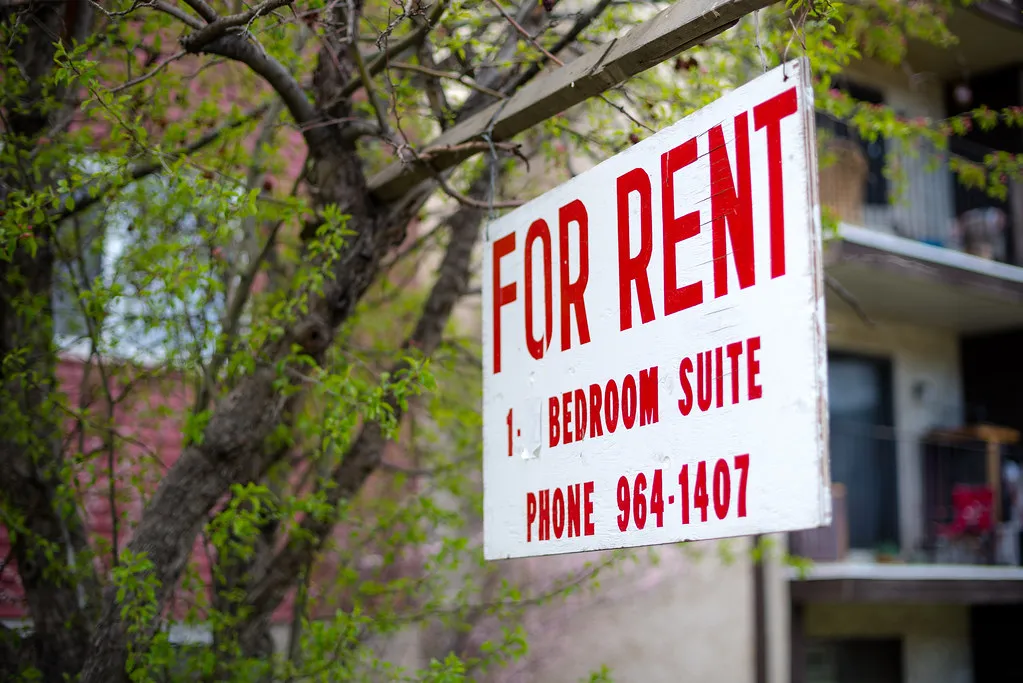
A viral post attributed to @ChristinaAguayoNews ties record-high New York City rents and a multibillion-dollar decline in state tax revenue directly to Mayor Zohran Mamdani’s “tax-the-rich and free-everything” agenda, framing the combination as evidence that “socialism is not working.” Some of the underlying numbers are accurate, drawn from a Citizens Budget Commission analysis published in August 2025. Others are misleading or false. The overarching causal argument, that Mamdani’s policies produced these trends, is impossible to support for reasons of basic chronology.
Verdict Scorecard
| Claim | Verdict |
|---|---|
| NY State lost $10.7B in PIT revenue as millionaire share fell 12.7% → 8.7% (2010–2022), the largest decline of any state | True |
| Filers earning over $1M (under 1% of filers) pay about 40–45% of state and city personal income taxes | True |
| Manhattan median rent ~$5,000 (Feb 2026, +6% YoY); ~$5,125 May; peaks ~$5,295; Brooklyn record $4,296 (+7.5% YoY); citywide asking ~$3,616 Q1 2026 (+6.2%) | Mostly True |
| “Illegal migrants snatching up apartments” caused the housing shortage; deporting them is the solution; NYC is 38% foreign-born | Misleading |
| These rent and tax-base trends are caused by Mamdani’s policies | False |
Claims 1 & 2: The CBC Millionaire Data
“A nonpartisan Citizens Budget Commission analysis shows NY State lost an estimated $10.7 billion in personal income tax revenue as its share of the nation’s millionaires fell from 12.7% (2010) to 8.7% (2022), the largest decline of any state.”
TrueThe Citizens Budget Commission published “The Hidden Cost of New York’s Shrinking Millionaire Share” on August 28, 2025.[1] The figures match the state-level findings closely. New York’s share of U.S. millionaire-income filers fell from 12.7 percent in 2010 to 8.7 percent in 2022, a 31 percent relative decline that the CBC identifies as the steepest of any state over that period.
The $10.7 billion is the state-level estimate of forgone personal income tax revenue: what New York would have collected in 2022 had its share of millionaires held at 2010 levels. The city’s parallel counterfactual is $2.5 billion, putting the combined state-and-city figure above $13 billion. Some news coverage describes this as “nearly $11 billion” (rounding $10.7B) or “$13 billion” (the combined total). The post uses the $10.7B state-only figure correctly.
“Filers earning over $1M (under 1% of filers) pay about 40–45% of state and city personal income taxes.”
TrueThe same CBC report confirms this directly. In 2022, millionaire-income households were less than 1 percent of resident filers yet paid 44 percent of New York State’s personal income tax and 40 percent of New York City’s personal income tax.[1] The “40–45%” range in the post brackets both figures accurately, with 44% (state) at the top and 40% (city) at the bottom.
Claim 3: The Rent Records
“Manhattan median rent hit a record $5,000 in February (up 6% YoY), ~$5,125 in May, peaks near $5,295; Brooklyn record $4,296 (up 7.5% YoY); citywide median asking ~$3,616 in Q1 2026 (up 6.2%).”
Mostly TrueThe Manhattan and Brooklyn figures check out from multiple reporting sources. Corcoran’s February 2026 market report showed Manhattan’s median rent reaching $5,000, a new all-time high, up 6 percent year over year, coinciding with a 24-month consecutive decline in rental inventory.[2] Brooklyn reached $4,296 in the same month, up 7.5 percent year over year, also an all-time record.[2] Subsequent Corcoran reports document Manhattan at $5,125 in May[3] and $5,295 in June.[4]
The citywide figures require a methodological note. The $3,616 figure at +6.2% comes from Realtor.com’s Q1 2026 data, which covers all five boroughs and averages January through March.[5] StreetEasy’s February-specific data shows $3,950 at +8.2% for the same period. The gap reflects different methodologies (quarterly average versus single-month, all-borough versus Manhattan-weighted) and different data collection approaches (listings-based asking rent versus signed-lease median). Both capture the same directional reality: New York City rents are at or near record levels across all boroughs. The $3,616 / +6.2% pairing is supported by Realtor.com data but should not be compared with StreetEasy’s methodology without adjusting for scope.
Claim 4: Immigration and Housing Costs
“Illegal migrants snatching up apartments caused a housing shortage that spiked prices, and deporting them is the solution; NYC is 38% foreign-born.”
MisleadingThis cluster of claims conflates different populations, asserts causation the evidence does not support, and sidesteps the documented primary driver of New York’s rent crisis.
The 38% figure
Correct, but it covers all immigrants, legal and undocumented together. New York City’s Office of Immigrant Affairs counted approximately 3.1 million foreign-born residents in 2023, representing around 38 percent of the city’s total population — the highest share since the early 20th century, when it reached 41 percent in 1910.[6] The city’s largest immigrant communities originate from the Dominican Republic, China, and Jamaica. Using a combined legal-and-undocumented share to specifically indict “illegal migrants” is a category error.
The causation claim
Research on undocumented immigration and housing costs is contested, and the framing of the claim does not survive scrutiny. The NYU Furman Center and immigration policy researchers document that undocumented residents are substantially more likely than U.S.-born households to share dwellings or occupy informal housing, rather than compete in the formal rental market.[7] NPR’s 2024 examination of the question found mixed evidence, with the Federal Reserve Bank of Dallas linking unauthorized immigration broadly to a portion of house price growth, while a 2025 peer-reviewed study found no statistically significant relationship between unauthorized immigration and house price growth across U.S. markets after controlling for supply conditions.[8]
What housing economists point to
New York’s housing supply grew by approximately 4 percent from 2010 to 2023, while employment grew 22 percent over the same period.[9] The Regional Plan Association and McKinsey estimate the metro-area unit shortfall at around 540,000 homes. The NYC Comptroller and independent housing researchers consistently identify supply constraints — restrictive zoning, slow permitting, high construction costs — as the structural driver of rent increases. No credible housing economics study supports the conclusion that deporting undocumented immigrants would meaningfully lower rents in a market where the primary constraint is supply, not population in that specific subgroup.
The Attribution Problem
These rent and tax-base trends are attributable to “Mamdani’s policies of tax-the-rich and free-everything for residents.”
FalseZohran Mamdani was sworn in as New York City’s mayor on January 1, 2026.[10] The CBC’s millionaire-share data runs from 2010 to 2022 — ending three years before Mamdani held any citywide office. The viral post acknowledges this in passing (“before Mamdani took office”), making its own overarching thesis internally contradictory.
On rents: the February 2026 Manhattan record came roughly six weeks into Mamdani’s term, before any of his major policies had taken effect. His first revenue measure, a pied-à-terre tax on secondary residences worth more than $5 million, was introduced in April 2026.[11] That tax targets luxury second homes, not primary-market renters or the broader income base the post references. No Mamdani administration has implemented a personal income tax increase. His headline housing proposal, 400,000 units of affordable housing backed by a $22 billion capital commitment, is in principle a supply-expansion measure that would exert downward pressure on rents if realized.
NYC rents have risen since at least 2021, accelerating through a combination of inventory contraction, rising top-income demand, and constrained supply. The trend predates Mamdani’s mayoral campaign, let alone his administration.
The Better Question
The post’s framing, “Is Mamdani’s socialism not working?”, is unanswerable at this point for chronological rather than political reasons. Mamdani has been in office fewer than seven months. Major policy implementations are in early stages. No mechanism exists by which a 6.5-month mayoralty could produce a 12-year millionaire-share trend or decade-long rent trajectory.
Three questions the available data can actually address:
What drove the 2010–2022 millionaire-share decline? The causes are multiple and contested. New York State raised its top marginal income tax rate via a millionaire surcharge starting in 2009 and again through 2021 legislation (10.9 percent for income above $25 million). Simultaneously, tech-heavy Sun Belt and Western states minted new millionaires faster than New York, shrinking New York’s share even if few people actually left. The pandemic temporarily disrupted place-based networks that normally anchor high earners to their home cities. Stanford sociologist Cristóbal Young, whose research analyzed 45 million high-income tax returns, found that millionaires migrate at roughly 2.4 percent annually, about half the rate of low-wage workers, because family ties, business networks, and professional relationships are difficult to relocate.[12] A declining share is consistent with both modest out-migration and faster millionaire creation elsewhere.
What are the root causes of New York’s rent crisis? Supply. From 2010 to 2023, NYC’s housing stock grew 4 percent while employment grew 22 percent. No immigration-category breakdown changes that structural arithmetic.
What would actually test Mamdani’s fiscal impact? IRS Statistics of Income data covering 2026 (the first full year of his tenure) will not be available before late 2027 or 2028. Rent trends that diverge from pre-2026 trajectories after his major policies take hold would be the earliest market signal. Nothing in the current data constitutes such a test.
The Legitimate Policy Warning
The strongest version of the post’s core concern does not depend on misattributing historical data to Mamdani or the immigration claim. It runs as follows.
New York’s fiscal base is unusually concentrated: fewer than 1 percent of filers pay 40 to 44 percent of income tax revenue. The 2010–2022 data shows the state’s millionaire share fell 31 percent, coinciding with a period of high-earner tax increases. Mamdani’s administration has signaled progressive taxation as a policy priority. If those measures deepen an existing migration trend, even marginally, the revenue impact on a city that depends on this narrow base could be large.
The CBC itself issued this as a forward-looking caution. Its companion op-ed was titled “Even Mamdani’s New York Needs Millionaires” — framing the historical data as a warning about structural fiscal vulnerability, not as a verdict on current policy. That concern is grounded in evidence, even though it describes a risk rather than an outcome.
The counter-evidence is also substantial. The Fiscal Policy Institute found no measurable out-migration by New York residents in response to the 2021 tax increases. Vital City’s 2026 analysis of whether a Mamdani-era millionaire exodus had materialized found none.[13] The debate is live; the CBC data describes the stakes, not the result.
What to Watch
- Fall 2026 The New York State 2027–28 executive budget cycle begins. If Albany pursues additional high-earner PIT legislation, IRS migration data for tax year 2024 (when released) will be the first available test of whether the 2021 rate increases correlated with accelerated millionaire migration.
- 2026–2027 Mamdani’s 400,000-unit housing plan hits implementation milestones, or it doesn’t. Monthly Corcoran and StreetEasy reports will indicate whether supply initiatives begin to moderate rent growth, or whether rents continue climbing independent of policy.
- 2027 IRS data The first IRS Statistics of Income release covering full-year 2026 — Mamdani’s inaugural calendar year — is the earliest data point that could test any policy-linked change in millionaire share. Expect publication no sooner than late 2027 or early 2028.
- Ongoing The pied-à-terre tax and free childcare program face legal and legislative challenges. Their fiscal impact will appear in the city’s annual financial plan updates, which are published quarterly and provide the clearest near-term accounting of Mamdani-era revenue policy.
Sources
- The Hidden Cost of New York’s Shrinking Millionaire Share
- Manhattan median rent climbed to $5,000 in February amid a plunge in listings
- NYC Residential Rental Market Report: May 2026
- Manhattan median rent reached new record of $5,295/month in June
- NYC Rents Hit New High as Rent Gap Between Staying and Moving Surpasses $1,750
- 2024 Annual Report on New York City’s Immigrant Population
- The Housing Conditions of Immigrants in New York City
- Examining how undocumented migrants are affecting housing prices
- Spotlight: New York City’s Housing Supply Challenge
- Zohran Mamdani sworn in as New York City mayor, capping historic rise
- One Hundred Days of Mayor Zohran Mamdani in New York: Free Kindergarten and a Tax on Luxury Homes
- Taxing the Rich: Millionaire Migration Research
- The Millionaire Exodus That Never Came